























Backflip Dive 3D Full Guide: How to Play, Tips, and More
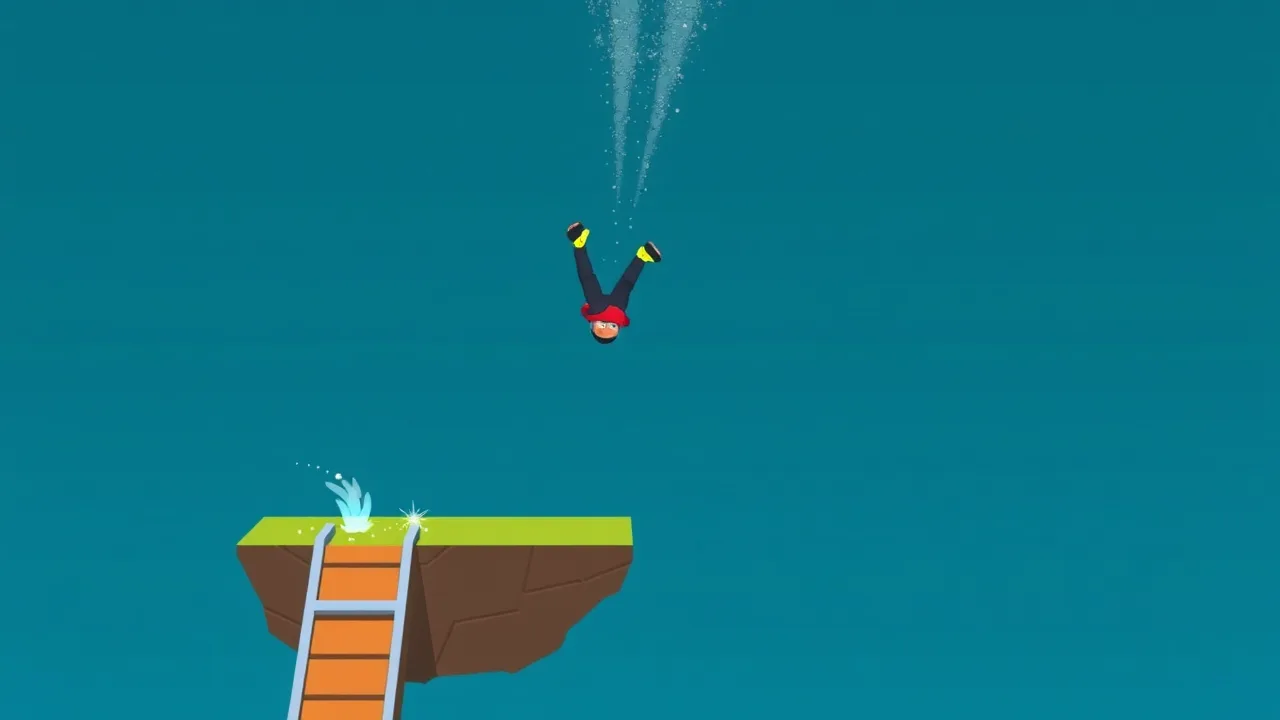
If you love precision physics, perfect timing, and that rush when a slow-motion flip sticks the landing, backflip dive 3d is about to be your new obsession. It’s a quick-to-play, hard-to-master browser game where your goal is simple: launch, rotate, and land like a pro. The challenge comes from judging jump strength, managing aerial rotation, and threading needle-thin landing zones as levels add moving platforms, windups, and tricky obstacles.
Want to jump straight in? Play backflip dive 3d now on bestcrazygames.com: backflip dive 3d.
In this definitive 2025 guide, you’ll learn what the game is, how the physics tick, the exact steps to start landing clean flips, and a progression system that takes you from shaky first rotations to multi-flip high scores. We’ll go deep on technique—tuck timing, late-phase rotation, spotting, and bailout saves—plus drills that build consistency fast.
What is backflip dive 3d? 📖
Backflip Dive 3D is a physics-based trick-jumping and landing game. Each stage puts your character on a platform or springy surface facing a goal area—water, mats, or a narrow target zone. You control launch power, body posture (which determines spin speed), and when to open up for landing. Miss your timing and you’ll under-rotate into a back-bump, over-rotate into a scorpion, or drift outside the zone. Nail the sequence and you’ll be rewarded with sparkling scores, satisfying slow-mo, and new stages to conquer.
At its core, the gameplay borrows ideas from real-world acrobatics and springboard technique. Rotations accelerate when the body tucks into a compact shape and slow when the body opens into a layout. That’s why your tuck → open rhythm is everything: speed up when you need rotation, open to “catch” the landing. For the real-world sport context that inspired this feel, see Diving (sport).
Core hallmarks
-
One-button depth: Simple inputs, deep timing windows.
-
Readable physics: Tuck speeds rotation; layout slows it.
-
Stage variety: Static and moving platforms, different distances and heights.
-
Skill ceiling: From single backflips to risky multi-flip chains with tight stick-landings.
Tip: Treat each stage like a puzzle. You’re solving for how much launch, how long to tuck, and when to open.
How to Play backflip dive 3d 🕹️
1) Launch the game
Open your browser and jump in here:
2) Learn the controls
Controls vary slightly by device, but the core loop looks like this:
-
Press/Hold to charge the jump (watch the power indicator).
-
Release to launch.
-
Hold (or tap) tuck mid-air to increase rotation speed.
-
Release/Toggle to open (layout) and slow rotation for landing.
-
Aim to land with feet/flat body in the scoring zone.
On mobile, you’ll see a power slider and a big jump/tuck button; on desktop, mouse/spacebar usually handles power and tuck. Use the pause/options menu if the game offers “invert,” sensitivity, or slow-mo practice toggles.
3) Read the HUD
-
Power Bar: How hard your jump will launch.
-
Ghost Arc/Guide (if enabled): A rough flight path for the center of mass—helpful but not perfect.
-
Target Zone: Marked ring, mat, or pool area—land here to clear.
-
Score Tiers: Bronze/Silver/Gold thresholds; higher ranks need cleaner entry angles.
4) First clear checklist
-
Pick medium power to keep the arc manageable.
-
Tuck the moment your feet leave the ground to commit to rotation.
-
Count “one-thousand-one” in your head; open at a consistent beat.
-
Watch the horizon line as you open—use it to align for landing.
-
Stick within the target; don’t chase extra flips until you’re consistent.
Top Tips & Strategies 💡
A. Launch Mechanics 🚀
-
Power isn’t everything. Too much launch extends flight and forces awkward late opens. Start at ~60–70% power and only add juice if you under-rotate.
-
Vertical vs. horizontal. The game often favors arc height over distance; aim your jump straight up to maximize hang time for rotations, then use open timing to drift forward.
-
Platform edges. Launching from the front edge effectively increases clearance—use it on stages with obstacles behind you.
B. Rotation Control: Tuck & Open 🔁
-
Rule of thumb: Tuck early to “bank” rotation. Open with time to spare, not in the last microsecond.
-
Micro-tucks. Short pulses can fine-tune rotation without overspinning. Try: tuck 0.4s → open 0.3s → micro-tuck 0.1s → open to land.
-
Late-phase braking. Open slightly past vertical so your chest faces the horizon; this acts like a rotational brake and helps you “catch” the mat.
C. Spotting the Landing 👀
-
Find the horizon. The moment you see the horizon line stable (not spinning across your view), you’re close to upright.
-
Use peripheral alignment. Let the target zone enter your lower field of view as you open—don’t stare straight down; you’ll over-tilt.
-
Two-point spot: First spot the horizon to gauge orientation, then flick eyes to the target for final aim.
D. Entry Angle & Body Shape 🧍♂️
-
Feet-first stick: Slight forward lean is safer than backward lean; under-rotation usually bruises less than over-rotation.
-
Layout landings earn higher aesthetics but require earlier open timing.
-
Pike variants (if supported) split the difference: faster than layout, slower than tuck—handy mid-air brake.
E. Drift & Lateral Control ↔️
-
Shoulder bias. Tiny shoulder/hip shifts early in the jump affect drift dramatically. If you keep missing left, start your tuck 50ms later; it changes your body line.
-
Wind-up balance. Some stages benefit from a short pre-jump crouch release; don’t rock back too far or you’ll lose vertical.
F. Risk Management for Multi-Flips 🎲
-
Build a safe single. Master one consistent single backflip with the same power/timing first.
-
Go 1.5 flips before 2.0. Practice an over-rotation catch: open at 1.3 and see if you can “float” to 1.5 without slamming.
-
Golden window. For doubles, tuck immediately on takeoff, then pop to layout earlier than you think. You can always micro-tuck again if you’re short.
G. Scoring Secrets 🥇
-
Clean entry angle beats raw flip count. A perfect single into the bullseye often outranks a messy double.
-
Center of zone multipliers: Many stages reward dead-center hits—prioritize control over flair when chasing gold.
-
Combo objectives: If a stage asks for a certain flip count, meet it first, then refine entry angle on subsequent attempts.
H. Camera & Comfort Options 🎥
-
Follow cam helps beginners feel rotation speed.
-
Static cam is best for learning drift and distance.
-
Sensitivity tweaks: If mid-air nudges exist on your version, lower sensitivity to avoid over-corrections.
Why backflip dive 3d Is So Addictive 🔁
1) Micro-mastery. Each stage is a miniature lab for launch power, tuck duration, and open timing. Tiny adjustments trigger big differences—catnip for problem-solvers.
2) Predictable physics, unpredictable outcomes. You know tuck speeds rotation and layout slows it, but slight changes in power or drift create surprising trajectories. The result is the perfect loop of “I know I can clean that.”
3) Instant retries, tangible progress. Rounds last seconds; iteration is nearly frictionless. Personal records are visible and feel fair.
4) Clear skill ceiling. Singles lead to doubles, then to finesse plays—late-open sticks, center-zone landings, and tight multi-flip chains.
5) Flow state. Counting tucks, spotting horizons, and hitting your open beats turns the brain quiet. It’s you, gravity, and a perfect arc.
Advanced Technique Lab 🧪
1) The 60/40 Rhythm Drill
-
Launch at ~60–70% power.
-
Tuck for 0.6 seconds, open for 0.4—stick the landing.
-
Repeat until you can land three in a row.
-
Purpose: build a baseline cadence you can nudge earlier/later on harder stages.
2) Over-Rotation Catch
-
Intentionally over-tuck to 1.3–1.4 rotations.
-
Open early and try to “float” the finish.
-
Purpose: trains late-phase braking and saves scuffed doubles.
3) Drift Correction Map
-
Pick a stage with frequent left/right misses.
-
Keep power constant; adjust only your tuck onset by ±50ms each attempt.
-
Track how lateral drift changes.
-
Purpose: connects timing to sideways movement intuition.
4) Double Builder
-
Target a stage with generous air time.
-
Sequence: max tuck off the line → micro open mid-air → micro tuck → full open.
-
Purpose: learn to “pulse” rotation instead of committing to one long tuck.
5) Blind Spotting
-
Practice opening to layout using only horizon alignment for three runs, then only target fixation for three runs.
-
Purpose: strengthens both visual systems so you can mix them under pressure.
Stage Archetypes & Solutions 🧩
Short Hop → Close Target
-
Power: 50–60%
-
Tuck: Brief (0.3–0.4s)
-
Open: Early; aim for a clean single
-
Common fail: Over-rotation from panic tucks → open earlier.
Tall Tower → Far Zone
-
Power: 80–90%
-
Tuck: Immediate and longer (0.7–0.9s)
-
Open: Mid-arc to drift forward on layout
-
Common fail: Undershoot; fix with slightly later open to preserve forward drift.
Moving Platform → Static Zone
-
Power: Medium; prioritize timing with platform cycle
-
Tuck: Normal
-
Open: Adjust to hit center as platform momentum adds/subtracts distance
-
Common fail: Landing behind; start the jump a beat earlier in the platform cycle.
Narrow Bullseye Zone
-
Power: Exact repeatability matters more than raw value
-
Tuck: Conservative; singles over doubles
-
Open: Earlier; prioritize feet-under-hips alignment
-
Common fail: Chasing extra flips—go for bullseye singles.
Multi-Obstacle Funnel
-
Power: Medium-high to clear first gate
-
Tuck: Early to rotate under obstacles
-
Open: Late-phase brake to stick safe
-
Common fail: Clipping obstacle due to late tuck—start the tuck sooner.
Troubleshooting: Quick Fixes 🧯
-
Always over-rotating? Reduce tuck duration by 0.1s or open earlier.
-
Consistently short? Increase power 5–10% or add a micro-tuck pulse mid-air.
-
Missing left/right? Adjust tuck timing, not power; earlier tucks tend to drift one way, later the other.
-
Nervous opens (wobble on landing)? Open a hair earlier to stabilize and let the body settle before contact.
-
Plateaued scores? Switch goals: chase three bullseye singles in a row before attempting doubles again.
(Optional) Practice Plans 🗓️
15-Minute Warmup
-
5 minutes: 60/40 rhythm drill on an easy stage.
-
5 minutes: ghost your best single and beat it by cleaner entry angle.
-
5 minutes: pick one medium stage and attempt three clean in a row.
30-Minute Skill Session
-
10 minutes: Double builder pulses.
-
10 minutes: Drift correction map.
-
10 minutes: Narrow bullseye consistency challenge.
Why Play backflip dive 3d on bestcrazygames.com? ⚡
When you’re tinkering with tenths of a second, load speed, stability, and clean focus matter. Here’s what makes bestcrazygames.com a strong home base:
🚀 Instant Access
No downloads or launchers—click, load, flip. Faster retries mean faster learning.
🎯 Performance & Readability
HTML5/WebGL builds keep frame pacing smooth, so your tuck/open timing isn’t ruined by stutter. Clean UI keeps the target visible.
📱 Cross-Device Play
Swap from laptop practice to phone drills on a break. Touch controls map naturally to charge-and-tuck inputs.
🧭 Simple Navigation
Find the game, hit play, and go full screen. No clutter between you and the next PR.
Ready to flip? Jump in now and play backflip dive 3d on bbackflip dive 3dackflip-dive-3d">backflip dive 3d.
Conclusion ✅
Backflip Dive 3D is the perfect mix of simplicity and depth. One button and two body shapes (tuck/layout) translate into endless nuance: launch power, tuck duration, open timing, drift control, and landing angle. Learn a consistent single, pulse your way to controlled doubles, and apply horizon-spotting to stick narrow targets. Use the drills to build muscle memory, then let your creativity take over—there’s always a cleaner arc to find and a tighter landing to stick.
The best part? Attempts are lightning-fast. Five minutes can be meaningful, and thirty minutes can transform your consistency. Lace up, take a breath, and flip with intent.
FAQ ❓
1) What’s the fastest way to improve in backflip dive 3d?
Start with a repeatable single: same power, same tuck length, same open point. Once you can land three in a row, nudge one variable—usually a slightly later open—to push distance or rotation.
2) How do I stop over-rotating on easy stages?
Open earlier and hold layout longer. If you still spin past upright, cut your initial tuck by 0.1s or lower jump power 5–10%.
3) When should I attempt double backflips?
After you’re landing consistent singles centered in the target zone. Use the double builder pulse—max tuck off the line, brief open to check spin, micro-tuck, then full open to catch.
4) Why do I drift sideways even when my power is consistent?
Tiny differences in tuck timing and body alignment create lateral drift. Adjust tuck onset earlier/later in 50–100ms steps and watch how the landing point moves.
5) Are bullseye landings more valuable than extra flips?
Usually, yes. Many stages reward entry angle and center hits more than raw flip count. Master bullseye singles first, then layer on extra rotation.
Discover the best browser games on BestCrazyGames and explore our collection at BestCrazyGames.