Make the view comfortable enough to read
Try a short turn and a short movement in an opening you can inspect. Notice where the aiming direction finishes. If the game offers a sensitivity setting, compare one adjustment at a time rather than changing several options together. A recognisable response makes it easier to judge whether an unsuccessful shot came from the movement of the view or the position you chose.
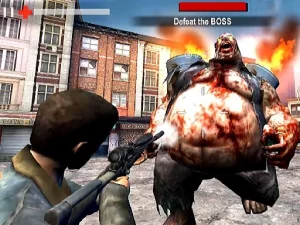
Learn to find ammunition, reload status and the relevant objective information without losing track of the scene. These displays answer different questions. Seeing an opponent does not tell you whether the selected weapon is ready, and completing a reload does not tell you which route remains exposed. Practise making those checks as separate decisions.
Choose a practice format in Oxy Arena
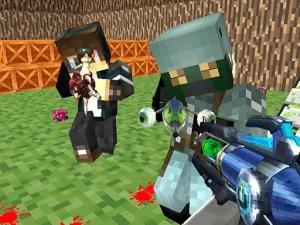
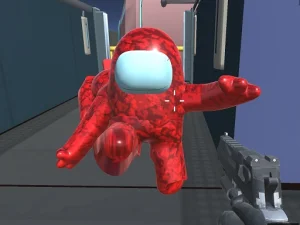
Oxy Arena divides its opening into public play, Rooms & Friends, Practice and a solo Backrooms: Zombies activity. Practice lets you choose Deathmatch, Team Deathmatch or Target Range and set bot difficulty. Start with the format that answers the question you want to practise instead of changing several settings without a plan.
WASD movement, mouse view, left-click fire and R reload form part of its keyboard-and-mouse scheme. Shift sprints, C crouches and the available gun-selection inputs change equipment. Learn how these actions interact with a small piece of the map before expecting a faster public encounter to provide a clear lesson.
Read enemy approaches in Frontline Strike
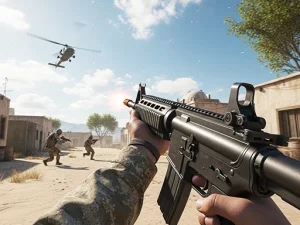
Frontline Strike begins at Desert Outpost with successive waves. The HUD separates wave number, kills, score, health and ammunition. Riflemen, heavier troops and distant marksmen call for attention to the kind of threat approaching, not just the nearest movement on screen. Check open directions while keeping the current magazine in mind.
The Armory lists an assault rifle, pistol and shotgun, along with separate improvements for damage, capacity and reload speed. Read the currently available option and requirement. An upgrade addresses a particular limitation; it should not replace learning where you can stand or when an approach becomes exposed.
Daily missions can give an attempt another focus. Inspect the actual target before choosing a weapon or a plan. A request involving one equipment type can lead to a different practice session from a general goal of surviving another wave. Keep the mode and task visible in your decisions.
Learn one encounter before changing everything
After an attempt, identify a decision you can repeat differently: turn toward the next opening earlier, reload from a more considered position or recognise when to change the weapon. Preserve the parts of the opening that already make sense. This gives the next result something useful to compare against.
Do not assume that every fps game offers public networking, the same mouse capture or an identical touch interface. Read the selected version's controls and joining options. Familiarity with a viewpoint transfers the habit of looking carefully, while the individual game still determines its keys, equipment, rules and objective.
Use a clear stopping point for practice, such as recognising a reload cue or learning one arena route. When that improves, combine it with another action. Adding complexity gradually helps keep mistakes understandable instead of turning every encounter into an unexplained mixture of aim, movement and equipment changes.