Look past the character outline
Read the main task before starting: reach a course finish, manage an encounter or reveal a hidden word. These activities use different kinds of attention. Movement timing is not the same as choosing an informative letter, even if both screens contain a familiar doodled figure.
Inspect the input method separately. A keyboard movement game, a pointer attack and a letter-selection interface should be learned on their own terms. Start with one deliberate action and observe the response. That helps prevent a visual resemblance from turning into an incorrect assumption about the buttons or gestures needed.
Use route knowledge in Vex 3
Vex 3 puts running, jumping and sliding into a route through hazardous obstacles. WASD or arrows move the character. Follow the game's prompts and read the next landing before committing. Reaching a platform is most useful when the resulting position also lets you understand the following passage.
On a retry, identify whether the mistake began at takeoff, during the movement or after landing. Keep the reliable part of the opening and revise the uncertain action. This gives practice a repeatable structure instead of making every attempt an unrelated rush through the same scenery.
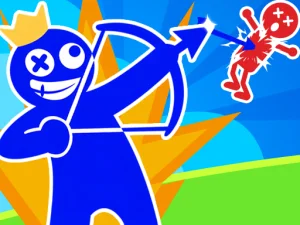
Read combat actions in Stickman Archero Fight
Stickman Archero Fight separates movement, interaction and hitting. WASD moves, E interacts with items and the left mouse button attacks. The publisher also describes virtual buttons. Inspect the current prompt before trying to use an item, so the intended interaction does not become an unrelated movement or hit.
Watch the space around the next opponent and consider where you can move afterward. The game includes battles, magic and improvements, but individual effects and costs belong to the visible menu. Read those details before planning around an ability from another stickman game.
A useful combat practice goal is recognising one item prompt or one position from which you can act deliberately. Add other actions once that part makes sense. Trying to optimise every menu and input at once can obscure the simple decision that caused an encounter to become difficult.
Change pace with a letter puzzle
Classic Hangman is another associated example. Its doodled figure accompanies a hidden word and limited lives, with correct letter guesses revealing the answer and mistakes costing a life. The next useful action is a letter supported by the visible pattern, a different task from controlling a moving stickman through a course.
Compare that pattern with possible words before choosing. A candidate in your mind is not confirmed evidence. This contrast is useful when selecting a game for the kind of attention you have available: a word puzzle can centre on interpretation while a platformer asks for timely execution.
When opening another card, identify the real objective and review its controls from the beginning. Read the current game rather than assigning a familiar stickman's abilities to a new character. The collection offers a shared visual style, while the individual rules explain how to make meaningful progress in each activity.
For the word puzzle, preserve confirmed letter positions when considering a possible answer. For the moving stickman, preserve a reliable approach when refining the next jump. These are different uses of evidence: one narrows an answer, while the other makes execution repeatable. Choosing between them is a more useful guide than expecting the shared character style to define the entire experience.