































LOLBeans Race Guide: Plan Crossings, Read Crowds and Reach the Finish
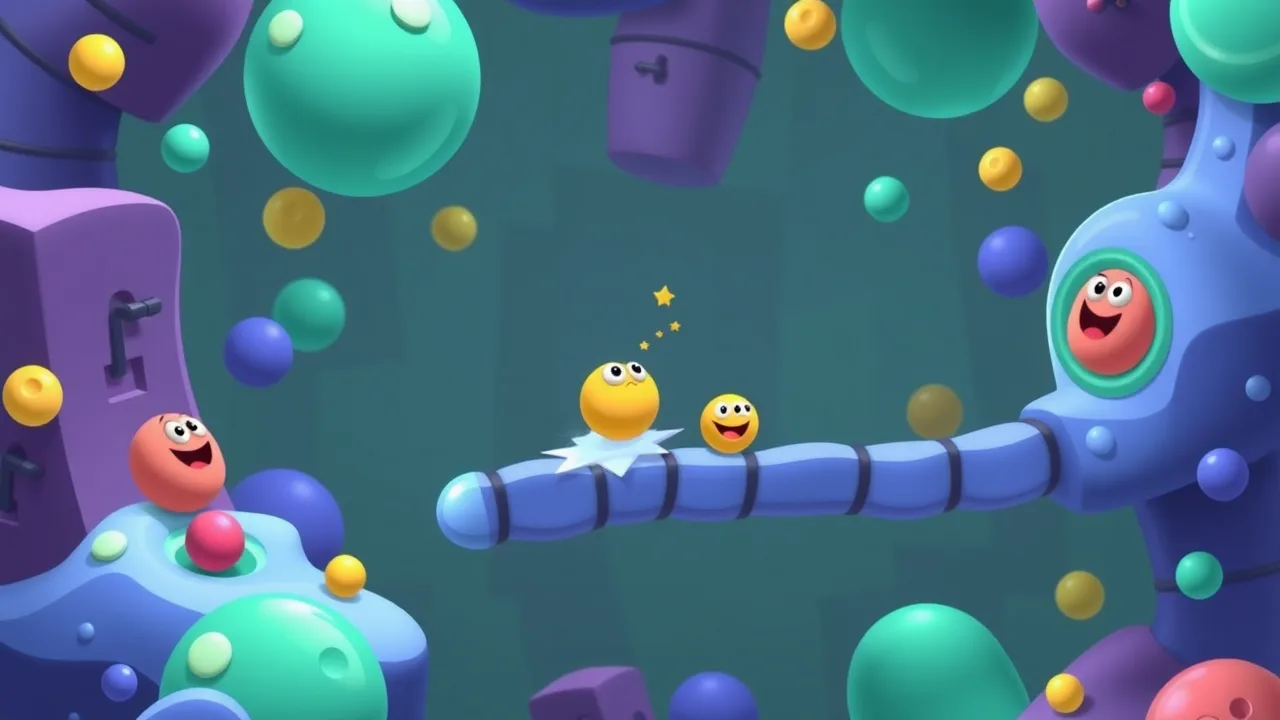
An obstacle race becomes easier to read when you stop treating the finish line as the only place worth looking. In LOLBeans, the next landing, the opening around a hazard and the traffic entering that opening all influence whether the route remains useful. This guide focuses on those race decisions. It uses the LOLBeans game as its reference, with the standard Battle Royale objective described by the game: avoid obstacles, reach the finish and stay ahead of the elimination that removes late players as maps progress. The ideas below are a route-reading method, not a claim to provide a fixed solution for every course.
Separate the destination from the next crossing
The finish gives the race its overall direction, but a distant objective does not explain the movement immediately ahead. Identify the next piece of ground you want to reach. Consider where the bean should arrive and what that position makes possible afterward. A crossing that barely reaches a surface may be harder to continue than one that leaves room for a controlled next move.
This does not require stopping to plan the entire map. Choose a useful local destination and update it as the scene develops. A short sequence you can read is more actionable than a general instruction to go faster. If your attention remains only on the distant finish, nearby decisions can become a series of surprises. Bringing the objective closer gives each input a purpose while preserving the wider aim of completing the race.
Establish a dependable movement arrangement
The official instructions list WASD or the arrow keys for movement and Space or right-click for jumping. Select a combination that lets you move and jump without changing hand position unexpectedly. Use the current settings and prompts if you have changed bindings. Before evaluating a difficult crossing, confirm that the game receives the intended input rather than a surrounding webpage or open menu.
Keep the arrangement familiar while studying a route question. Switching the movement layout and jump method together can make a difference hard to explain. You want to distinguish an unclear action from an unclear route. Once the controls are dependable, the useful attention can move to the landing, hazard motion and nearby racers. A compact setup check prevents an interface problem from being mistaken for proof that the chosen crossing cannot work.
Inspect the landing as part of the jump
Look at where the bean is meant to settle before committing. The nearest reachable surface is not necessarily a useful arrival if the next hazard leaves little room to recover. Consider the path beyond the landing as well as the gap itself. This turns the jump from an isolated action into part of the race route and can explain why a crossing that technically succeeds still leads to trouble immediately afterward.
When an attempt fails, describe which part was different from the intention. You may have chosen an awkward destination, approached it from a poor position or acted at a moment that did not fit the hazard. These explanations suggest different changes. Avoid treating every miss as a demand for more frantic movement. A better landing choice can improve the sequence without requiring a completely new control habit or a guess about hidden movement features.
Watch a hazard's direction, not just its current gap
A moving obstacle can leave an opening that is becoming more useful or one that is about to close. Those pictures may look similar at a glance. Observe the direction of movement and relate it to the crossing you intend to make. The question is whether the opening will serve the movement, not merely whether the screen contains a clear-looking patch at the instant you notice it.
Choose a visible cue that belongs to the hazard when you need to learn a difficult interaction. An arbitrary delay counted from the start of a run may not describe the situation you encounter later. Treat the cue as an idea to test, then compare the outcome with what you expected. If the route does not work, inspect whether the opportunity was misread or whether your input differed from the plan. That distinction makes another attempt more informative.
Use the crowd as evidence rather than a command
Other racers can reveal that a route is possible, but they do not provide the whole explanation. A player ahead may arrive with a different position, direction or view of the hazard. Before copying the movement, identify what makes the crossing useful from your own location. Following without that check can leave you reacting to someone else's action while your own destination remains undefined.
Crowds can also make a cue harder to see. If that happens, decide which piece of information you need sooner. You might inspect the landing before entering the busy area or choose a more readable approach when one is available. Do not assume that every slower-looking route must be worse. Compare the whole crossing and the risk of repeating it after a miss. A deliberate choice can be efficient even when it does not follow the largest group immediately.
Balance elimination pressure with the cost of a mistake
Battle Royale gives lateness a consequence, so reading the course cannot become endless hesitation. Use observation to make a decision, then act on it. The useful question is whether a brief look improves the crossing enough to justify the time it takes. A pause with no purpose is different from a short inspection that prevents a sequence you do not understand from ending immediately.
After the race, evaluate that tradeoff honestly. If you waited despite already understanding the opening, the lesson may be to commit more promptly. If you rushed into a confusing approach and lost time recovering, the lesson may be to inspect earlier. These are opposite adjustments, and the result alone does not tell you which one applies. Look at the sequence that produced the delay rather than assuming that every unsuccessful race needs either more caution or more speed everywhere.
Read the next situation after a recovery
When a mistake or interruption changes the bean's position, rebuild the route from the current scene. Continuing an old input sequence can be unhelpful if the approach no longer resembles the one you planned. Locate the next usable surface, inspect the immediate hazard and choose an action that fits. The remaining race is still a set of decisions, even if the original attempt did not unfold as intended.
Avoid turning one missed crossing into several rushed ones. A frustrated response can remove the observation that would make the next action understandable. Keep the reset small: identify where you are and what comes next. You do not need to make up all lost time in a single movement. The practical objective is returning to a readable route, which gives later decisions a chance to contribute instead of inheriting the uncertainty of the first mistake.
Match the mode to the race advice
Check the selected mode before using elimination assumptions. LOLBeans presents mode choices and community content, and a familiar visual style does not establish identical rules for every activity. The late-player elimination described here belongs to the standard Battle Royale instructions. Read the current objective if you choose another activity rather than expecting every screen to measure success in the same way.
The same care applies to a named course you remember. Inspect its current instructions and geometry instead of relying entirely on a label. The transferable part of this guide is how to read a crossing: a destination, a useful cue and an arrival you can continue from. The specific route must come from the course in front of you. That approach remains useful when an unfamiliar map makes a memorized sequence irrelevant.
Give practice a question that a race can answer
Pick one recurring decision for a few attempts. You might study how early you inspect a landing, whether you follow a crowd without understanding its cue or how you resume after a mistake. The focus should be narrow enough to remember during the race. Trying to improve every aspect simultaneously can make the final outcome feel important while leaving the cause of each difficulty obscure.
Review the focus after the attempt using visible evidence. Perhaps you recognized the landing earlier but still chose an unsuitable approach, or perhaps the route was clear while the input did not register as intended. Preserve that distinction. Improvement is easier to build when you know what changed. A race that ends in elimination can still supply a practical lesson, while a good finish can reveal a decision worth reproducing rather than merely a result worth celebrating.
Keep responsiveness separate from route judgement
Online play depends on the current browser, connection and game service. If the entire scene is stuttering or a connection message appears, do not diagnose every delayed movement as a routing error. Describe the visible symptom and let the session become responsive before comparing fine input timing. You need a reasonably clear relationship between action and result to evaluate the crossing fairly.
Likewise, a loaded article is not proof that the embedded game has finished preparing or joined an activity. Read the state inside the game. If it is not ready, another movement attempt cannot answer the question you meant to study. Return later when necessary. Keeping availability, input and route decisions separate helps you choose a response that addresses the actual difficulty rather than changing your racing technique to compensate for a problem outside the course.
Return with a route lesson
The LOLBeans collection offers a browsing route, but its recommendations are separate destinations. Check the exact game and its own controls when you change activities. An unblocked search label also does not guarantee access on a school or workplace connection. Choose a permitted place to play and confirm the intended game is ready before beginning a serious comparison of attempts.
Leave a session with one route lesson you can state clearly. It may concern a landing you inspected too late, a crowd you followed without a cue or a recovery that needed a fresh reading of the scene. Test that lesson early next time. Reaching the finish remains the race objective, but the decisions that make a route repeatable are local and observable. Learning to connect them gives each new course a structure you can work with instead of a succession of obstacles you can only rush toward.