































Demolition Derby Guide: Choose Encounters and Recover After Contact
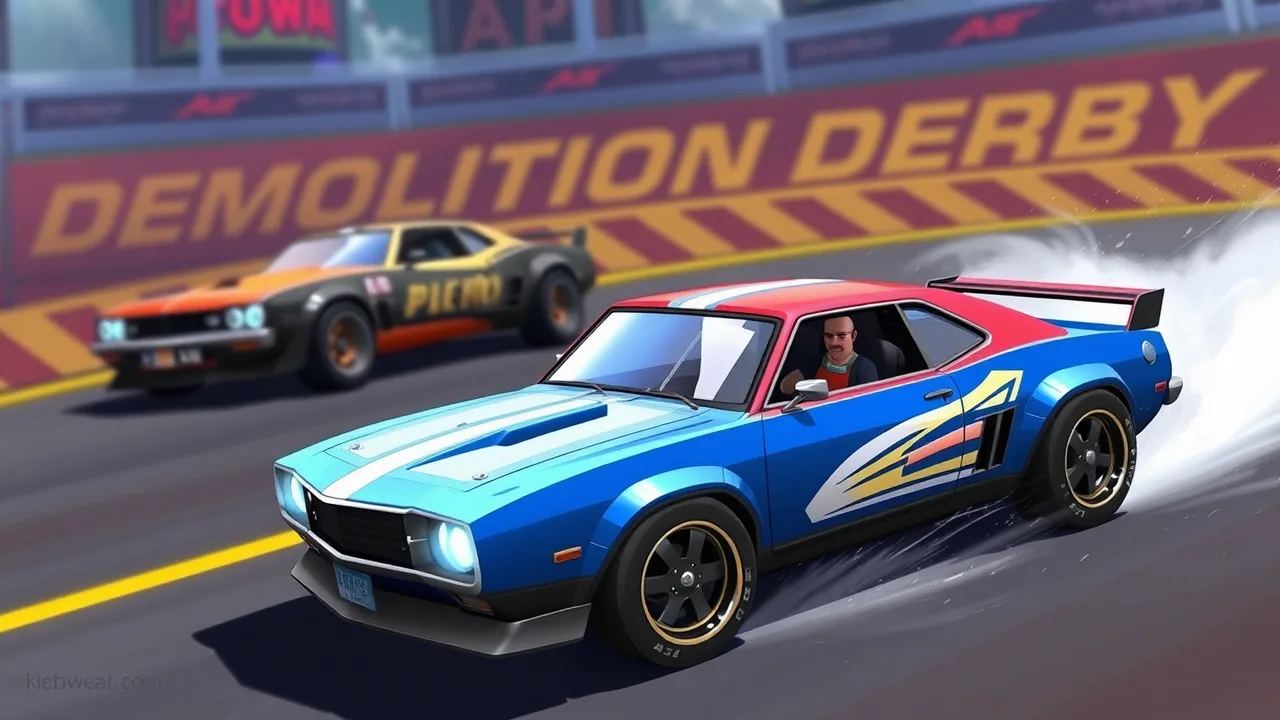
Demolition Derby changes the purpose of driving. Reaching another car may be part of the objective, so avoiding every encounter is not the same task as driving a clean circuit race. Yet an opportunity to make contact still deserves a decision: what are you approaching, how much room remains and what will you do after the impact? This guide examines those choices for the Demolition Derby game hosted on BestCrazyGames. The verified supplier entry describes car-smashing destruction-derby action and keyboard input. Use the loaded game's instructions for its exact keys and event requirements before applying the planning advice below.
Read the event before treating every car as a target
Begin with the objective and information shown by the current event. A derby theme establishes vehicle conflict, but it does not establish a particular damage formula, timer, upgrade system or online mode. Read the actual interface to find out what the attempt asks and how its result is presented. This avoids building a strategy around features borrowed from a different game with the same generic title.
Keep the immediate goal in view while moving. If the current event provides specific instructions, let them guide your choice of encounter. A collision can look dramatic without serving the task you were given. Conversely, a quiet moment spent repositioning can be useful if it creates a better opportunity to continue. The aim is purposeful vehicle combat, not the largest possible amount of movement or contact regardless of what happens afterward.
Establish steering before adding contact
The supplier lists keyboard control without providing a complete universal key map. Follow the prompt inside this version and learn how the car responds in a relatively clear area. Notice the space required to change direction and how easy it is to judge the vehicle's heading. Those observations will matter when another car interrupts the movement. An unfamiliar steering response and an unfamiliar collision are difficult to diagnose simultaneously.
Make sure the playing area receives your input. If a key affects the surrounding page or the game has not finished becoming ready, resolve that before testing an approach. Once the response is dependable, choose a modest movement you can understand. You do not need an elaborate warm-up. A clear connection between intended direction and visible motion gives you a reference when the scene becomes busier and several possible explanations compete for attention.
Choose an encounter from the space around it
Look beyond the opponent's position. Consider the ground around the approach, nearby obstructions and the room available if the cars do not meet exactly as intended. An attractive target can become a poor choice when pursuing it requires a turn you cannot read clearly. Assess the whole movement rather than treating the opponent's body as the only relevant object on screen.
For example, compare an opponent reached through an understandable approach with one that requires a last-second change beside an obstruction. This is a hypothetical decision exercise, not a description of a fixed arena landmark. Ask which movement leaves you better able to interpret the result. A clear encounter can teach you something about contact and recovery, while a confused one may end before you can identify which part of the approach actually caused the problem.
Predict your own position after contact
Before committing, ask where your car is likely to need steering room next. Do not concentrate exclusively on what you hope happens to the other vehicle. Contact can change the situation for both, and a successful approach can still leave you poorly placed for another encounter. Your own ability to continue is part of judging the choice, even when the event rewards aggression.
Keep the prediction modest. You are not required to calculate exact collision physics from a screenshot. Identify a plausible continuation and remain ready to inspect the actual result. If the movement develops differently, update the plan. This gives the recovery a purpose without pretending that every impact can be forecast precisely. The useful habit is remembering that reaching the target is a transition into another situation, not the end of all decisions in the attempt.
Separate a deliberate pursuit from tunnel vision
A pursuit starts with a reason to follow a particular car. Tunnel vision begins when you continue after that reason or route has stopped making sense. Check whether you are still gaining a useful position and whether the surrounding scene remains readable. A target moving away can pull your attention across the arena while other vehicles and obstacles become relevant to your own movement.
Reassess before frustration determines the next turn. Choosing another opportunity is not automatically a failure to commit. It can be a response to a changed scene. On the other hand, abandoning every approach before learning anything can make play equally unclear. The distinction is your reason: continue because the encounter still serves the event and remains understandable, or disengage because the movement has lost those qualities. Either can be deliberate when it follows from what you see.
Use the moment after impact to rebuild the picture
An impact can make the next view feel urgent. First establish your heading, the available space and the nearest relevant vehicle or obstruction. Continuing the same input automatically may solve a situation that no longer exists. Read the new arrangement before applying the next part of the old pursuit. A small, purposeful correction can be easier to evaluate than a large action made only because the preceding contact was surprising.
Do not assume the recovery must always be an immediate second attack. The event and the current position should decide that. You may need to regain a readable approach or observe how the vehicle responds after contact. Treat that observation as part of the driving challenge. It helps turn the impact from an interruption into a source of information about the next decision, rather than a cue to stop thinking and hold the controls more forcefully.
Review the approach separately from the outcome
After an encounter, describe whether the car reached the intended area in a controlled way. Then consider the contact itself and the movement that followed. These are separate observations. An unsuccessful result does not prove that the approach was wrong, and a fortunate result does not prove that every part was well judged. Identifying the phases prevents one dramatic ending from becoming the explanation for the entire attempt.
Choose the part that deserves the next test. If the approach was unclear, simplify it. If contact repeatedly leaves you unable to judge the heading, pay attention to the immediate recovery. If the pursuit distracts you from the rest of the scene, inspect the moment when you chose to keep following. This creates practical learning goals without inventing a hidden damage multiplier or claiming that a particular angle must always produce the best result.
Interpret the displayed feedback conservatively
Use the event's own messages and indicators to understand what counted. If the game explicitly describes a condition, take that into account on the next attempt. Do not infer a detailed damage model, vehicle class advantage or permanent penalty from one animation. A visible collision establishes that contact occurred; other conclusions need the information the game actually provides or repeated observations you can explain.
The same restraint applies to menus between attempts. Read an option before selecting it and distinguish a stated effect from a desired effect. This guide does not prescribe an upgrade order because the verified source does not establish one for the current version. A reasonable progression decision starts with the actual option and the problem you want it to address, not with the assumption that every car game shares a familiar shopping system.
Give a short session a driving question
One useful session can focus on choosing readable approaches. Another can examine how you regain direction after contact. Keep the question consistent across a few encounters so that the results are comparable. If every attempt tests a new target, a different input habit and another menu choice, you may enjoy the activity but find it difficult to explain which change helped.
Look for improvement you can describe. Perhaps you noticed an obstruction before committing or stopped a pursuit when it no longer offered a manageable approach. Those decisions can matter even when the event result is not your best. Use them to choose a next focus. This keeps practice connected to the actual driving rather than reducing every session to a judgement based solely on the last result screen.
Compare derby games without merging their rules
The Demolition Derby collection offers another browsing route. Its entries should be read individually. A similar title or vehicle thumbnail does not establish the same arena, controls, damage behaviour or progression. Check the destination's instructions when you switch. The general habit of considering the space around an encounter can transfer, while the specific actions must belong to the game you opened.
Search wording such as unblocked also does not guarantee access on every managed connection. Choose a permitted device and give the intended game time to become responsive. A loading problem is separate from learning collision decisions. Resolve the visible availability issue before interpreting missed inputs as evidence about steering or impact. This makes the time you spend analysing an attempt more likely to produce a useful conclusion.
Build a repeatable decision cycle
A manageable derby encounter has a reason to begin, an approach you understand and a fresh reading after contact. You can use those three points as a brief review without turning the session into a long checklist. When something goes wrong, locate the point where the plan stopped matching the scene. That is a concrete place to direct attention on the next attempt.
The purpose is not to remove the unpredictability that makes vehicle combat interesting. It is to keep your own choices understandable within it. An unexpected result can still be enjoyable and informative when you know what you were attempting. Read the event, choose the encounter and regain the picture afterward. Those habits give the car-smashing action a clearer structure and make another attempt an opportunity to apply a lesson rather than merely repeat the last chase.