


Magic Tiles Unblocked: Timing, Attention and the Magic Piano Tiles Browser Game
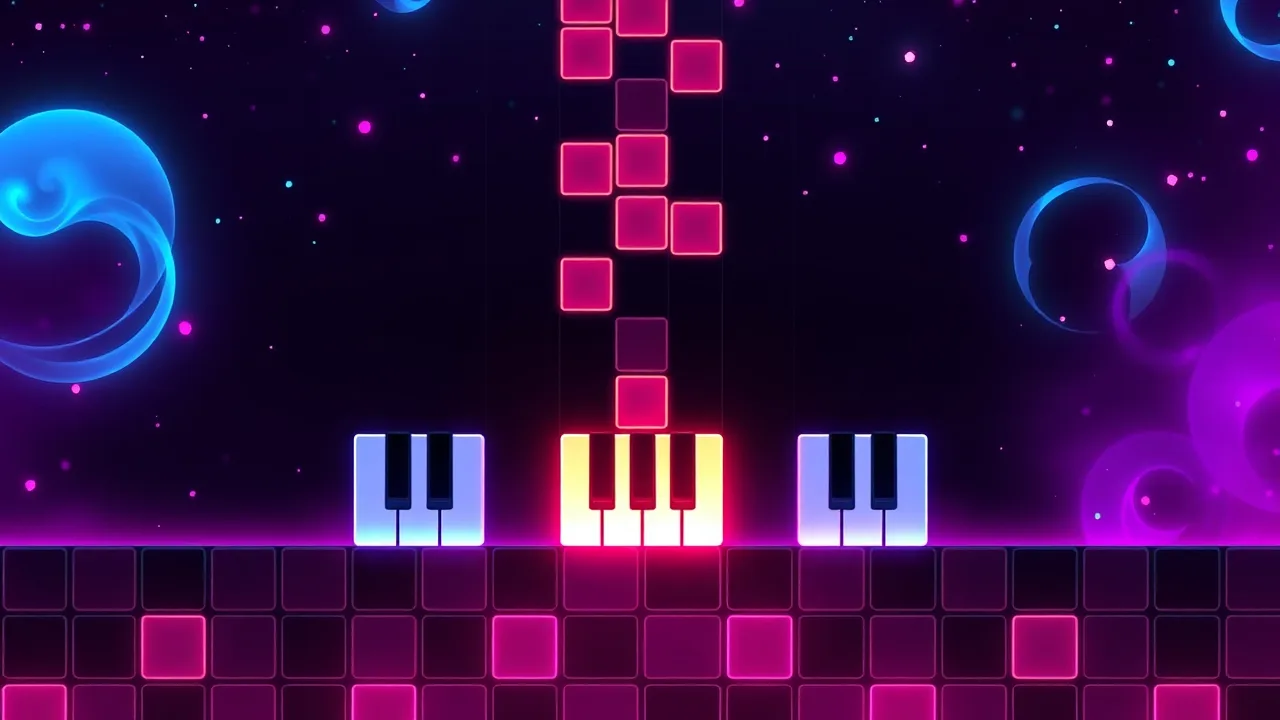
Magic Piano Tiles turns a simple instruction into a test of attention: tap at the right moment when a tile touches its target. The important relationship is between the moving tile, the target and the input you make. Reacting as soon as something appears is different from waiting for it to reach the intended place. Learning that distinction gives you a useful first goal before you worry about completing a demanding sequence.
The Magic Piano Tiles game page on BestCrazyGames loads a version whose embedded description advertises twelve songs or rhythms. It is a timing game, rather than evidence of a full piano-learning course or a universal keyboard layout. Use the inputs shown by the actual game. This article explains how to organize attention, recognize the difference between an early and a late decision and make another attempt informative without inventing a separate practice mode or guaranteed scoring trick.
Identify the target before following the tiles
At the start, locate the area where the game expects a tile to be selected. The published instruction connects a successful action with the moment the tile touches its target. That gives you a visual relationship to understand, rather than a reason to tap anywhere on the screen as quickly as possible. Notice the intended selection area before the sequence becomes your main focus.
Then observe how an approaching tile relates to that target. You do not need to predict an entire song immediately. Begin by connecting one deliberate input with one visible arrival. If several things happen quickly, keep the first question small: did you select when the tile reached the place you were watching? A clear answer teaches more than a rushed series of presses that you cannot reconstruct.
Read the current interface for additional instructions. Different games with similar piano-tile names may use different inputs or presentation. This build's verified description does not establish a particular keyboard mapping, so a guide should not invent one. Follow the loaded game's control information and make sure your intended action reaches the game rather than another part of the webpage.
Separate noticing a tile from selecting it
Seeing an approaching tile creates preparation time, but preparation is not necessarily the moment to act. If you tend to select immediately after noticing movement, ask whether you are responding to the appearance of the tile rather than its arrival at the target. Those are different events. Recognizing which one triggered your input can explain why a sequence feels difficult even when you noticed every tile.
On another attempt, keep attention on the relationship between the tile and the target for a deliberate moment. The aim is not to delay every input indiscriminately. It is to make the action correspond to the visible event the game describes. An input that was already late would not improve merely because you tried to wait longer.
This distinction helps keep advice specific. A general instruction to react faster can make an early input earlier, while an instruction to be more patient can make a late one later. Look at what actually happened before choosing the adjustment. Timing practice becomes more useful when you know which direction your decision needs to change.
Look ahead without abandoning the next arrival
Concentrating only on the tile at the target can leave the following arrival feeling sudden. Looking too far ahead can cause you to neglect the input that is immediately due. Try to balance awareness of the next action with a brief sense of what follows. The useful distance to look ahead is the amount you can interpret while still making the current selection deliberately.
For a hypothetical sequence, imagine that you understand the current tile but lose track of the one arriving next. The adjustment may be a short earlier glance, not faster tapping. In a different attempt, you may already be thinking about later tiles while missing the immediate arrival. There, bringing attention back toward the target may be more useful. The two situations call for different responses.
Keep this as an attention strategy rather than a promise about a fixed pattern. The verified description establishes songs, rhythms and target timing, not one sequence that appears identically in every session. Read the current movement. If a familiar-looking passage develops differently, observation should take priority over a remembered series of unexplained presses.
Let the music help you observe the timing
Music is part of the game's described activity, so listening can help you organize attention while watching the target. Notice how the sound relates to the visible sequence rather than assuming that a familiar tune tells you exactly when every input belongs. The game still supplies a visual event to act on, and that event deserves direct attention.
If you find yourself tapping to a rhythm you remember while the visible tiles suggest something else, return to the actual target. A remembered melody and the current input sequence are not automatically interchangeable. Understanding their relationship is more useful than guessing that an apparent mismatch proves the game is wrong. Observe one arrival and the response to your selection before changing several habits.
Use the current interface for any available sound settings. The verified information does not establish a calibration menu or a numerical delay correction, so do not spend a session searching for a feature a guide invented. First distinguish whether you are misunderstanding the visual moment, selecting accidentally or having trouble directing the input to the game.
Read a mistake before restarting automatically
After a missed or unexpected result, identify the action you intended. Did you notice the arrival late, select before the tile reached the target or interact with a different part of the screen? You may not be able to determine the cause immediately, but naming the possibilities gives the next attempt a useful question. Repeated restarts without that question can make the same difficulty feel mysterious.
Choose one possibility to examine. If you suspect early selection, watch whether your next action follows the tile's appearance or its arrival. If you suspect late attention, notice when you first saw the approaching tile. This is a way to gather information from normal play, not a claim that the game includes a special diagnostic or slow-motion mode.
Keep the conclusion proportionate to the evidence. One difficult input does not establish that an entire song is beyond your ability, and one clean sequence does not mean every later passage will feel the same. Focus on the decision you can observe. That gives improvement a concrete basis rather than tying confidence entirely to a single attempt's final result.
Give repeated attempts different purposes
A useful first attempt can be about identifying the target and controlling one selection. Another can focus on looking ahead enough to notice the following tile. A later attempt may examine whether listening helps you maintain attention without anticipating the input too early. These are separate practice aims, even though all of them occur within the same simple timing activity.
Avoid demanding that every attempt improve every skill at once. If you changed your look-ahead habit, assess whether you noticed the upcoming sequence more clearly. You can learn something from that comparison even if another part of the attempt remained difficult. This makes a session more informative than repeatedly measuring yourself against an imagined perfect performance.
The version's description advertises twelve songs or rhythms, but availability and selection should be read from the current interface. Do not assume an unsupported unlock order, song list or difficulty label. If the game offers a choice you want to explore, approach that sequence on its own terms. A different musical selection is an opportunity to observe, not proof that a remembered input pattern will transfer unchanged.
Distinguish game timing from learning an instrument
Selecting tiles in time can be an enjoyable coordination challenge, but this page does not establish instruction in reading notation, playing a physical keyboard or performing a song on an instrument. Keep the session goal connected to the activity the game presents. You are interpreting a moving visual sequence and choosing a corresponding input, with music providing the setting.
That clear goal also helps you decide when to stop. A short session might end after you understand why you were selecting too early, rather than continuing only because the previous attempt was frustrating. On a later return, begin with that observation and see whether it still explains the current difficulty. Understanding one habit gives you a more useful starting point than remembering only how far an earlier attempt seemed to go.
Choose the next music game by its actual rules
The Magic Tiles collection offers related browsing on BestCrazyGames. A familiar piano-themed name does not prove that another destination shares this build's inputs, advertised songs or timing presentation. Check the selected game's own description before carrying over a control scheme or expecting a particular mode.
For Magic Piano Tiles, keep the central instruction clear: watch a tile approach its target and make the intended selection at the corresponding moment. Use another attempt to investigate one specific timing decision. By separating preparation, observation and action, you can understand the sequence more clearly without relying on invented shortcuts or a promise that rapid tapping alone solves the challenge.