

















moto road rash 3d quickstart for real riders
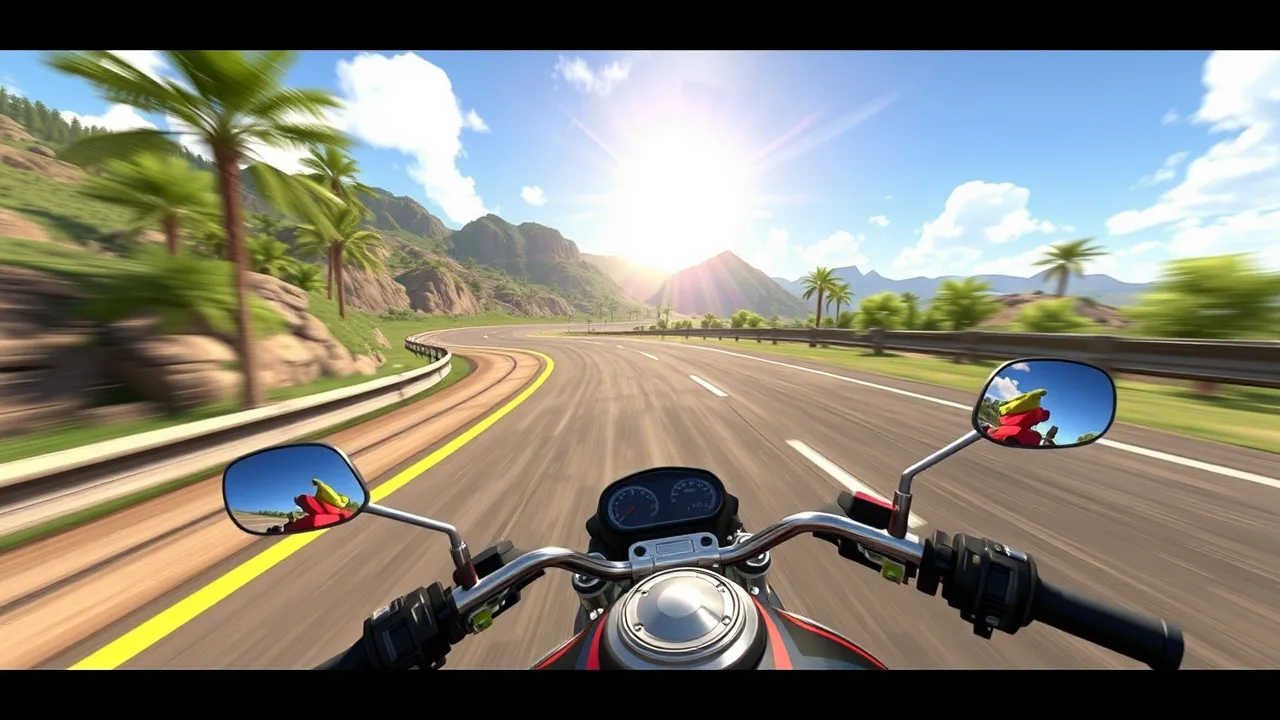
If you like your racing raw, fast, and a little bit reckless, you’re in the right lane. This is your no-nonsense, hands-on guide to getting up to speed fast and shaving seconds off every run. You can jump straight in and play on your browser here: Play it here.
⚙️ Controls, camera, and comfort settings
First things first: how you handle the bike determines everything downstream speed, safety, and score. Keep your grip light. Over-steering is the number-one way beginners kiss the guardrail.
-
Sensitivity: Start mid-range. If you’re wobbling at high speed, notch it down a touch. If you’re missing gaps, bump it up.
-
Camera view: First-person gives the best sense of depth for threading tiny openings. If you get tunnel vision, switch to a slightly pulled-back view for situational awareness.
-
Frame rhythm: Keep inputs rhythmic, almost like breathing small counter-steers to keep your line instead of jerky swings.
-
Audio cues: Listen for engine pitch to time lane changes when you hear the revs rising cleanly, you’re stable enough to merge.
🚦 Traffic patterns 101: read the road, not the car
Traffic isn’t random chaos; it has lanes, gaps, and micro-rhythms. Learn to “read” the pack:
-
Cluster logic: Cars bunch, then leave pockets. Don’t blast into the back of a cluster. Slide alongside, scout the gaps, then commit.
-
Vehicle behavior: Trucks and buses stay steadier; sedans drift more. Use the big rigs as moving shields while you scope openings ahead.
-
The zipper rule: When two gaps open in adjacent lanes, pick the one whose trailing car is slower. That gives you a longer safe window if you hesitate.
-
Peripheral anchoring: Fix your eyes three to five cars ahead and use periphery for lane mirrors. Looking too close makes you twitchy.
💸 Score, cash, and the near-miss mindset
If you’re chasing high scores or currency for upgrades, near-misses are your bread and butter. The trick is flirting with danger without dating it:
-
Angle of approach: Slide past at a shallow angle, not 90°. You want a “brushing past” line that lets you abort if the car shifts.
-
Chain building: Safest chain is two moderate near-misses, reset with a clean stretch, then two more. The “all-in” five-miss chain is for endgame riders with nerves of steel.
-
Speed floor: Below a certain speed, near-miss rewards feel meh. Keep a steady, survivable high speed just under the redline so your misses pay out.
🧠 The focus loop: calm eyes, quick hands
You’re not just steering; you’re managing arousal levels. Too hyped and you slam; too chilled and you miss the juicy gaps.
-
Breathing: 4-in, 4-hold, 4-out when entering dense traffic. It slows time just enough to react.
-
Micro-goals: Don’t “win the run.” Win the next 300 meters. Then the next. That prevents panic spirals after one mistake.
-
Tilt discipline: If you tilt after a crash, force a 20-second reset before the next attempt. Performances rebound when you break the frustration loop.
🛠️ Upgrades and bike feel: where to spend first
Every upgrade changes how your ride “talks” to you. Prioritize what shortens your time-to-decision:
-
Handling first: A slightly quicker turn-in lets you place the bike precisely between mirrors. Precision saves crashes; crashes wipe runs.
-
Acceleration second: Getting back to speed after a lift keeps your scoring rhythm alive.
-
Top speed last: It’s fun, but useless if you can’t keep the line. Top speed is dessert, not dinner.
-
Brakes as insurance: One tier of better brakes gives you a bigger “oops” buffer for last-second cut-ins.
🧭 Lines that don’t lie: lane choice playbook
-
Right-lane scout: Use the slow lane to preview traffic ahead, then slingshot into a mid-lane pocket.
-
Middle-lane neutrality: Safest default when you’re unsure two exits left, two right.
-
Left-lane commitment: Only commit if you can see clean air. It’s fast, but you can get boxed by a sudden pair of overtakers.
-
The diagonal drift: Instead of hard lane swaps, drift diagonally across two lanes during an opening. It feels slower but is way safer at high speed.
🧩 Situational drills you can practice in 10 minutes
Skill compounds with deliberate reps. Try these mini-drills:
-
Mirror-to-mirror pass: Find two cars with tight spacing and practice sliding through at modest speed. Goal: clean pass five times in a row.
-
Shadow run: Tuck behind a bus for 8–10 seconds, then pop out through the first gap you see. Trains your timing reflex.
-
Lift-and-go: At high speed, feather the throttle to settle the bike, then re-commit. Builds stability for panic moments.
-
Two-lane weave: Gentle S-curves across two lanes without touching traffic. Focus on line smoothness, not speed.
🧯 Survival kit: how to not bin it at 200+
-
Abort early: If your gut says the gap’s closing, it is. Reset to a safe lane and rebuild speed.
-
Never chase a missed gap: There will be another. Forcing late moves creates pinball crashes.
-
Calm the hands: If you feel your arms locking, purposely loosen your grip and roll a hair off the throttle.
-
Crash audit: After any wipe, ask: Did I over-correct? Did I fixate on a bumper? One honest note per crash = rapid improvement.
🧨 Advanced: threading “dirty” traffic like a pro
Dirty traffic = mixed speeds, tiny openings, sudden lane changes.
-
Bumper triangulation: Picture a triangle from the car ahead to the one beside you and the lane line. You want the longest side as your escape.
-
S-curve stacking: Two small curves are safer than one big swing. The first opens the second.
-
Time your merges on taillight flickers: A micro-brighten often precedes braking. If you see that shimmer, pick another lane now.
-
Memory maps: In longer stages, certain spawn patterns repeat. If you sense déjà vu, trust it and pre-position.
🧱 Why this feels familiar: the Road Rash DNA
The roots are classic. The original Road Rash series from Electronic Arts mixed high-speed bike racing with scrappy, elbows-out energy, carving a cult lane in the 90s and beyond. That lineage fast, risky, highway-heavy is exactly what modern browser racers riff on today, just with smoother 3D and cleaner controls. If you want a quick lore dive for context, here’s a natural read on the OG series: Road Rash.
📈 A 5-step path from casual to competent
-
Learn one view and stick to it a full session so your depth judgment stabilizes.
-
Master one escape (usually a shallow two-lane drift) before adding fancy weaves.
-
Set a conservative speed cap for 10 minutes; focus on clean lines, not max velocity.
-
Build a two-near-miss habit after every stable stretch.
-
End your session on a clean run even if the score is mid. Banking a “win” keeps tomorrow’s learning curve gentle.
🏁 Session templates: 30, 45, and 60 minutes
-
30-minute tune-up: 5 min warm-up lines → 10 min near-miss chains → 10 min high-speed practice → 5 min cool-down with controlled lifts.
-
45-minute rank grind: 10 min drills → 20 min focused scoring (two-miss pattern) → 10 min speed trials → 5 min review.
-
60-minute mastery: 10 min drills → 20 min traffic reading (cluster work) → 20 min clean runs → 10 min clutch save practice (panic brakes + re-merge).
🧭 Common mistakes and fast fixes
-
Problem: Drifting toward bumpers when nervous.
Fix: Soft focus 3–5 cars ahead; imagine a “ghost lane” you’re following. -
Problem: Over-correcting after a near-miss.
Fix: Counter-steer half as much as your instinct tells you. -
Problem: Late merges into closing gaps.
Fix: Decide by the midpoint of the gap; after that, abandon it. -
Problem: Upgrading top speed too early.
Fix: Handling → acceleration → top speed → brakes. Dinner before dessert.
🧪 Mindset for PBs: controlled aggression
Your fastest runs won’t feel wild they’ll feel quiet. High scores come from confident placement, not constant risk. Treat every lane change like a chess move with two exits. When a plan fails, shrug, reset your line, and hunt the next pocket. Consistency builds cash and confidence; confidence feeds speed.
🛣️ Sprint scenarios: what to do, exactly
-
Two cars, same speed, one lane apart: Drift diagonally toward the slower one’s rear quarter, then slip through as it yields space.
-
Sudden brake-check ahead: Snap one lane over, feather throttle, and ride parallel until you see a clean re-entry.
-
Dense pack with a bus core: Shadow the bus, then peel to the side the bus isn’t covering it’s blocking one danger vector for you.
-
Staggered four-car wall: Hunt mini-gaps at the edges; if both edges are dirty, back off two ticks and wait for a zipper to open.
🧭 Controller vs keyboard vs mobile feel
-
Controller: Analog sticks make micro-drifts easy and reduce over-steer.
-
Keyboard: Strong on straight-line stability. Tap-tapping is safer than holds.
-
Mobile tilt/touch: Great for “flow” once calibrated. Do a 60-second calibration run every session to sync your wrists.
🎯 Personal goals that actually move the needle
Set targets that reflect skill, not luck:
-
10 clean near-misses in a single run.
-
Zero crashes for 4 minutes at high speed.
-
One consistent escape pattern you can execute under pressure.
-
A disciplined cool-down run at the end of every session.
🧰 Tiny tweaks that feel like cheats (but aren’t)
-
Head tilt IRL: Subtle real-world head tilt can sharpen depth cues in first-person views.
-
Blink timing: Blink during straightaways so you never miss a taillight flicker in tight packs.
-
Grip check: If your forearms burn, you’re strangling the controller. Shake out, reset posture, continue.
🧠 Why practice works faster than “just playing”
Deliberate drills compress learning time. When you run set pieces mirror-to-mirror passes, shadow runs, diagonal drifts you’re telling your brain exactly what to wire. After two or three sessions of drill-forward practice, you’ll feel lines “snap” into place. That’s your internal traffic model maturing.
🥇 The day your riding “clicks”
You’ll know you’re leveling up when:
-
You choose lanes for the next five seconds, not the next one.
-
Near-misses feel routine, not lucky.
-
You start lifting on purpose to re-stabilize before the next attack.
-
Crashes become weird and rare usually from boredom or cockiness, not panic.
❓FAQ: everything new riders ask
Q: Where do I play safely and for free?
A: Fire it up in your browser here: Play it here. One click, no installs, quick sessions or marathon grinds your call.
Q: What’s the fastest way to improve without constant crashing?
A: Cap your speed for the first 10 minutes, drill shallow diagonal drifts, and shadow a bus to practice patient timing. Once your hands calm down, lift the cap gradually.
Q: Should I max top speed first for higher scores?
A: Not yet. Handling and acceleration create more scoring opportunities because you place the bike better and recover faster after lifts. Top speed is for when your lines are already clean.
Q: How do I string near-miss chains without wiping out?
A: Aim for two moderate misses, stabilize, then two more. Keep the approach shallow and always keep one exit lane free.
Q: Any “classic” inspiration behind this vibe?
A: The highway-heavy, high-risk feel traces back to the 90s Road Rash era fast lanes, gritty energy, simple rules: go quick, squeeze gaps, don’t crash. A quick history read is here: Road Rash.
Q: Controller, keyboard, or phone what’s best?
A: Use whatever you control most precisely. Controller analog sticks win for fine placement; keyboards are stable in a straight line; mobile is great once tilt is tuned.
Q: I keep over-correcting after close calls. How do I fix that?
A: Count “one-and-half” on your counter-steer. Your instinct overshoots by about 2× when stressed. Practice gentle S-curves to retrain that reflex.
Q: What do I do right after a crash so I don’t tilt?
A: Step away for 20 seconds. Shake your hands, roll the shoulders, breathe 4-4-4, then restart with a calm warm-up line.
🧾 A quick checklist before each session
-
Sensitivity feels natural, not twitchy
-
One default escape move chosen
-
Speed cap set for warm-up
-
Breathing pattern locked in
-
End-of-session cool-down planned
🔚 Wrap-up: ride clean, score big
The shortest path to steady wins is boring on purpose: smoother lines, fewer dramatic saves, smarter lane choices. Upgrade handling, practice diagonal drifts, chain near-misses in small batches, and respect the abort button in your head. Do that, and your scores climb while your crash count drops. Most riders think speed is the goal; veterans know line ownership is what wins. When the road opens up and your hands are quiet, punch it and enjoy the flow. And whenever you’re ready to put in reps, load up a run here: Play it here.