


Snowboarding Games Unblocked: A Snowboard Kings 2022 Practice Guide
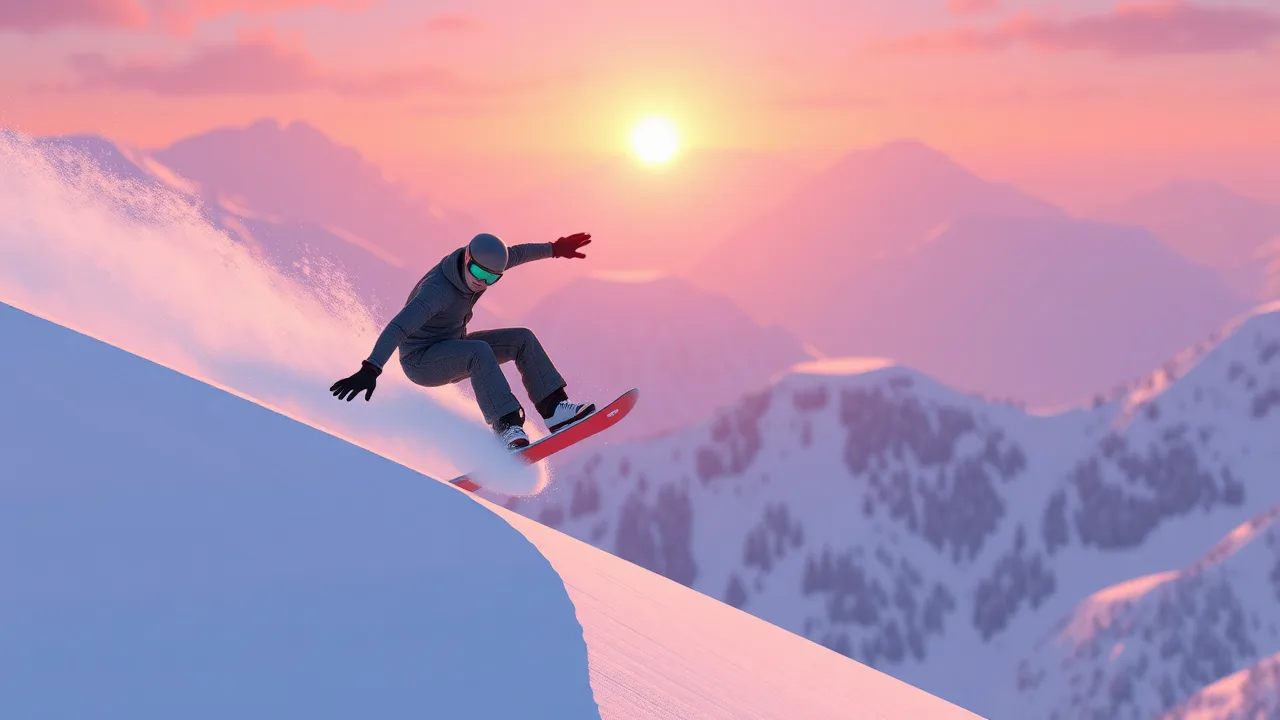
Snowboard Kings 2022 makes route choice matter throughout a descent. Trees, rocks and icy snow give you reasons to inspect the slope ahead rather than watch only the rider. The publisher describes finding a short way downhill, following directional arrows, collecting coins for skill upgrades and using a boost button for acceleration. An avalanche adds another part of the challenge. Those elements make a useful run a sequence of decisions about space and speed.
The Snowboard Kings 2022 game page on BestCrazyGames loads that specific version. This article focuses on its documented downhill activity, rather than assuming every snowboarding game uses the same controls, tricks or progression. Read the movement prompts in the loaded game before starting. Once you know how to direct the rider, the next task is deciding where to go and when extra speed helps the route you can actually see.
Read a corridor of snow rather than one obstacle
A tree directly ahead is an immediate problem, but the space beyond it determines whether your response creates another one. When looking at the slope, try to identify a corridor that continues through the next visible area. You are choosing a passage through the layout rather than making a fresh emergency turn at every object. This gives the next movement a reason you can follow.
Suppose you see room on both sides of a rock. One side may leave a clearer approach to the next opening, while the other appears to narrow quickly. That hypothetical comparison illustrates why the nearest obstacle should not absorb all your attention. The useful choice is the one whose continuation you understand. Another slope can present a different arrangement, so inspect it again rather than always favoring one side.
Keep the rider's current position in your awareness while looking forward. Watching only the distant route can leave you unaware of an immediate approach, while staring only at the rider makes decisions arrive late. A useful balance is checking the near opening and then returning your attention to what follows. Adjust that balance according to how much of the slope is visible and how quickly the situation is developing.
Choose a line you can continue to explain
The publisher invites players to find a short way down the hill. A short route is attractive, but it should still be a route you can direct through the obstacles. A narrow-looking opening may require more precise movement than you currently manage. Another passage may be easier to read while you are learning the response. Compare those options instead of equating the most direct-looking line with the best decision every time.
During an early attempt, prioritize understanding how your chosen passage connects to the next area. Once that connection becomes familiar, you can examine whether a different entry would reduce an unnecessary detour. Improvement then has a clear basis: you are refining a route you understand. Randomly switching lines can produce a better result without teaching you why it happened.
Do not assume the same approach remains appropriate after an imperfect movement. If the rider is now positioned differently, inspect the space available from there. Trying to force the original route can turn one uncertain decision into another. A practical response begins with the current position, even when that means choosing a less direct continuation for the moment.
Use the arrows as information to interpret
Following arrows is part of the published instruction. Look at how a visible arrow relates to the next part of the slope, then connect that guidance with your own position. The arrow helps direct attention, but you still need to operate the rider through the space you are approaching. Treating it as information is more useful than reacting to its symbol without inspecting the route.
If you find yourself repeatedly arriving poorly positioned after an arrow, consider when you noticed it. Perhaps you were already committed to a different approach, or focused on a coin while the route guidance was becoming relevant. The correction may be an earlier observation rather than a stronger last-second input. Give the next attempt a specific question about that timing.
You can also compare your intended line with the guided one after a difficult section. Ask what the arrow was drawing attention toward and whether you understood that continuation. This creates a route-reading lesson rather than a rule to memorize an unexplained movement. The visible arrangement remains the reference for the next decision.
Separate a speed decision from a steering problem
Boost provides acceleration, so using it is a choice about how quickly the next situation will arrive. Before pressing the current boost control, look at the passage ahead and decide whether you understand its continuation. Extra pace can be useful when the available line is clear. It also gives you less time to interpret a route that still feels uncertain.
If a section repeatedly becomes difficult during acceleration, first identify what goes wrong. Are you discovering the next obstacle too late, entering from an awkward position or struggling to execute a movement you already planned? Those are different problems. Adding more speed is unlikely to clarify which one caused the failure. Learn the passage at a pace you can interpret before judging a faster approach.
This advice does not establish an exact boost duration or a universal safe section. The instructions identify an acceleration button, not a fixed winning recipe. Use the current interface and visible slope to decide when to apply it. A useful boost decision has a reason tied to the route, rather than being a response to every moment of frustration.
Coins should be part of a route decision
Collected coins can be used to upgrade skills according to the publisher's instructions. That gives them a progression purpose, but it does not mean every visible pickup deserves an immediate change of line. Look at the approach to a coin and the continuation beyond it. Ask whether collecting it fits a passage you can still direct through the surrounding obstacles.
For a hypothetical comparison, imagine one pickup near a clear corridor and another that appears to require a hurried change toward a rock. Those opportunities should not be treated as identical merely because both are coins. The difference is the movement each asks you to make. Consider the route cost as well as the collection benefit, especially while you are still learning the slope.
When visiting the upgrade interface, read the options and their current descriptions. The verified information establishes skill upgrades, but not a universal best purchase or exact price sequence. Relate a choice to the difficulty you have actually observed. That creates a clearer reason for progression than buying something because a guide assigned an unsupported numerical advantage to it.
Pay attention to the surface you are approaching
Icy snow is named in the game's description, alongside trees and rocks. Notice where the visible surface changes and observe how the current run responds. A change in appearance is a reason to pay attention, not permission to invent a specific friction value or copy a steering rule from another snowboarding release. Learn from the actual movement you can see.
If your line becomes less controlled around a particular visible area, separate that observation from the explanation you give it. You may have entered awkwardly, accelerated before understanding the passage or reacted late to an obstacle. Comparing those possibilities prevents a surface label from becoming a vague excuse for every difficult moment. Look for the decision you can improve on the next descent.
Respond to pressure with a smaller decision
The publisher also describes escaping an avalanche. A pressured run can tempt you to make several abrupt choices at once. Bring the task back to the next readable passage: where the rider is, which opening is available and what lies beyond it. A sequence of manageable route decisions is easier to control than an attempt to solve the entire remaining descent immediately.
After a failure, avoid judging every earlier movement by the last moment. Identify where the route first became hard to explain. The final collision or missed passage may be the result of an earlier entry choice. Working backward to that first uncertain decision often gives you a more useful adjustment than concentrating only on the last input before the attempt ended.
Plan a focused return to the slope
For one session, work on looking beyond each obstacle before moving around it. For another, concentrate on choosing boost moments only after identifying the next corridor. These are different goals, and each can be assessed from a visible result. A session does not need to produce a perfect descent to reveal a better decision habit.
The snowboarding games collection offers further browsing when you want another activity. Check the selected title's own instructions before carrying over the route, boost or upgrade expectations described here. Snowboard Kings 2022 gives you its own combination of obstacles, arrows, coins and downhill pressure. Begin with those actual elements, choose a line for a reason and let the result guide the next attempt.