


Top Speed Racing 3D Guide: Events, Stunts and Car Customization
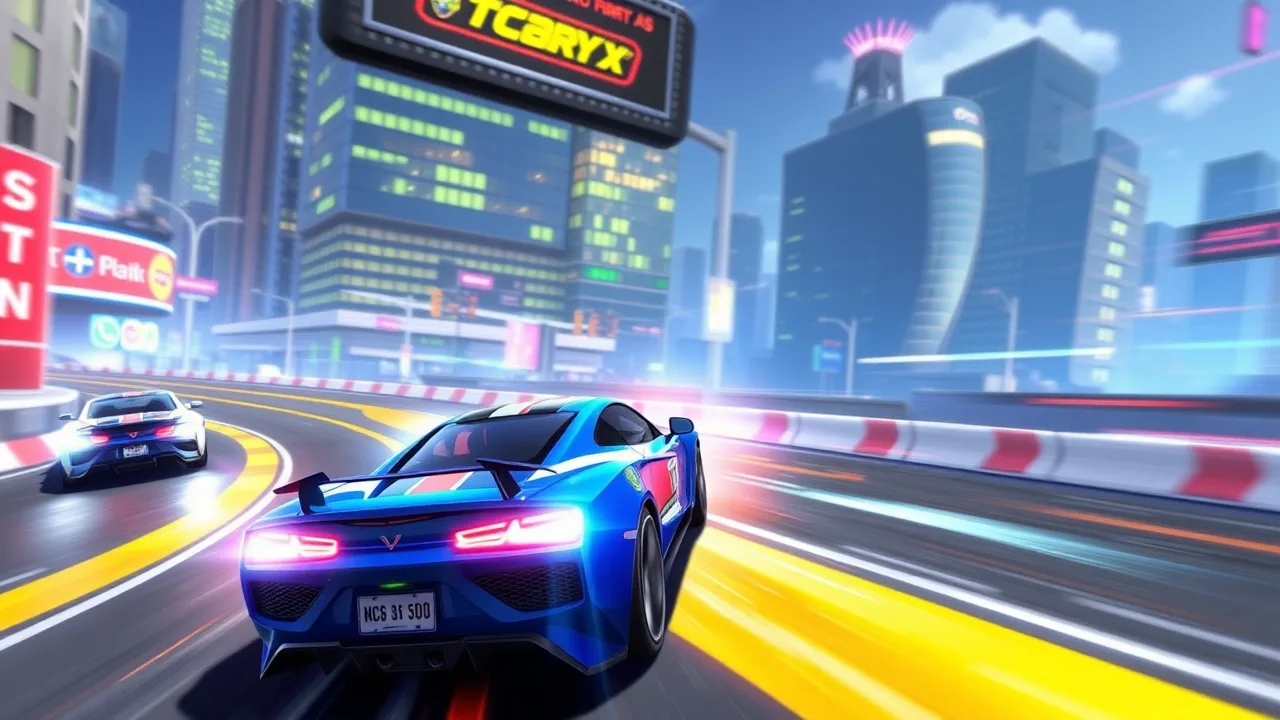
Driving toward an event and completing it well are different tasks. Top Speed Racing 3D combines vehicle choice, customization, driving challenges, and stunts, so a useful session begins by deciding which part of that experience you want to understand. Buying another accessory or pressing nitro earlier does not automatically explain why an event attempt went wrong.
The Top Speed Racing 3D game is the specific browser title discussed here. Its distributor describes earning money through events, personalizing your ride, and performing stunts. This guide uses those verified features and the published driving inputs to organize a practical approach. It does not assume the game is an identical copy of every title named Top Speed or invent weather modes, opponent behavior, or vehicle statistics.
Learn the documented driving controls
The publisher lists arrow keys or WASD for driving, braking, and turning left and right. Space is also given for braking, while either Left Shift or Right Shift activates nitro. Establish an ordinary driving reference before adding the extra burst of speed. If you cannot yet place the car where you intend, nitro makes the experiment harder to interpret rather than answering the steering question for you.
Choose one movement layout and check that the playing area receives the keyboard input. When a key affects the surrounding page, restore focus before deciding the game ignored your request. The first useful goal is simple: move toward a visible destination, change direction deliberately, and slow down when intended. That gives later event decisions a foundation you can recognize even when the route becomes more demanding.
Read an event before treating it as a race
The verified description refers to events and stunt opportunities, but it does not establish that every activity is a conventional race to a finish line against other cars. Read the current event prompt and identify what the game asks you to accomplish. A challenge can require a particular kind of driving decision without sharing the assumptions you bring from a circuit racer.
Before beginning, state the objective in plain language using the displayed information. Then identify what would count as a completed attempt and what feedback the game provides. If you do not understand the requirement, a fast run is unlikely to clarify it. A brief inspection of the prompt can save several attempts spent optimizing an action that was never the event's main task.
Inspect the approach before the difficult action
A stunt or demanding maneuver has a setup. Look at the direction you will approach from, the available space, and where the car might continue afterward. The action at the obstacle is only one part of the sequence. A poor approach can make a promising input difficult to control, while a clearer setup can make the same maneuver easier to evaluate.
Use the features actually visible in the current challenge. Do not assume every event contains a ramp, a fixed jump distance, or a special landing bonus. If one of those elements is shown, inspect it as part of that particular situation. The useful planning habit is to connect the approach with the action and the continuation, rather than rely on a universal trick that supposedly completes every event.
Give braking a specific purpose
Space is documented for braking. Use it to create a position or pace you can understand, not merely as an emergency response after the intended route has already disappeared. A deliberate reduction in speed can make an approach easier to read. That does not prove braking is always the fastest option; it gives you another control to evaluate against the objective you are trying to complete.
When an attempt fails, ask whether the problem was the chosen route, the timing of the slowdown, or the steering after it. “I needed more brake” is not always the correct explanation. You may have started from the wrong angle or tried to correct too late. Separating those causes helps you avoid making each new attempt slower without solving the positioning issue that caused the difficulty.
Introduce nitro only after choosing the route
Either Shift key activates nitro according to the distributor. The instruction establishes the input, but it does not establish a universal duration, refill rule, or ideal activation point. Read the current interface and observe the effect in the game. First choose a route you can follow, then consider whether using nitro serves the particular event or practice goal.
For an introductory comparison, keep the car and broad approach familiar and add the input on a suitable opportunity. Review what changed: could you still read the next direction, did the maneuver begin from the intended position, and was the continuation manageable? A successful burst is useful evidence about that situation. It is not proof that using nitro immediately will improve every event or every vehicle choice.
Separate stunt completion from stunt refinement
If an event contains a stunt, first understand how to complete the required action in a readable way. Once you have a valid attempt, investigate whether a different approach improves the result. Trying to maximize an assumed bonus before understanding completion can produce spectacular motion without useful progress. Let the game's displayed objective and feedback establish what actually matters.
Keep the sequence in three parts: setup, action, and recovery. A good setup with a poor recovery may still contain an idea worth preserving. A successful landing after an unclear approach might be difficult to repeat. Describe which part worked instead of labelling the whole attempt good or bad. This makes the next adjustment more precise and avoids discarding a useful approach because one later action was unfamiliar.
Understand what customization information actually says
The game's published description confirms personalization and accessories. Inspect the current menus to see what can be changed and what information accompanies a choice. A visual change is not automatic proof of a handling advantage. If the game shows a performance value, read that value; if it only presents an appearance choice, do not invent a hidden speed increase because the accessory looks sporty.
This distinction helps you decide how to use event earnings. You may choose a car or style because you enjoy its appearance, or pursue a displayed option for a stated gameplay purpose. Both can be reasonable. The problem is expecting an undocumented effect and then treating the next run as proof that it occurred. Keep the menu's actual information separate from what you hope the purchase will improve.
Compare vehicles with a familiar task
When trying another ride, use an event or movement task you broadly understand. Keep the view and control layout consistent if possible. Notice the specific response that feels different rather than assigning a complete ranking after one attempt. You might find it easier to judge a turn, harder to place the car, or simply need time to adapt to the new visual reference.
Avoid assuming a car's size or styling establishes its exact handling model. The verified sources do not provide a full numerical vehicle comparison. Your practical comparison should remain grounded in observed behavior and displayed information. A vehicle that feels unfamiliar at first is not necessarily unsuitable, and a vehicle that produces one good result is not proven to solve an event you have not yet understood.
Use event earnings without turning practice into guessing
The distributor describes earning money by participating in events. Read the reward information the current game supplies rather than assuming a fixed amount for every attempt. If a purchase is your goal, identify its displayed requirement and decide which available activity you understand well enough to pursue. That is more useful than repeatedly entering unfamiliar events while expecting an undocumented shortcut to progression.
A practice attempt can still have value even when it does not provide the reward you wanted. You might learn a clearer approach or recognize a control problem. Keep that information alongside the outcome. Progression and execution are connected, but they are not the same measure. Understanding one challenge can make later sessions more purposeful without requiring a promise that practice always produces a particular payout.
Build a small event notebook in plain language
You do not need an external tool or a complicated spreadsheet. After an attempt, remember the event's objective, the part of the route that caused uncertainty, and one change to try. A note such as “approach was too wide before the maneuver” carries more useful information than “need a faster car.” Keep equipment purchases out of the explanation unless you have evidence that the equipment was the relevant issue.
Review successful attempts too. Identify which approach you could reasonably reproduce and which part depended on an uncertain recovery. The next session can then begin with a known action rather than a vague memory of a good result. This matters in a game that offers several activities, because the easiest way to lose a useful lesson is to switch immediately to a different challenge without noticing what you learned.
Distinguish technical interruptions from driving errors
If the game visibly stalls, loses keyboard focus, or stops receiving an expected input, restore normal operation before comparing technique. An interrupted run is not clean evidence about your braking or steering. At the same time, a demanding event is not proof of a browser problem. Look for an actual technical symptom instead of assuming every failed maneuver has an external cause.
The Top Speed collection provides related driving cards, but their names do not establish shared event structures or identical controls. Check the selected title before applying this guide. Use permitted access, learn the current objective, and give the car a clear approach to it. Top Speed Racing 3D is easier to explore when events, stunts, customization, and control practice each have a purpose you can explain.