





























venge.io at a glance
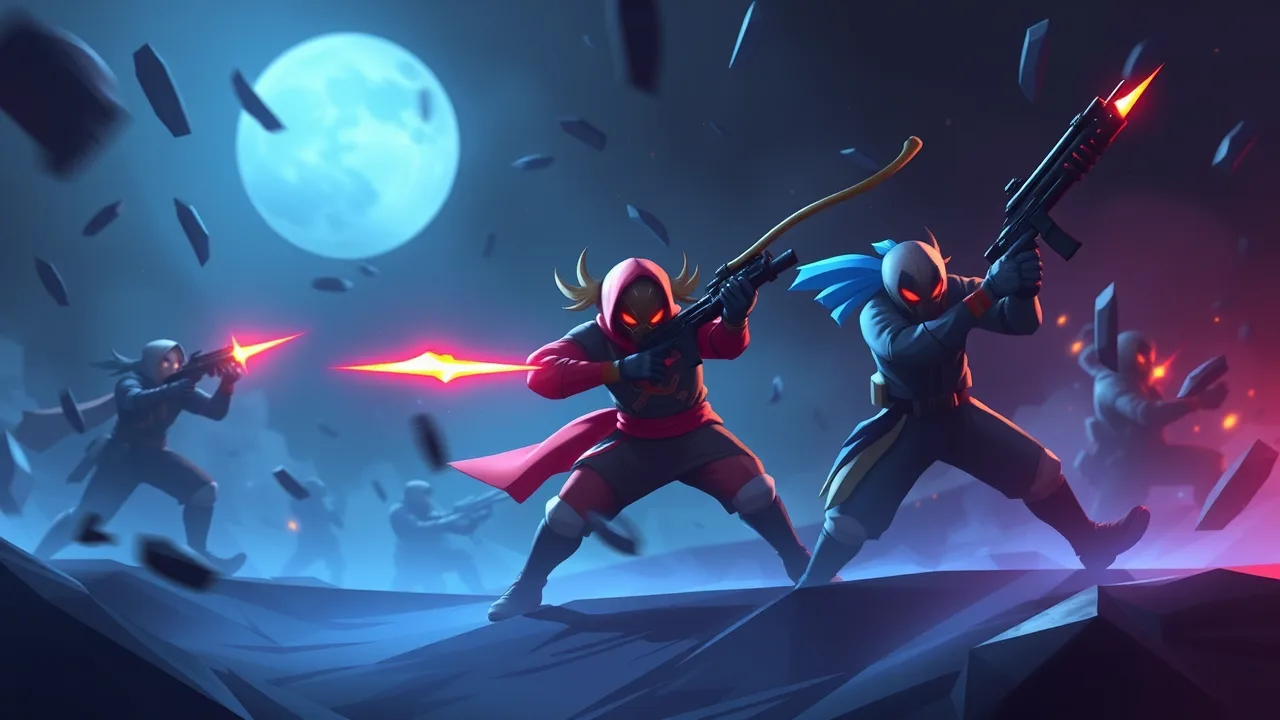
If you want instant browser PvP with crisp movement, tight TTK, and map control that actually matters, venge.io delivers. It is a fast, objective-driven FPS built for the web, with distinct heroes, unique weapon kits, and community maps that keep the meta shaking. Expect quick spawns, short rounds, and a surprising amount of tactical play for something that runs in a tab. Official blurbs highlight objective gameplay, hero abilities, and tons of maps handcrafted by the community, which tracks with how it feels in-match.
🎮 Controls and loadouts in venge.io
The game keeps inputs familiar so you can focus on decision making: WASD to move, Space to jump, mouse to aim, and typical FPS binds for melee, grenade, and ADS. If you ever forget a key, the original itch page lists the full default scheme with extras like emotes and card turning for ability interactions. That page also dates the browser version to late May 2020, which lines up with community dates you’ll see on hubs and press.
Once you’re in, pick a hero and a primary. The SCAR-style rifle is your go-to starter piece because of its all-range stability and mag size. Community wikis break down pros and cons per gun and explain why the SCAR is a comfort pick while you learn recoil rhythm and peeker’s advantage.
🧠 Movement tech in venge.io
Good hands beat good crosshairs. Small things like pre-aiming angles, counter-strafing, and jump timing are the difference between a trade and a clean frag. Watch any settings or tips videos and you’ll see creators preaching sensitivity discipline, matching ADS sens to hip sens, and setting a smaller dead zone so micro-corrections snap in. That advice is evergreen and maps neatly to this shooter.
A quick drill that pays off: load into a custom or quiet lobby and run a figure-eight path around two objects while tracking an invisible target at chest level. Do 3 sets of 60 seconds. Then flick between least-used angles on the map and hold the crosshair still for 2 seconds at each stop. You are training stillness, not speed.
🗺️ Modes and map flow that reward brains
Core modes rotate, but the loop is stable: you capture, hold, or deliver while denying the same to other players. The Social Club’s documentation describes a deathmatch variant named Black Coin that leans into coins, high-ground traps, and timing your deliveries for bonus points. That write-up gives away a classic lesson: the upstairs path on Temple is gold because vision plus elevation equals free interrupts. Any map with an overlook will echo that dynamic.
On small arenas, think in three lanes with a mid cut. On bigger playspaces, look for the route that lets you see two objectives without exposing yourself to spawn doors. Your first 5 seconds after spawning are about information, not ego peeks.
🔧 Settings that actually move the needle
-
Mouse sensitivity: start lower than you think. You need 180-degree turns, but precision wins more fights than spin speed.
-
ADS sensitivity: match a ratio you can compute in your sleep so your muscle memory transfers between hip and ADS.
-
Camera and FOV: widen a touch so you catch shoulder peeks earlier; don’t go fisheye.
-
Aim trainer: the official changelog shows recent updates to in-game training options, including no recoil and no spread toggles. Use those to sandbox tracking versus click-timing separately.
🧩 Heroes, abilities, and why counters matter
The pitch for this shooter has always included hero variety. Different kits, different ult flow, different cards. Know what each kit deletes. If an enemy hero wins mid-range duels with sustained DPS, your job is to either force close range with terrain or extend the fight to where their bloom betrays them. That simple frame keeps your decisions clean as metas evolve.
🛡️ Weapon fundamentals you can bank on
-
Rifles handle cross-map picks and two-burst punishments when you hold head height.
-
SMGs swing fights around boxes where hip-fire strafing and shoulder peeks rule.
-
Shotguns are commitment devices. Only push with a mental exit.
-
Utility matters more than you think. One well-timed nade flips site control, denies a delivery, or buys your squad the extra half second at a point.
If you need a shorthand when anxiety hits, remember this: rifles aim, SMGs move, shotguns commit. The SCAR sits in the center and forgives most mistakes. Community breakdowns characterize it as the versatile baseline for newcomers for good reason.
📚 A single, clean knowledge backlink
If you want a quick refresher on genre DNA and why aim placement plus map control dominate skill curves, skim the history and mechanics on the first-person shooter page. It situates what you are learning here in the wider FPS playbook.
🏗️ Why web tech matters here
This title runs on PlayCanvas, an open-source HTML5/WebGL engine geared for real-time 3D in the browser. That helps explain the snappy load times and how the devs can ship frequent tweaks without asking you to download a giant client. If you are a tech nerd, you can browse the engine repo and docs to see how WebGL and glTF assets get pushed.
🧭 Early-game route for brand-new players
-
Play a hero with a simple, repeatable kit.
-
Lock one primary for three sessions. Switching daily hides your mistakes behind novelty.
-
Choose a single map and run a 10-minute solo scout to learn every head-glitch, jump-up, and rotate.
-
Grind a settings test: three sensitivities, ten rounds each, and keep graphs of accuracy. The winner stays.
-
VOD yourself for 5 minutes. Count the number of times you died while re-peeking the same angle. Fix that habit first.
🥊 Mid-game tactics that farm value
-
Play the clock. Objectives flip on timers. Bait early touches, punish late scrambles.
-
Trade smarter. If you cannot frag out, be the space maker. Take aggro, die in a power spot, and your teammate cleans.
-
Rotate first. Rotate second and you’re retaking into crossfires. Rotate first and you’re setting them.
-
Utility discipline. Grenades are for timing windows, not feelings.
🧨 Common mistakes and quick fixes
-
Holding angles too close to corners. Back up so your pre-aim lines up with head height at the moment an enemy clears.
-
Sprinting through chokes with no info. Stop. Shoulder peek first.
-
Reloading after every duel. Count bullets and cancel reload if footsteps spike.
-
Full-sending with a shotgun on a long lane. Swap or route differently.
-
Ignoring minimap pings and teammate LOS. Information thrown away is fights thrown away.
🫡 Mindset: patience wins streaks
Aggro is fun. Patience wins. Learn to sit on your hands for three beats when your team has the stronger angle. If you already control the choke, the enemy must make the first mistake. Let them.
🏛️ Community, dev notes, and staying current
There is an official hub, a social stats site, and plenty of creator content. Medium recently profiled the founder of OnRush Studio, naming Cem Demir and confirming PlayCanvas as the tech stack and Poki as a distribution partner. Pair that with the public changelog showing weekly-ish updates and you have a healthy loop: devs tinker, creators document, players iterate. Follow both so you are never surprised by silent tuning passes.
📈 How to climb without burning out
Set micro goals per session. One night could be only crosshair height. Another is exit speed from gunfights. Another is grenade bounces that land exactly where you planned. Improvement stacks faster when each session has a theme.
🧪 Simple drills that actually work
-
20-kill head-only warmup: enter a lobby and force yourself to take fights at head height. Even if you lose early, your brain tunes in.
-
The 3-peek rule: never peek an angle more than three times from the same spot. On the fourth, change height, speed, or timing.
-
Two-grenade lab: find two default grenade bounces that deny a key doorway and an altar approach. Use them every round until they are muscle memory.
🌍 Why this title punches above its weight
Running a hero shooter with slick netcode inside a browser is not trivial. Between WebGL performance, input latency, and community UGC map counts, it is wild how responsive it feels on modest hardware. Poki’s page pushes the same story to casuals and is useful if you are onboarding friends who have never touched an FPS.
💬 Skill vocabulary for fast feedback
When reviewing your own clips, use short labels so fixes stick:
-
Swing timing: you left cover before the reload cancel finished.
-
Cross replacement: your mouse settled after the enemy already strafed.
-
Anchor error: you held the same level twice and ate a pre-fire.
-
Greed peek: you re-challenged down two mags.
Names save time. Time saves SR.
🧯 What if the player base dips?
Some creators have voiced concerns about slower queues or lower daily lobbies in certain regions. That does not erase skill value. Your aim, movement, and macro translate to any arena shooter. If you are chasing matches, check prime hours or hop through community channels before writing the title off.
🧠 Tiny macro plays that feel unfair
-
Late flank on sound cue: start a slow walk when you hear a nade pin or a card cast. That sound locks their eyes.
-
Fake rotate: toss a utility sound at B, then tiptoe to A for a free plant or cap.
-
Off-angle discipline: stand a meter off the obvious head-glitch so their pre-aim whiffs.
-
Trade delay: count to two before swinging after your opener dies. Many players pre-fire the insta-trade window.
🏁 Session closer checklist
-
Did you change one setting and test it properly for 10 rounds.
-
Did you record 3 minutes and write one fixable habit.
-
Did you grind one utility lineup.
-
Did you learn one new angle.
That’s progress. Keep it light and consistent.
❓ FAQ
What is the best way to start practicing on a fresh account in this shooter
Play unranked or casual modes for two sessions and lock one rifle. Your goal is not kills per minute on day one. It is smoother crosshair travel and better decision timing. After that, pick a hero and learn two ability interactions that bail you out when a duel goes wrong.
Is there an official aim trainer tied to the game
Yes. The public changelog notes an upgraded AimTrainer with new toggles like no recoil and no spread. Use it to isolate tracking versus click-timing before you enter live lobbies.
Who develops this title and what engine runs it
OnRush Studio builds it, with Cem Demir as the lead mentioned in a recent profile. The game runs on PlayCanvas, a WebGL engine that’s open source and well suited to browser FPS projects.
Any quick map tips for coin or delivery-style modes
On Temple, there is an upper corridor that overlooks the altar. Holding that position lets you delete carriers before they convert points. Apply the rule elsewhere: if a route gives you vision over an objective and a safe fallback, that is home base until the enemy proves they can break it.
I am brand new. Which primary is the easiest to control
The SCAR-type rifle. It offers predictable recoil, usable range, and a forgiving magazine size according to community breakdowns. It is a training wheel that still wins duels at high MMR when you place heads.
Does this title actually hold up in 2025
Absolutely, especially if you want low-friction browser PvP. If your local lobbies feel quiet at odd hours, grab friends or queue at regional peak. Skill development carries to any competitive FPS you touch next.
Where should I send friends who have never played an FPS before
Hand them the genre primer and a single goal for session one: keep the crosshair at head height. A basic read of the FPS overview plus your coaching gets them productive in minutes.
Discover the thrill of competitive play and explore more browser games on BestCrazyGames BestCrazyGames.