Airplane games let you experience a route from above, but the kind of flight varies. A simulator gives you an aircraft whose speed and altitude matter through takeoff, a turn and an approach. A paper plane challenge gives you obstacles and small targets to pass or collect as you travel. Choose the kind of view you want, then use the first flight to learn where a correction starts to change your path.
Last Updated:
Establish a steady approach in the flight simulator
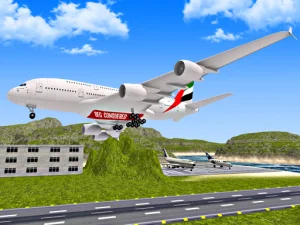
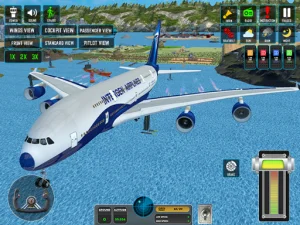
Airplane Simulator Game covers takeoffs and landings. Read the speed, altitude and direction controls in the selected mode. At first, try to keep a direction long enough to recognise how the plane responds. Find a feature outside the aircraft you can keep in view. Imagine the line from your position to that feature and see how smoothly you can correct toward it. That teaches you how a small input behaves before you rely on it close to a runway.
When approaching a landing, look for the runway's alignment early. You want to see whether you can travel along its length after arriving over it. Begin farther out if you need a better view of the line. Think about the speed and height you will have at that point as well as your heading. A useful practice approach ends where you expected, even if you decide to repeat it to handle the final descent more smoothly.
Glide through a clear route in a paper plane game
Paperly: Paper Plane Adventure gives you a paper aircraft, obstacles and stars to collect. Use the movement controls shown in the player and watch how the craft behaves after you change direction. Start by following a route that gives you time to see the next opening. An immediate star may be within reach while the path beyond it takes you close to an obstacle. Look at both parts of the route before deciding whether to collect it.
Find an early part of the level you can fly through repeatedly. Try one pass using wider turns and another with a more direct line. Watch the next open section in both cases. The wider choice may leave you with a better view, while a direct choice may bring you to another target sooner. If an attempt ends, locate the first place your route narrowed. Change the approach to that point before trying to make every later adjustment faster.
Use a landmark to connect flight and feedback
On one flight, choose a landmark ahead of you and aim to approach it with a steady heading. Notice where the aircraft is relative to the landmark when you first turn toward it. If you go past the useful line, begin the next attempt a little earlier or use a smaller change while you still have space. This works well when the aircraft moves far enough between inputs that a late correction is hard to see.
The landmark can be something different in each version. In a simulator it might be the start of a runway or an obvious point in the terrain. In Paperly it could be an open gap between objects or a place where the route bends. Use a feature you can spot without pausing to search for it. That lets you spend more of your attention on the way the aircraft is moving.
Choose the kind of flying you want to practise
A simulator is a useful place to work on the whole sequence from departure to arrival. A paper plane adventure gives you a compact way to practise judging a route with moving scenery. Open the game whose first flight feels like the challenge you want. Follow its control prompts and make one move you can describe afterwards. Where that move leaves you is the information you need to plan the next part of the flight.