Choosing Your First Blue-Focused Session
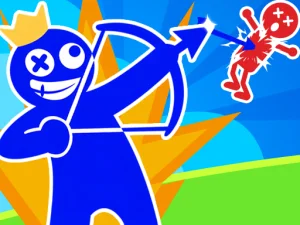
Open Red And Blue Stickman Spy Puzzles if you want a spy-flavored run built around eliminating every red monster with a bow. The stated goal is clear: clear each level by taking out those enemies while avoiding their attacks. Use the click or tap controls to aim and shoot at a target, following the game’s opening prompts. Before the first shot, scan the level layout for obstacles that can block your line or provide cover, and note where projectiles are likely to come from. Treat the opening levels as calibration: adjust the angle in small increments, watch how the arrow travels, and replay a level to refine the same shot rather than rushing forward.
Reading the Field Before You Shoot
Both games ask you to read the blue-versus-red geometry before firing. In the original, the layout and enemy patterns are part of the puzzle: observe how red monsters attack, then use obstacles to dodge while keeping your aim on them. In Red And Blue Stickman Spy Puzzles 2, the same blue hero faces puzzles that demand creativity alongside quick reflexes, with positioning treated as a strategic choice. A practical first-session approach is to pause after each miss and identify whether the problem was angle, distance, or timing. If a shot is blocked, ask whether a different position would open a cleaner line instead of repeating the same input.
Sequel Differences Worth Noting
The sequel presents itself as a challenge to archery skill with innovative puzzles and quick reflexes, while the original frames its levels as an action-driven spy adventure with increasing difficulty. In practical terms, the sequel emphasizes calculating angles and distances for precise hits and moving quickly to avoid red monster attacks, whereas the original highlights analyzing the layout and dodging incoming projectiles as you focus on targets. That difference changes how you spend your first few attempts: in the original, spend time mapping cover and enemy patterns; in the sequel, spend time rehearsing shot placement and repositioning. Both use simple click or tap controls, so the learning curve sits in the decisions you make around those inputs rather than in a complex control scheme.
A Blue Practice Loop
Use a short, repeatable loop for your opening sessions. First, identify the red monsters and the path their attacks take. Second, choose a blue position that keeps you out of the line of fire while giving you a clear shot. Third, set your angle and distance deliberately, then take the shot and watch the result. Fourth, compare the outcome with your intent: was the arrow off because of the angle, the distance, or the timing of enemy movement? Replay the same level with one variable changed. If the original’s obstacle-heavy layout punishes poor cover choices, practice repositioning before you aim; if the sequel’s puzzles reward creative placement, practice finding a new line rather than repeating the last one.
When to Switch Between the Two
Move between the titles when you want a different emphasis. Return to the original when you want to concentrate on eliminating all red monsters across its levels and on using obstacles to dodge projectiles. Switch to the sequel when you want to concentrate on precise arrow placement, quick movement, and puzzles that ask for a fresh approach. Keep the blue-versus-red contrast in mind as a reading tool: red marks the threat you must solve, and blue marks the position you control. A first session that alternates between careful observation and deliberate practice will make both games feel less like a test of reflexes and more like a series of decisions you can refine.