Choose a destination before choosing power
Picture where the ball should finish the next movement. That may be the hole or an intermediate position that makes the following approach clearer. Give such a setup a reason, since using extra shots without a plan can work against a game that rewards fewer attempts.
Observe the entire shot before making another choice. A ball that initially travels along a promising line can still finish somewhere unexpected. Plan the next movement from where it actually stops rather than continuing as though the earlier attempt reached its intended destination.
Compare angle and strength in Minigolf
Minigolf loads Mini Golf Adventure. Set an angle, choose strength and shoot with the documented mouse or tap input. The objective is reaching the hole with as few attempts as possible. Begin with a target you can recognise and watch how far the ball travels on the chosen line.
If the direction looks suitable but the ball goes too far, reconsider strength. If it misses to one side, inspect the angle rather than automatically adding power. Changing one part of a shot at a time makes the next result easier to interpret. A familiar starting position is useful when learning the response.
Read course objects in Micro Golf Ball 2
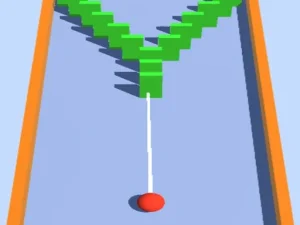
Micro Golf Ball 2 uses compact obstacle puzzles. Boxes can obstruct a route, portals move the ball between areas and springs help it travel upward. Light sources change the ball's colour. Look at these objects in relation to the hole before committing to a movement that only solves the first part of the course.
The documented input uses the mouse or touch. Follow the interaction shown by the game, then watch the complete path. Decide whether the route needs a portal, a spring or another approach around a box. An unobstructed first movement does not guarantee that the final position will support the finish.
This is a course-reading puzzle, so do not assume an orbital distance launcher or an upgrade system from another golf-themed game. Learn what the objects actually change in this version. Their placement gives a shot more to consider than the straight-line distance from the starting ball to the hole.
Make a miss answer a specific question
After an unsuccessful shot, identify the part of the plan that failed: direction, travel distance, the approach to a portal or the position after a spring. Preserve a section that already works while changing the uncertain step. Several simultaneous adjustments make it harder to tell what improved.
Use the visible course and game prompts as the reference for the next attempt. Do not assume a universal bounce, strength scale or penalty rule. The useful comparison is between the input you selected and the route the current game produced.
For a short session, aim to understand one shot interaction or complete one layout deliberately. When opening another golf card, inspect its obstacle types, finish condition and controls afresh. The collection brings together ball-to-hole challenges, while each game supplies the rules that make planning an angle, strength and continuation worthwhile.
If an intermediate position is part of the plan, decide what it should make easier on the following shot. A setup that exposes a clearer route can be evaluated against that purpose. Simply moving the ball without choosing a continuation offers less information about how to finish the course.