Keep the wheels and the route in view
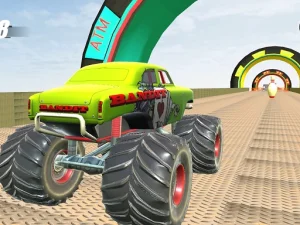
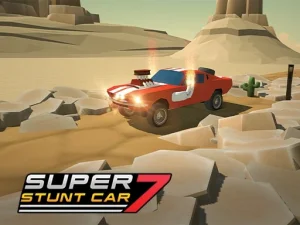
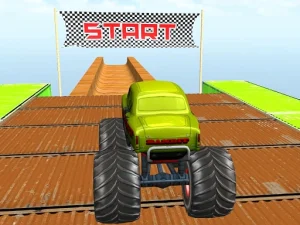
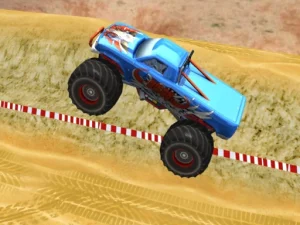
Torque Trail gives a monster truck twenty physics-based courses with bridges, steep ramps and obstacles. The completion condition is arriving without flipping. This changes the meaning of a good approach: going farther quickly is not enough if the truck reaches the next surface in a position you cannot manage.
Observe the change in support as the vehicle enters a ramp or crosses a bridge. Look at the section immediately beyond it as well. You are choosing an approach that should remain useful after the first obstacle, so a spectacular movement is less helpful than a landing or transition you can interpret.
Use a short input to answer a specific question
On a desktop, the right arrow or D drives forward; the left arrow or A reverses and helps with balance. A phone uses the right half of the screen for driving and the left half for reverse. These are Torque Trail's documented inputs, not a control standard for the entire Stunts collection.
Try a brief movement before holding an input through an unfamiliar section. Notice the relationship between the truck's speed, its position and the changing ground. If a response surprises you, a shorter, more deliberate attempt can reveal which part of the approach needs attention. Randomly alternating directions gives you less useful information about the obstacle.
Read a difficult course as connected sections
Choose a visible point at which you want the vehicle to be settled enough for the next action. That might be the beginning of a ramp or a more readable patch after an obstruction. The purpose is to divide the course into decisions you can observe. It is not a promise that a named checkpoint or automatic save exists at that position.
Keep one successful transition as a reference. On a later attempt, compare where the truck was and what you were pressing when the ground changed. If the same section becomes inconsistent, revisit the approach before adding more speed. Knowing the useful position matters more than remembering only how long an input was held.
Make an overturning informative
Torque Trail provides a Restart control for another attempt. Before using it, identify the first moment the position became difficult to recover. The last visible flip may be the consequence of an earlier approach, so review the sequence rather than concentrating exclusively on the final instant.
For the next run, retain what worked and adjust the uncertain section. You might arrive at the ramp with a more measured input or allow a clearer view of the transition before continuing. Such adjustments are practical experiments with the current course, not guaranteed solutions or undocumented vehicle upgrades.
Choose other stunt games by their actual rules
The collection contains many separately named destinations. Inspect a game's own page for its vehicle, objective and controls before transferring Torque Trail's forward-and-reverse habits to it. Some titles may ask for a different kind of movement entirely. The Stunts label helps you browse an idea; it does not establish a shared physics model.
Set a session goal you can assess, such as understanding one awkward bridge or completing a more controlled approach. Use the game's Settings for the available audio and effects options, and read any progress information it presents before leaving. The most useful improvement is a clearer explanation of how your input affects the next part of the route.