Observe what one action changes
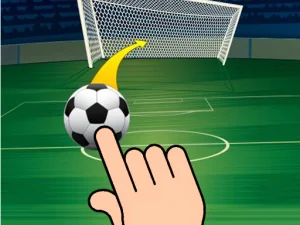
In Tap Goal, the supplier documents mouse control. Read the actual prompt and watch the response to an indicated action before repeating it. A useful early attempt establishes what the input changes, not simply how often you can press.
Focus on a visible opening you can recognise. Connect the action with that moment, then allow its result to appear. Additional clicks made before you understand the previous response can make a failed attempt difficult to explain. When an early action becomes reliable, keep that part of your approach consistent while studying the next prompt. This makes the later timing decision easier to isolate and compare.
Choose a cue that belongs to this level
The current situation should determine what you watch. Identify the relevant movement or opening and notice how it develops before acting. A clear cue is something you can recognise again, rather than an approximate delay you copied from a different game.
If the result surprises you, reconsider the relation between that cue and the input. Did you identify the moment too late, act before the situation was ready or misunderstand the prompt? Those questions are more useful than immediately assuming that another rapid click is required.
Keep the approach and finish as separate decisions
Working toward a scoring opportunity and completing it are different parts of the challenge. Once an approach becomes familiar, give the final opportunity fresh attention. A sequence that reaches a promising position does not automatically explain the next timing decision.
Preserve the part that you understand while studying the uncertain continuation. This gives you a reference for comparing another attempt. Replacing every earlier action because the final moment failed can make a readable route less consistent.
Use a retry to test a specific idea
Choose one observation from the previous attempt and make a deliberate adjustment around it. You might recognise the cue earlier or wait until the action you intended becomes clearer. These are practice questions about the current level, not claims about a fixed hidden timer or an undocumented winning sequence.
Watch the revised result carefully enough to decide whether the adjustment helped. A successful action is more useful when you can explain its relationship to the visible situation. If the outcome remains uncertain, return to the prompt and the response of one input before complicating the plan.
Do not assume a full football-management game
Tap Goal's verified description presents a compact timing challenge. It does not establish team-management menus, passing systems, competitive seasons or a complete set of full-match features. Let the loaded player's instructions define the activity rather than expecting every soccer theme to reproduce another title.
The wider Tap collection likewise does not promise identical input effects or rules. Read the next destination's objective before transferring a habit. A tap that commits one action here may serve a completely different purpose elsewhere.
For a short session, choose an aspect of timing to understand rather than chasing a vague goal of clicking faster. Recognise the cue, observe the response and keep a useful part of the approach consistent. Before leaving, check the actual player's pause and progress information. The most transferable lesson is connecting an intentional input with a moment you can read, while allowing each game to define what that action accomplishes.