































Flip Master Guide: Plan Jumps, Control Rotation and Land Safely
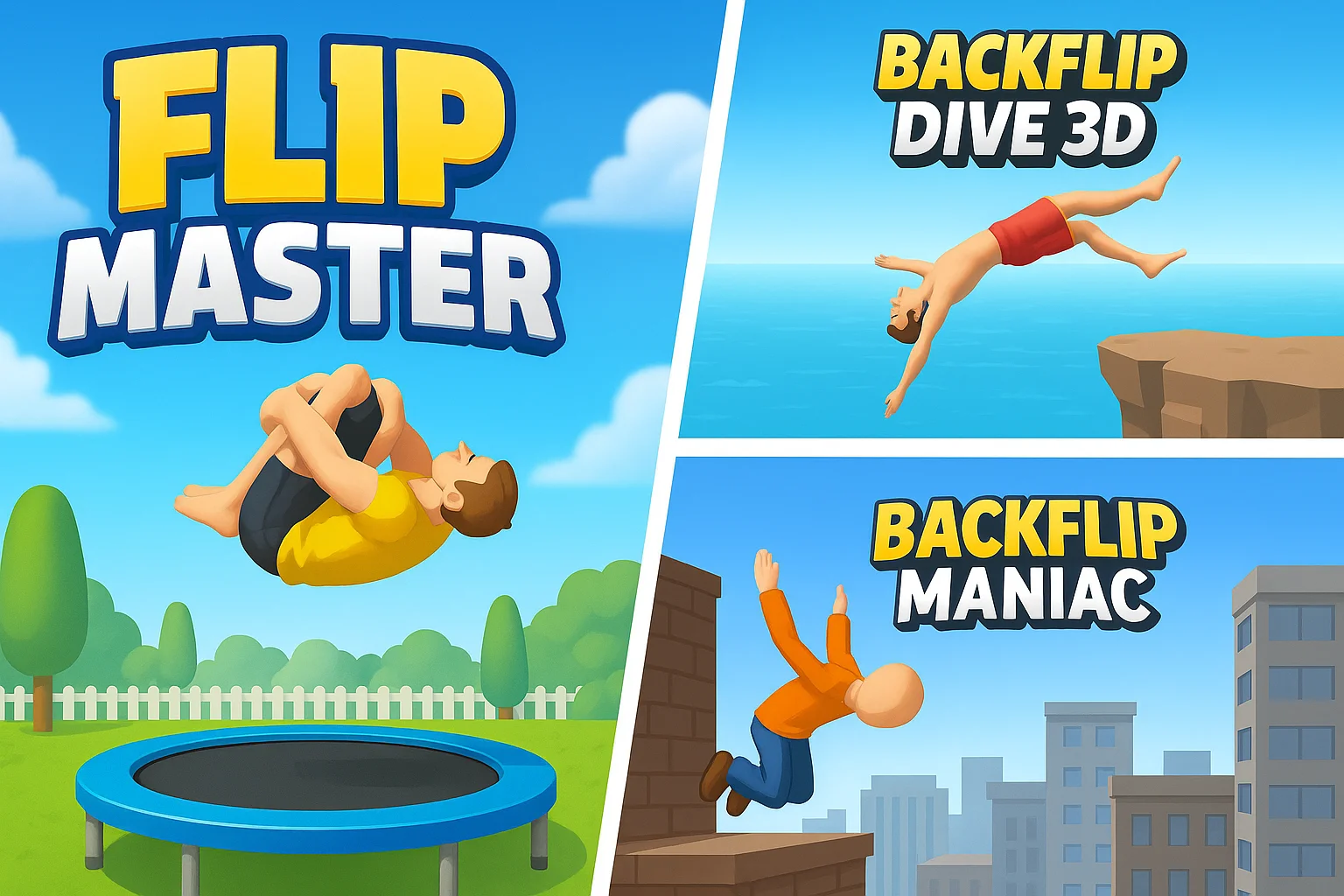
Flip Master rewards attention to the part of a stunt that is easiest to overlook: how the character will arrive after leaving the ground. A spectacular rotation is only one part of a successful movement. The approach, the space around the jump and the landing all matter when you decide what to attempt. The Flip Master game on BestCrazyGames is the parkour and acrobatics title discussed in this guide. Its published controls use a mouse click or a tap. Start with its own on-screen instructions, then use the planning ideas below to make your jumps more deliberate.
Identify this version before copying a technique
Several games can share a name or a theme built around flips. Do not assume that a guide describing a trampoline, a particular character roster or a specific upgrade price refers to the game on this page. The relevant title here presents acrobatics, obstacles, aerial control, skill upgrades and different locations. Read the current interface to see how those features are offered. This keeps advice tied to what you can actually select and observe.
A simple check is to describe the opening challenge in your own words. Where does the character begin, what is the immediate obstacle and what result is the game asking for? If a piece of advice does not fit that scene, set it aside until you can verify it. A familiar game name is not enough reason to force an unrelated control sequence into the current level. The useful starting point is the visible task, followed by the control prompt that belongs to it.
Divide the stunt into approach, flight and arrival
Treat a jump as three connected decisions. Before takeoff, examine the space you intend to cross. During flight, pay attention to the character's orientation and the remaining room. At arrival, judge the actual contact and the game's feedback. Separating these phases makes a failure easier to understand. A poor landing may have begun with an unsuitable approach rather than a mistake made only at the last instant.
You can use the same division when a jump succeeds. Notice what was repeatable about the approach and what changed during flight. Do not reduce success to a vague feeling that the click was lucky. Even if you cannot describe the exact timing yet, you may recognize a useful visual cue or a safer starting position. That observation gives your next attempt a basis. A stunt becomes a skill when you can connect its result to decisions you understand.
Read the destination before choosing a flip
The destination should influence the movement you attempt. Look at the available landing space and the nearby obstacles before deciding that another rotation would be impressive. A movement that fits an open area may be unsuitable where the arrival zone is constrained. This is general planning advice, not a claim about a hidden scoring formula. Read the current challenge and let the space determine what seems manageable.
A useful question is what would count as a controlled arrival in this particular scene. The game's own result will tell you whether the attempt meets its requirement, but you can still prepare by identifying where you want the character to end up. Without a destination in mind, every aerial adjustment becomes a reaction to the changing picture. With a destination, you have a reason to limit a stunt, reconsider a takeoff or practise a simpler movement before increasing its complexity.
Learn what the click or tap actually changes
The published control description is deliberately simple: mouse click or tap to play. It does not justify inventing extra keyboard shortcuts or claiming that every touch action performs the same phase of a stunt. Watch the current tutorial and the character's response. Work out which action starts the movement and what input remains available afterward. If the interface gives a more specific instruction, follow that instruction rather than assuming a mechanic from a different flipping game.
When learning a response, use a modest attempt that lets you see the change. Do not combine several unfamiliar actions and then try to diagnose the final result. If you are unsure whether your input registered, check that you interacted with the playing area and that no menu was covering it. A missed input and a poor timing choice can look similar from the final landing, but they require different solutions. Establish that basic connection before trying to refine a difficult rotation.
Turn a failed landing into a useful observation
Describe the failure using visible information. The character might arrive short of the intended spot, travel beyond it or approach with an orientation that does not produce the result you wanted. Those are different observations. Choose the one that best explains what you saw, then revisit the phase of the jump that influenced it. Avoid calling every result a timing problem without saying which decision was early, late or unsuitable.
It can help to watch one attempt with no expectation of improving the score. Your sole task is to notice the moment when the movement diverges from the plan. Was the takeoff already poorly placed? Did an additional adjustment create an unwanted orientation? Did your attention remain on the stunt while the landing space approached? One clear observation is enough. You do not need to solve the entire level in the same attempt that first reveals the cause of a recurring mistake.
Practise an arrival before extending the trick
If a simpler movement reaches a useful destination, make it repeatable before adding difficulty. This gives you a reference for how the scene behaves. When you later alter the stunt, you can compare the new result with something familiar rather than with an ideal performance you have never achieved. Progress can then be measured as a specific extension of a controlled movement, not as an obligation to attempt the most dramatic action immediately.
A practical session might begin with several attempts focused only on the landing, followed by a small experiment in the middle of the flight. Keep the destination similar where the level allows that comparison. If the experiment makes arrivals much less understandable, return to the simpler reference. That is a way to recover useful feedback, not a failure to progress. A stable foundation often gives you more opportunities to explore than repeatedly attempting a trick whose beginning and ending both remain uncertain.
Let obstacles shape the route
An obstacle is information about the available space. Before takeoff, check whether it affects the beginning of the jump, the aerial path or the landing. A nearby obstruction can change which part deserves the most attention. This helps prevent a common habit: concentrating on the character's rotation while overlooking the object that makes the chosen route unsuitable. The environment and the stunt need to be read together.
Do not assume that every location asks for the same solution with slightly different scenery. Use the opening moments in a new area to inspect it again. A previously useful cue may no longer line up with the destination, and a movement that felt generous in one space may be hard to control in another. Transfer the planning process rather than a rigid input sequence. The process of identifying the route, observing the response and judging arrival remains useful even when the scene changes.
Evaluate upgrades from their actual descriptions
The game's published feature list includes skill upgrades, but it does not establish a universal best purchase or a guaranteed order. Read what the current upgrade screen says and connect each option to a problem you have observed. A choice that affects a part of movement you already handle comfortably may be less useful to your immediate goal than one that addresses a genuine limitation. Make that judgment from the interface rather than from assumptions about another version.
After changing an available skill, give yourself time to notice its effect. If you alter several things and then enter an unfamiliar location, it becomes difficult to identify what changed. A familiar challenge can provide a clearer comparison when the game lets you revisit it. Do not promise yourself an automatic perfect landing because an upgrade was available. Your understanding of the route and the current input still matters, and the visible result remains the evidence for whether a change helped.
Use short goals that match your current difficulty
Choose a goal you can evaluate in a few attempts. It might be recognizing a takeoff cue, reaching an arrival area more consistently or understanding how the current input affects the character in the air. A goal such as become better at everything gives little guidance after an attempt. A narrow question makes it easier to keep one part of the stunt stable while studying another.
Stop the experiment when you have a useful answer, even if that answer is that your original assumption was wrong. Perhaps the landing problem begins before takeoff, or perhaps the selected route leaves too little space for the stunt you wanted. Revise the plan based on that observation. The goal of practice is to improve your decisions, not to defend the first approach you tried. This keeps a session productive without requiring every attempt to produce a new record.
Browse related titles without confusing their rules
The Flip Master collection is useful when you want to explore the site's related browsing label. Check the actual title on every card. A game about jumping, tumbling or sports may ask for different controls and different success conditions. Treat it as a new activity until its instructions establish a connection. A shared theme does not mean that its progress, upgrades or timing transfer to this game.
Likewise, unblocked in a search label is not an access guarantee. Use an allowed device and connection, and let the game load before judging its response. If a menu, loading screen or loss of focus prevents input, resolve that visible issue before treating it as a failure of your technique. Returning to a responsive game gives practice a clear purpose: understanding how your choices affect the stunt, then using that understanding to arrive more reliably at the destination you planned.