































Street Fighter Searches: Know the Street Fight Browser Game
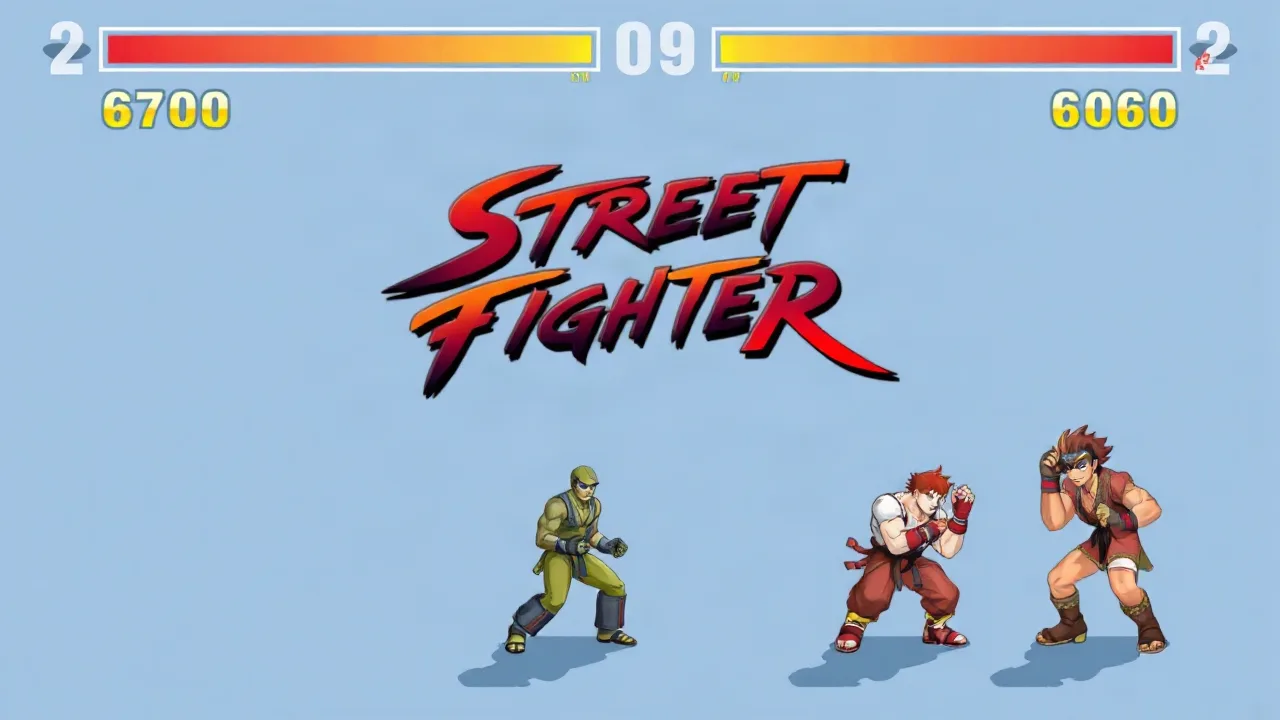
The first useful step after a Street Fighter search is to check which fighting game has actually opened. The page named Street Fighter on this site embeds a game whose own title is Street Fight. Its documented activity is fighting street thugs, collecting coins from victories and using a shop for power-ups. That is a specific browser game, and it should not be described as a full edition of a different fighting franchise simply because the page names look similar.
Open the Street Fighter page containing Street Fight when you want this particular experience. Its own game files show pointer-based desktop movement and clicking to attack. On touch devices, a short tap issues an attack, while a held touch and drag operates the movement control. This guide explains that distinction, the game's street encounters and the practical choices around its shop, without borrowing special-move commands or character rosters from another release.
Learn movement before combining it with attacks
On desktop, the character follows the pointer while available to move. Position the pointer deliberately and watch where the hero goes before clicking repeatedly. This differs from a game where the keyboard alone determines movement and the pointer is irrelevant. Moving the mouse casually across the play area can therefore influence your position, even when your attention is on an approaching opponent.
Try a short, controlled movement in open space and let the hero settle. Then click once and observe the attack. Separating those two actions at the beginning helps explain whether a problem came from your position or the moment you attacked. If you move and click rapidly from the start, the results can feel harder to interpret.
Keep the game area focused and the pointer visible. If you have just interacted with the surrounding page, return to the playable frame before testing another input. Do not assume that arrow keys, a gamepad mapping or a familiar arcade button layout will work unless the loaded game's own interface confirms that support.
Understand the touch distinction
The game's input handling separates a short tap from a longer held touch. A short tap requests an attack. Holding and dragging creates a virtual movement control. That means an intended movement can turn into an attack if you release too quickly, while an intended quick strike can become a movement gesture if you hold the touch.
Practise each interaction separately before trying to react quickly to opponents. Make a deliberate hold and drag, release it and see where the character stops. Then use a short tap and watch the attack. Once the difference is clear, combine them in a simple approach: move into a useful position, release and attack at the appropriate moment.
If the controls feel inconsistent, ask whether the gesture duration or drag direction changed. This is more useful than immediately assuming that the game needs a different keyboard shortcut. The relevant instructions are the ones for this pointer and touch system, not a sequence copied from a console fighting game.
Watch the space between the fighters
An attack is only useful if your position allows it to connect under the game's rules. Before clicking, look at the distance and direction between your hero and the target. Approaching without considering that gap can leave you swinging at empty space or moving too close without a plan for the next action.
Use a measured approach against an unfamiliar opponent. Watch how it moves and where your first attack occurs. If you miss, examine the position rather than merely increasing the rate of clicks. A small adjustment in approach can provide more information than a long burst of inputs whose individual effects are difficult to distinguish.
After an exchange, reassess the space. The opponent and hero may no longer occupy the positions they held when the first input began. A good next decision uses the current scene. This is particularly important in a pointer-driven game, where moving the mouse to another part of the play area can also change the hero's movement intention.
Learn combinations from the current game's response
Street Fight's published description includes five attack combinations. That gives you a reason to pay attention to the timing and outcome of successive attacks. It does not justify inserting a particular half-circle command, named projectile or keyboard sequence from a different title. Learn what the loaded tutorial and your observed inputs actually demonstrate.
Begin with a single strike, then try a short sequence and watch the animations. If the result changes, identify which part of your timing changed. Repeating one understandable sequence can be more useful than alternating many inputs and hoping to discover a powerful move accidentally. Keep your position consistent while studying the attack interaction.
Do not assume a combination solves every encounter. A sequence that works when the enemy is close may be ineffective when it is out of reach or approaching from a different direction. Combine knowledge of the attack with knowledge of spacing, rather than treating a successful animation as a universal answer to every opponent.
Treat different enemies as observations
The supplier describes ten enemy characters with different behaviour and skill sets. When a new opponent appears, use its movement and attacks as information. Notice whether it approaches quickly, waits for you or repeatedly creates a particular distance. Avoid assigning it a detailed pattern that the current encounter has not shown.
Choose one question to investigate. You might ask whether an earlier repositioning gives you a clearer opening, or whether you keep attacking before the opponent is in range. Test that question with a measured exchange. The goal is to make the next decision more understandable, not to write a complicated theory after one brief encounter.
If multiple enemies make the area difficult to read, pay attention to the positions around your hero. An attack aimed at one target does not remove the need to understand another approach. Move with a purpose and keep track of the space you are entering. This advice concerns the game's encounters, not any real-world fighting technique.
Use coins with a specific problem in mind
Victories provide coins, and the game includes a shop for power-ups. The actual shop text identifies options such as Brass Knuckles for increased damage, Speed Up for movement speed, Health Up for maximum health and Armor Up for reduced damage received. A Power Pill is described as a temporary powerful state during fights. Read the current purchase description before spending.
Choose according to the difficulty you can identify. If you repeatedly lose track of an opponent's approach, a purchase alone may not resolve that observation problem. If you understand the encounter but want to change a particular statistic, the shop description gives a clearer basis for the decision. Avoid assuming that the most expensive or most dramatic-looking option is automatically the best choice.
Do not invent exact prices, stacking limits or the duration of an effect when the current interface has not supplied them. Those details should come from the displayed shop. A useful guide explains what to look for and why a choice might suit your play, while leaving version-specific numbers to the game itself.
Separate a temporary effect from a lasting expectation
The Power Pill's description explicitly calls its powerful state temporary. If you use it, watch for the game's indication that the effect is active and be prepared for normal play afterward. A short advantage is most useful when you understand the situation in which you want to use it, rather than triggering it without looking at the encounter.
For any other purchase, read the wording and inspect the result before assuming how long it remains available. A browser session, saved progress and an upgrade effect are separate things. The presence of a shop is not proof of cloud accounts, permanent cross-device progress or an online economy shared with other players.
Keep an explanation for your choice simple. “I wanted more room for error while learning this encounter” is a meaningful intention. “The guide said every player must buy this first” is less useful when the guide has not established the current prices, available options or the particular problem you are trying to solve.
Notice the location as part of the encounter
The game identifies Sunset Avenue, Frozen Overpass and Mean Street as locations. Use their visible layouts and boundaries to understand where movement is available. A familiar name does not tell you everything about an encounter, so inspect the actual screen rather than assuming an identical arrangement across all three.
When moving into a new area, start by locating the hero and available space. Then consider the opponents. Trying to apply an old movement pattern without checking the new surroundings can create an avoidable positioning problem. A brief look at the scene gives you a better basis for choosing the first approach.
The location names do not establish hazards, weather penalties or hidden bonuses by themselves. For example, a name containing “Frozen” is not sufficient evidence of a slipping mechanic. Use what the game visibly presents and documents. This keeps the strategy grounded in the version you are actually playing.
Make the next attempt informative
After a difficult fight, identify whether your main problem was input, spacing, recognising an opponent or a purchase decision. Choose one aspect to improve on the next attempt. If touch movement is still uncertain, practise the hold-and-drag interaction before demanding a precise combination under pressure. If the controls are clear, focus on the moment you approach the opponent.
The Street Fighter Unblocked Games collection offers other browsing choices, each with its own identity. Check the title inside the game before applying advice about characters, commands or modes. For this page's Street Fight, a deliberate pointer or touch interaction, readable spacing and a shop choice tied to an actual problem are the useful foundations. Play where games are permitted, and judge each improvement by a result you can explain rather than by a borrowed promise about another fighting game.