































Tung Tung Sahur Browser Games: Snake, Differences and Two-Player Choices
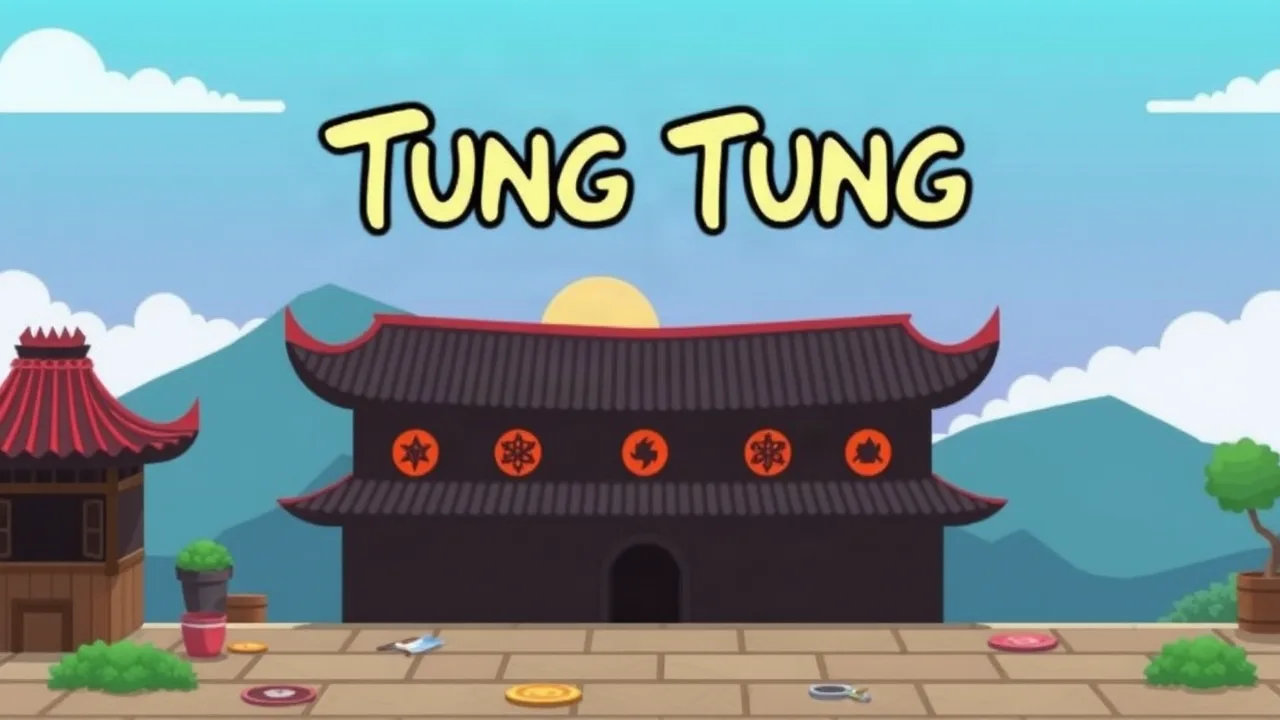
Tung Tung Sahur appears in browser games with very different objectives. One title asks you to guide a growing snake through an arena, another asks you to inspect illustrations, and another puts two players into a shared-keyboard battle. The familiar character connects the theme; it does not supply a single set of controls, a universal rhythm mechanic, or a guarantee that every game works on every network.
This guide helps you choose a specific activity from the Tungtung Unblocker collection on BestCrazyGames and understand the instructions that belong to it. The collection currently includes Italian Brainrot Tung Sahur Snake.io, Italian Brainrot Tung Tung Sahur Anomaly and GunMyTungtungSahur 2Player. Those verified examples provide a more useful starting point than treating the whole topic as one game that you can learn through a single control table.
Choose the task before following the character
Start by deciding what you want to do. Guiding a moving character requires continuous attention, searching for differences requires visual inspection, and a local two-player match requires another person and enough room to share the keyboard. These choices affect a session much more than a similar thumbnail. A familiar name can help you discover a title, but the objective tells you whether it fits the activity you actually want.
Then check the complete destination title. “Tung Tung Sahur” can appear within a longer name that identifies a particular puzzle or challenge. Keep that full name in mind when reading instructions or returning later. Otherwise, it is easy to remember a tip accurately but apply it to a different game. An arena snake, a spot-the-difference illustration and a projectile-based level do not become interchangeable because the same meme character appears in all three.
Snake.io: grow while preserving room to move
The supplier describes Italian Brainrot Tung Sahur Snake.io as a snake-style arena game using meme characters. You begin small and grow by eating glowing orbs scattered around the play area. The published control instruction is mouse only. That establishes the basic activity: direct movement while looking for opportunities to collect and continue through the arena. It does not establish a keyboard sprint button or a universal ability shared with every other snake game.
For an early attempt, concentrate on a manageable route through visible space. Chasing an orb is a decision about where you will travel, not only a decision about collecting it. Look at the continuation beyond the target before committing to it. As the snake becomes longer, keep watching the shape of the path you are creating. This is practical route advice rather than a promise about a particular collision rule or a guaranteed way to defeat every opponent.
When an attempt goes wrong, remember the decision that narrowed your options. Perhaps you followed a collectible without looking ahead or tried to change direction after the useful opening was already behind you. That observation suggests a specific adjustment for another attempt. Avoid inventing an exact turning radius or a hidden speed statistic from the character's appearance; use the movement response and the instructions shown in the loaded game.
Anomaly: search for five differences in the illustration
Italian Brainrot Tung Tung Sahur Anomaly is a different kind of challenge. Its supplier describes a spot-the-difference activity with five hidden differences in each illustration and mouse-based interaction. Choose it when careful observation sounds more appealing than maintaining movement through an arena. The important information is in the artwork you are comparing, not in a timing pattern suggested by the character's name.
Use a consistent visual search rather than repeatedly checking the most noticeable face or object. Start at one part of the illustration and move through the visible scene in an orderly direction. Compare outlines, small details and the relationships between objects. These are ways to organize attention, not a claim that a particular difference always appears in a particular corner. Each illustration must be inspected on its own terms.
When you find a likely difference, verify the location before selecting it. If the game does not respond as expected, reconsider whether you identified the actual changed detail or clicked an adjacent area. Do not assume an unlimited hint system, an exact penalty for a wrong choice, or a countdown simply because another difference game has one. Read any current on-screen feedback and use it to decide how to continue the search.
Two-player battles: agree on the inputs before starting
GunMyTungtungSahur 2Player provides a shared-keyboard alternative. Its supplier assigns WASD to the red player and arrow keys to the blue player. It describes collecting drops that fall from the sky to obtain more powerful weapons, and states that the player hit twenty times loses. Those are concrete rules for this named game, rather than evidence that every Tung Tung title includes weapons or the same two-player format.
Before a match, decide who uses each layout and make sure both players can reach the keys comfortably. Confirm the current game's instructions instead of borrowing a firing button from an unrelated action game. The verified listing specifies movement and the drop-based objective; it does not justify adding an undocumented key combination. A short orientation is useful when one player is unfamiliar with sharing a screen or distinguishing the two characters.
During play, a falling drop creates a choice about position. Moving toward it may improve the available weapon, but it also changes where the character will be when the other player acts. Look at both the immediate pickup and the space around it. After the match, discuss the decision rather than attributing the entire result to who happened to be faster at the keyboard. This makes another round more understandable for both players.
The separately named slingshot game uses another idea
The site also has a game named Tung Tung Sahur whose supplier describes launching the character to rescue kidnapped Brainrot characters from zombies. That listing specifies mouse clicks or taps and a slingshot-style adventure with levels, traps and targets. It is another example of why the topic should not automatically be described as a rhythm game. Its activity is different from the snake, illustration and local battle examples above.
If you choose that destination, read its opening instructions and observe the relationship between your input and the launch. Begin by identifying the target and the visible obstacles rather than importing the snake game's mouse movement advice. The supplier's short instruction does not establish an exact gesture length, a fixed winning angle or a scoring bonus for every target. Use the game in front of you to learn the actual response before planning a more complicated attempt.
Recognize other Tung Tung activities by their full titles
Two other named games available on the site show how far the theme can stretch. Tung Tung Sahur Hidden Bedug asks players to find ten hidden drums in each level, with mouse-only interaction. That is an object-search task, distinct from Anomaly's five differences between illustrations. Read which kind of visual search the selected game actually requests before assuming that finding one unusual detail completes the scene.
Tung Tung Sahur Midnight Terror is a horror-comedy survival game. Its supplier describes collecting ten packs of instant noodles in a haunted property before dawn to unlock an escape. The documented controls are WASD to move, Shift to run and Space to grab an item. Choose that specific title when you want exploration and tension, rather than expecting the calmer observation task of the hidden-object game. These are separate site destinations, not a claim that every current collection card includes them.
Match the controls to the device you have
Mouse-only, keyboard-based and click-or-tap instructions describe different interaction needs. A webpage appearing on a phone does not prove that every game inside a collection offers equivalent touch controls. Likewise, a desktop browser does not give a pointer-based puzzle an undocumented keyboard shortcut. Check the selected title's published instructions and current interface before committing to a session.
Test one simple action after the game becomes ready. If the surrounding webpage receives the input instead, restore focus or adjust where you interact before evaluating the gameplay. In a shared-keyboard match, make that check for both players. This separates an input problem from a strategy problem: you cannot assess a route or a battle decision fairly if the requested movement never reached the selected game.
Use a session goal that fits the chosen activity
For Snake.io, a useful goal might be making clearer route choices around collectibles. For Anomaly, it might be searching one illustration systematically instead of guessing. For the two-player title, it might be understanding how a pickup changes the contest. Each goal belongs to a particular activity. There is no reason to invent a common score, shared inventory or combined tournament linking these separate games.
Keep the first goal small enough to observe. “Master every Tung Tung game” does not tell you what to change after a difficult attempt. “Check the space beyond the next orb” or “scan the upper part of the illustration before returning to the center” gives the next session a clear task. You can still play casually, but a concrete observation helps when you want improvement rather than several confusing starts.
Understand what unblocked wording can and cannot tell you
The collection name is a way people search for games; it is not a network-unblocking service. It cannot establish permission to play on a school, workplace or other managed connection. Use access that is allowed and distinguish a loaded collection page from an embedded game that is ready. A browser-based title can still depend on its host, your connection and the inputs available on your device.
Before switching away, check any pause or progress information the current game actually supplies. Do not assume a shared save system or cross-device continuation merely because the titles are on the same site. When choosing another card, read the new objective again. A reliable session begins with the complete game name, its own controls and a clear reason for selecting that particular kind of play.