Continuous movement or careful observation
Italian Brainrot Tung Sahur Snake.io is a useful example of the movement-focused side of the collection. Its supplier describes starting with a small snake and growing by eating glowing orbs in an arena. The documented input is mouse only. A sensible first objective is learning how to direct the snake through available space while still noticing the route beyond the next collectible.
Do not transfer that control description to every card with Tung Sahur in its title. Italian Brainrot Tung Tung Sahur Anomaly instead asks you to find five hidden differences in each illustration. Its supplier also specifies the mouse, but the task is visual comparison rather than guiding a moving snake. The same input device can support very different kinds of attention and a very different pace of play.
Choose a useful first attempt
For the snake game, consider where a movement will leave you after reaching an orb. A target is less attractive when approaching it makes the next route difficult to read. Observe the actual movement response before assuming the game has a sprint key, a special boost or the collision behavior of another snake title. Those details need their own instruction or visible evidence.
For Anomaly, inspect the illustration systematically. Move your attention through recognizable regions rather than repeatedly guessing at the most noticeable object. Compare small features and outlines, then select a difference when you have identified its location. Use the current interface for any hint, penalty or timing information instead of assuming every spot-the-difference game follows the same rules.
A shared-keyboard option
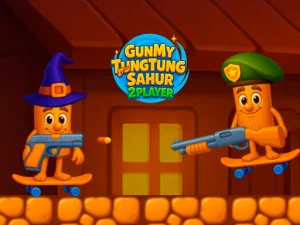
GunMyTungtungSahur 2Player offers another verified activity in the listing. The red player moves with WASD, while the blue player uses the arrow keys. The supplier describes collecting falling drops for more powerful weapons and says the player hit twenty times loses. This is a local contest with a stated loss condition, not evidence that every other card has a two-player mode.
Agree on the keyboard layouts before starting and make sure both players can distinguish their character. Read the loaded game's instructions rather than inventing an additional action key. During the match, notice how pursuing a drop changes your position relative to the opponent. A pickup can be useful, but the route to it is still a choice that needs attention.
Browse beyond the familiar name
The current collection also displays names such as Italian Brainrot Guess Who, Merge Fellas Italian Brainrot and Italian Brainrot Puzzle. Their presence gives you other destinations to inspect; it does not prove they share one merged set of levels, accounts or rewards. Check the actual objective and supported input on each game page before switching to a new activity.
If you want help deciding which experience fits, the Tung Tung Sahur browser-game guide compares the verified movement, observation and two-player examples. It explains the differences between the games rather than promising a universal control scheme. Use that comparison to choose, then follow the selected title's own instructions in play.
Access and device expectations
A collection loading on a phone does not establish touch support for every keyboard-based game inside it. Check whether the selected title requires a mouse, a shared keyboard or another documented input. Begin with a simple action so you can confirm that the game, rather than the surrounding page, receives it. Clear control expectations prevent an input mismatch from looking like a difficult gameplay problem.
Use a device and connection where playing is permitted. The word unblocker in this established URL does not guarantee unrestricted access or authorize bypassing local rules. Likewise, the collection does not establish that every game saves progress or resumes identically after leaving the tab. Read the current interface and choose a session whose objective, inputs and interruption needs suit the time you actually have.