Learn the raft's response before choosing a fight
In Crazy Sea Battle, drag to move the raft across the water. Moving into a floating piece collects it, helping expand the raft and grow the team. An early movement toward a nearby piece is a useful way to connect the dragging input with what the raft does.
Pause your own decision-making long enough to recognise the result. Notice what changed after collection and where the raft now sits relative to other objects. A successful pickup is one part of the route, not the end of the next decision. Look for room to continue before chasing another floating piece.
Distance can change travel into combat
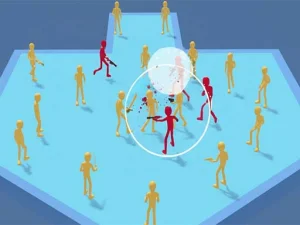
The game's instructions state that the team engages opponents automatically when they are within range. That means steering toward an enemy can initiate an encounter. You are making a combat decision through positioning even when the input itself still looks like ordinary travel.
Check the surroundings before committing to a longer movement. A direct approach to a collectible may also take you close to another raft. Consider whether a different route gives you more room to assess the situation. This is advice about reading distance, not a claim about an undocumented exact attack radius.
Gathering material first gives you a chance to understand the growth loop before seeking every available opponent. Watch how the raft's shape and the nearby space change as pieces are collected. Do not let one attractive item draw all your attention away from an approaching threat.
Make preparation and engagement separate decisions
You can ask two questions in sequence: what can I collect along a readable route, and which encounter am I prepared to approach? Combining both questions into an immediate chase makes it harder to recognise why an attempt became difficult.
After a battle ends an attempt, review the approach. Did it leave a way to change direction? Were you already within range before noticing the opposing raft? The next useful change concerns the decision you observed, rather than an assumed weapon command or a stat that the current interface has not shown.
Use growth without losing track of space
A larger raft gives the run a visible sense of development, but growth alone does not explain the best route. Keep looking beyond the next piece and reassess where you want to arrive. A short collection path that remains understandable can teach you more than a long movement through an area you have not read.
Try to remember one position or approach that worked. On another attempt, use it as a reference and change the uncertain part. This creates a practical comparison without claiming that the map, opponents or floating pieces repeat in a fixed pattern.
Read each action game's own objective
Actions is a catalogue label shared by separate titles. It does not establish that every listed game has rafts, automatic combat, the same enemies or the same dragging input. When you leave Crazy Sea Battle, inspect the next page's controls and aim before applying its habits.
Choose this example for the combination of movement, collection and proximity-based encounters. Check the loaded player for any pause or progress information before ending a session. A useful sign of improvement is recognising sooner when an ordinary-looking route will put you into a fight, and choosing that approach with a clearer purpose.