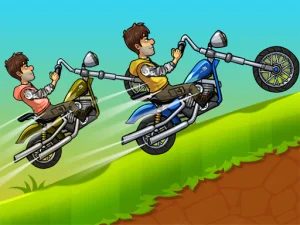
Bike games offer two common reasons to pay attention to the route. On a road, traffic moves around you and a gap can change before you arrive. On a rough track, the surface changes the way the bike needs to approach and land. Pick a game according to whether you want to watch the movement of other vehicles or work with the shape of the ground.
Last Updated:
Look at the space between vehicles over time
Bike Rider Highway places you on a highway with cars and trucks to avoid. Use the directional or touch controls shown by the player and watch where the nearest traffic is headed. A gap that looks open for a moment can close while you are approaching it. Find a line through the space and then look for a place you can settle after passing. That second look can help you avoid making two rushed movements back to back.
If you pass a large vehicle, consider what you can see beyond it before cutting back. Look at whether you have room to hold the new line. When a run ends in traffic, remember where you first had to make an adjustment quickly. On the next run, start positioning earlier for a similar situation. An easier pass through one group of vehicles can buy you time to see the next one clearly.
Learn the shape of the ground in a platform race
Hobo Speedster uses bike balance across a 2D route and adds cash and diamonds to collect. Read the player’s control hints before tackling a new slope. Keep your eyes on where the bike will next touch the ground. When approaching a ledge or incline, try a simple line that lets you observe how the bike leans. Use what you learn from that move when a later part requires a more exact approach.
Look at the position of a collectible relative to a safe landing. If it lies along a route you already understand, you can make it part of a regular run. If it requires a different approach, decide whether you want to practise that route now. Watch what happens immediately after the pickup. A route that lets you land in a useful position afterwards is easier to repeat than a jump that makes you guess where the bike will end up.
Make the next move visible before increasing speed
Speed helps when it serves a decision you have already made. On a highway, use a clear stretch to get into position for a gap rather than trying to find a gap once you are beside the traffic. On a platform route, think about where a slope leads and whether you will have room to settle the bike afterwards. Give yourself enough space to watch how the bike responds to a change before relying on that change in a difficult section.
When comparing runs, look at the first place where the route stopped feeling predictable. A different traffic pattern can change your exact path, but an earlier choice about which side to use can still be a useful adjustment. A different approach to a ramp can change the landing, which gives you a concrete result to compare. Keep one aspect of the new attempt familiar so you know what helped.
Match the course to the kind of challenge you like
Open the highway game to practise reading moving space. Try Hobo Speedster when you want to learn the position of a jump, a landing or a collection route. In the first round, choose one section you can describe afterwards. Notice which input helped you get through it and where it left you. Once you can repeat one useful passage, add another to the run. That is a practical way to improve whether you are passing cars or trying to carry a bike smoothly across broken ground.