Distinguish number practice from movement practice
Start by deciding what you want to practise. Recalling products asks you to recognise the relationship between two factors and their result. Crossing gaps asks you to manage movement and timing. A game could combine subjects, but this collection title alone does not prove that any particular card does so. Read the individual objective instead of expecting every landing to present a multiplication question.
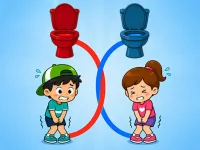
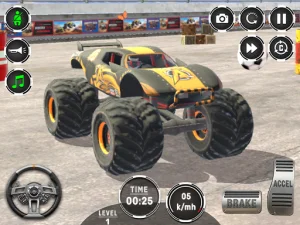
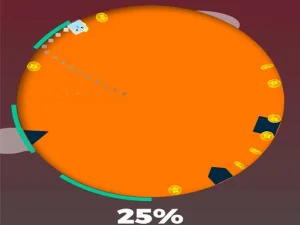
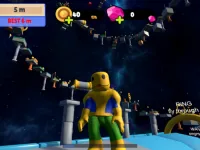
Names currently shown include Blocky Sky Jumping, Blocky Circle Jumping, Jumps Blocks Road and Pipe Connect Puzzle Game. These names are useful browsing clues, not verified descriptions of a shared lesson structure. The selection also displays unrelated sounding activities. Check the game's page and loaded instructions before deciding whether it fits a learning session, an obstacle challenge or a different kind of play.
An exact option for practising products
Multiplication Roulette offers a documented arithmetic activity elsewhere in the BestCrazyGames catalogue. It presents a session of ten questions. Start the roulettes, stop them to choose the two factors and work out their product. The moving selectors add variety to factor selection, while the calculation remains multiplication. This recommendation does not claim that the game is one of the collection's currently displayed cards.
Its instructions use the displayed Spin button with touch or mouse input, followed by the roulettes and the on-screen answer controls. Read both selected numbers before answering. Adding them produces a different result from multiplying them, so make sure you have identified the required operation. A quick response is only helpful when it reflects a product you actually understand.
If a fact is uncertain, build it from an easier one. Six groups of seven can be separated into five groups of seven and one additional group. That gives 35 plus 7, or 42. This reasoning is a way to work out the answer; it is not an extra game feature. You can use the same approach to explain a difficult question after the ten turns have ended.
Make a short session useful
Notice one multiplication fact that required extra thought. After the session, write or draw its equal groups on paper, then connect the picture to the equation. Returning with a clearer explanation is more useful than repeatedly guessing at the same product. If you are helping another player, ask how the answer was found before focusing on a faster response.
Keep arithmetic review separate from a jumping game's controls. A platforming title may ask for careful positioning without displaying any numbers to calculate. In that case, assess the next surface and the movement instructions it provides. Do not turn the collection's name into a claim that the game teaches times tables, adapts its questions or records learning progress unless its own interface establishes that behaviour.
Pick by the actual rules
For a mathematics session, look for explicit factors, an answer method and an understandable round objective. For movement practice, look for the stated controls and a route you can interpret. These are different reasons to choose a game, even if their cards share a blocky visual style. Comparing the task first makes the selection more useful than relying on the collection wording.
There is no common lesson tracker or control scheme established by this page. Device compatibility, saved progress and any difficulty settings belong to each individual game. Check those details where you play. Use this collection for discovery, and follow the verified Multiplication Roulette recommendation when a ten question product exercise is the activity you are seeking.