Match the activity to your available attention
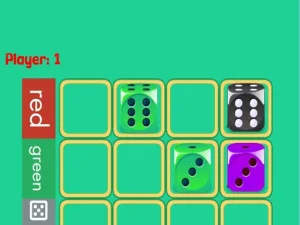
Before choosing a card, decide whether you want to plan, react or experiment. Sorting games reward attention to the arrangement in front of you. A jumping game asks you to judge a landing. Other casual entries may use repeated clicks or a series of small tasks. Read the selected game's objective so you know what your first action should accomplish instead of assuming that a colorful thumbnail describes the whole experience.
Consider how you want to spend a short session. Learning a new control may be enjoyable when you have time to retry, while a familiar layout may suit a brief break. Look for the game's own pause and progress information. Browser storage, saving behavior and restarting rules differ between entries, so avoid assuming that closing a tab will preserve every unfinished attempt.
Sorting with a conveyor is a planning problem
Fruit Box Sort makes the order of your selections important. You open accessible boxes to release fruit onto a moving conveyor and fill the matching containers below. Opening several boxes quickly can use the space needed for the next useful delivery. Compare the waiting containers with the boxes you can reach, then watch what changes after one release.
The game uses clicks on a computer and taps on a touch device. Its later arrangements include mystery boxes, fruit barrels, ice and linked boxes. Treat each new obstacle as information about the current puzzle rather than continuing the same opening pattern on every level. When the conveyor becomes crowded, reconsider the order of releases before relying on a booster to clear the problem.
A simple launch can still need careful aim
For movement rather than sorting, Slime Jump: Crown Quest asks you to hold, aim and release a slime toward a crown. Its compact launch action creates a different decision from choosing a box on a conveyor. Check the next platform, consider where the slime should land and make the following plan from its actual position.
If a jump fails, compare the landing with the target you intended to reach. A shortfall and an overshoot suggest different adjustments. Repeating one familiar target while changing the aim gives you clearer feedback than releasing immediately at each new opportunity. The point of a quick retry is to learn from the previous result, rather than turn a simple control into hurried guesswork.
Check what the current game supports
Casual is a style label, not a universal control scheme. Some games use a single button, some need dragging, and others expect several keys. Read the instructions in the playable version and make sure the game area has focus. If you switch from a mouse to a phone, check whether that entry provides touch controls instead of assuming the whole collection behaves identically on both devices.
Choose a comfortable pace by watching the actual rules. A timer, limited space and a sequence of moving objects create different kinds of pressure. Identify which condition ends the attempt, then give your attention to the decision that affects it. In a constrained sorting board, preserving one useful opening may matter more than making the greatest number of moves.
When you want a different kind of session, use the BestCrazyGames homepage to compare other collections. Pick the next game by its objective and controls, then allow an opening attempt to show whether its pace suits you. A casual collection is most useful when it helps you choose an activity deliberately.