A cargo delivery option
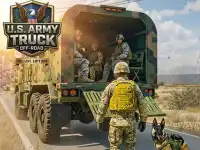
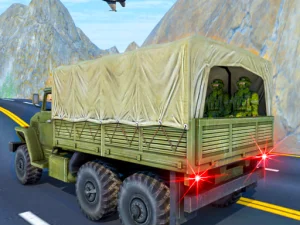
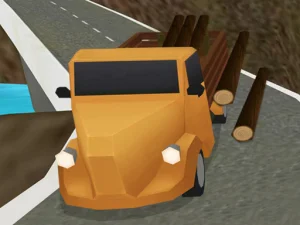
US Army Truck Driving is a current choice for players who want a transport mission. Its supplier describes military trucks carrying supplies through highways, mountains, muddy routes and off-road terrain. Your practical task is to follow the mission's guidance, avoid obstacles and deliver the cargo. Use the completion conditions displayed in the loaded mission rather than assuming that every delivery uses an identical parking procedure.
The published movement controls are WASD or arrow keys. Click into the game before testing them, then make a small movement to understand the response. A steady departure gives you time to see the route and judge the vehicle's position. Combining full acceleration with a large steering input before reading the first bend can create an avoidable problem.
Different truck games ask different questions
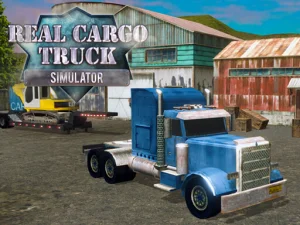
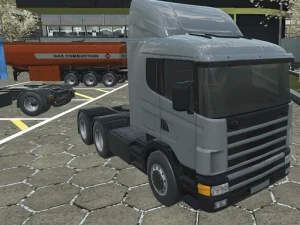
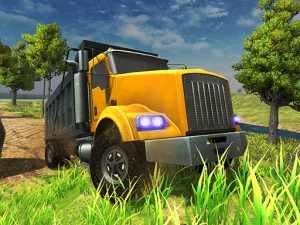
The visible collection includes names such as Top Down Truck Racing, Euro Truck Driving Simulator and several cargo or off-road driving titles. These are browsing choices with their own rules, not a single campaign shared across the page. A racing game can focus on making progress through a course, while a transport mission asks you to reach the destination under its stated conditions.
Select the kind of session you actually want. If you prefer a clear delivery objective, start with a transport title and read its current mission. If you want a race, inspect that game's driving guidance instead. If you specifically want to move a character across truck roofs, do not assume that a vehicle simulator supplies that mechanic just because it appears under a Cluster Truck search label.
Read the route ahead of the truck
In a delivery game, choose a speed that leaves time to interpret bends and obstructions. Look beyond the immediate front of the vehicle. A turn may lead into another restricted section, so think about the exit position as well as the first obstacle. Reduce speed before the space becomes narrow rather than relying on a last-second swerve.
Rough or muddy scenery is a reason to observe the game's response carefully. It does not establish an invisible damage penalty or one universal traction rule. Watch what happens on the current surface and use the mission's actual indicators. This keeps the advice tied to the loaded simulation instead of borrowing detailed mechanics from another truck game.
Practise a delivery in understandable stages
Break a difficult route into departure, constrained turns, obstacles and final approach. Keep a section that works while adjusting one uncertain decision. If you repeatedly miss a bend, review the earlier entry speed and position rather than changing only the final correction. A small, comparable experiment gives you a clearer reason for success or failure.
The truck delivery guide develops that approach for US Army Truck Driving. It covers reading the mission and confirming arrival without inventing a fuel system or mandatory upgrade routine. Treat it as advice for the game, not training for operating a real vehicle.
Start with realistic access expectations
The word “unblocked” cannot guarantee that a particular network permits the external game host. Play where games are allowed and distinguish a page-loading issue from a control problem inside a running mission. Give the game area enough room to read its route markers, keep keyboard focus on the play frame and follow the instructions for the title you actually selected.