A house is an easy place to understand at a glance. You can picture a kitchen, a hallway and what might fit inside an empty room. House games use that familiarity in different ways. One game can turn a household task into a risky race, another helps you recognize areas in the home, and a third lets you decide what a place should look like.
Last Updated:
Make ordinary chores into a route through danger
House of Hazards gives you a house with traps where completing tasks puts you into the path of the other players. If you've never seen the current route, look at where you can safely stop before beginning the next part. Familiar objects can be useful landmarks, but they can also hide the thing that interrupts the move you were planning. Look first at what the game wants you to accomplish in the area, then at the part of the room you have to cross to do it.
Take turns studying a task if you're playing with other people. A first attempt can be about finding where it starts and ends. Once everybody can recognize the route, pay attention to the timing. Running through the same danger again with a quicker start may help less than waiting until you can see what just happened. If the threat requires another player to act, what worked in an earlier run won't necessarily be safe at the same moment. A good approach gives you time to see whether the immediate path is actually clear.
Learn to read a space through its objects
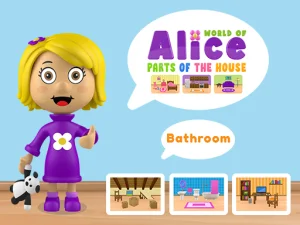
World of Alice: Parts of the House takes a more relaxed approach, using rooms and illustrations as its subject. Ask what the objects shown tell you about the room before picking an answer. A sink, a bed and a set of kitchen tools have associations you can use without reading every choice immediately. Look for two clues if one familiar object could belong in more than one place. The picture gives you a chance to reason about what the room is for, not just match the first thing you recognize.
When playing with a child, let them describe the activity they would do in that room. A good follow-up is to point to something else in the picture and ask whether it fits that activity. It keeps the conversation connected to the screen and lets them make the selection themselves. Give them time to see how the game responds before moving to the next picture. Taking a moment to name a real clue is a more interesting short visit than advancing quickly through screens without seeing why they changed.
Design one room you can explain
The Magic House gives you a home design task. Start from how you want to move through a room and choose one item or area to organize around. Decide where the main feature should sit and consider what you want to leave open nearby. An arrangement that looks interesting when all the choices are open may become crowded if you use the same amount of detail everywhere. Select a few things you want people to see first and let the rest of the room support them.
Play a short session by working on one corner or one room. When you have a layout you like, see what happens if you exchange just one item or change where it sits. The comparison lets you distinguish the effect of that move from the impression created by starting over. You can choose to keep something purely because it makes the room feel the way you wanted. That is the advantage of a design game when you're looking for a break from completing tasks under pressure.
Choose the space for what you want to do
For quick shared action, pick the house with tasks and traps. For a child who wants a picture-based activity, pick the one that uses rooms as clues. If you want to make a decision and see it stay visible, choose the decorating game. The building is a familiar starting point that makes those choices easier to understand. What makes the session yours is whether you decide to cross it, recognize it or rearrange it.