Pick a platform course if you want a clear next step
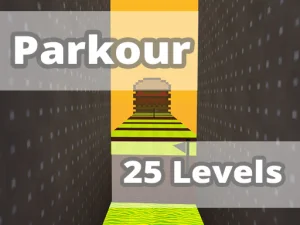
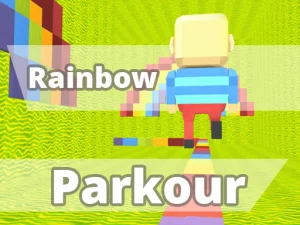
Kogama Parkour 25 Levels gives you a series of areas to cross rather than a team objective to keep track of. Your first few jumps are a chance to see how movement and view fit together. Line the camera up with the next landing before leaving the current platform. If the destination is narrow, pick the widest piece of it you can see. Aiming for a broad surface is more useful than adding a larger correction after the jump has started.
On a repeat attempt, take a moment to compare your starting place with where you fell. Some misses begin before the character leaves the block. If you were already turning, or heading across the landing at an angle, a stronger jump may leave you in the same position. Start closer to the middle of the platform and try a straighter approach. When the movement is predictable, moving through the route alongside another person is less distracting.
Learn a team's route before looking for a fight
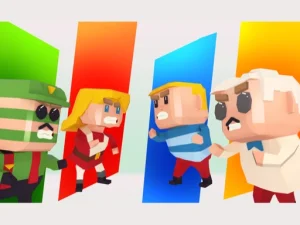
KOGAMA Two Fort places opposing teams in a 3D arena. Learn where your side starts, what cover you can recognize from there and where teammates usually move first. That gives you a return path after leaving your starting area. If you emerge in the same open stretch on every attempt, try a route with a corner you can reach without crossing the entire space. Look for areas that let you see one approach at a time.
Team play also changes when a room feels busy. Treat another player's movement as information about where a route leads, not as a promise that it's safe right now. A teammate may be heading to a different objective or starting from a position you can't reach as easily. If you want a reliable comparison, keep using one entry for a few attempts, notice what you meet on arrival, then find a different entry when the first doesn't suit you. The map starts to make more sense once you can recognize its parts independently of where everybody is running.
Explore instead of racing across the map
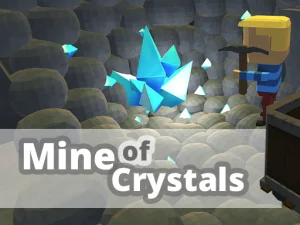
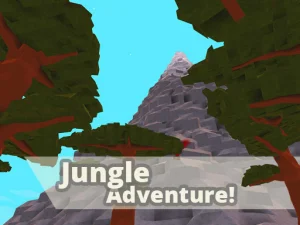
Kogama Mine of Crystals sends you through caves to find crystals. Pay attention to how a passage looks from both directions. A landmark is particularly helpful if you plan to step into an offshoot and then return to a larger chamber. Take a little time to see what's beside you where two passages meet. If you move through every junction without looking, the way back may look much less familiar than the way in.
When choosing a first map, think about what you want to measure. In parkour you can tell that one crossing became more reliable. In an arena you can establish whether a route gives your team more useful space. In the mine you can learn a connection between two passages and use it again. All three provide progress you can describe, even if you don't finish a whole session or worry about another player's pace.
Read the room when your game opens
The browser page can load before the specific game or room is ready. Check the prompts and the player name, and give it time to show what options are available. On desktop, focus the game area if movement is going to the browser instead. When a map you expected doesn't show up, return to the catalog and open the exact named map rather than guessing among similar tiles. You'll spend more of the session learning a place you actually wanted to visit.