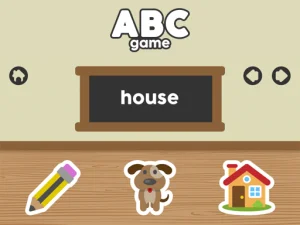
Use the whole word in a picture-matching activity
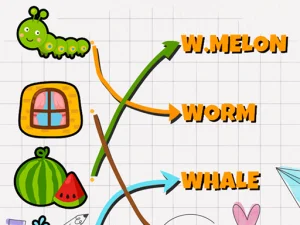
ABC game presents a word above several pictures. In the verified example, juice appears with a drink, an umbrella and an apple among the choices. Read the word, name the illustrations and select the image that represents it. The documented interaction is a mouse click or touch selection.
Look beyond the first letter before deciding. Recognising an initial shape can be a useful start, but the complete word-and-picture relationship is the task. Saying the object names aloud gives a learner another reference for comparing the written form with the images.
Read a five-letter board as accumulated evidence
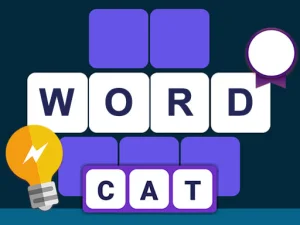
The established Wordle page opens Super Wordle Game, whose menu offers Daily Word and Scrambled. The verified Daily Word mode uses five spaces per word and six rows of attempts. Select its on-screen letters to enter a candidate, use the back arrow for a correction and submit an accepted word with the blue TRY button.
An INVALID WORD message asks for a changed entry before you continue. When a guess is submitted, green marks a letter in the correct position. Yellow or amber indicates that the letter belongs elsewhere, while grey marks an unsuccessful letter choice. A letter's identity and its position are separate pieces of information to carry into the next row.
Check a proposed guess against every previous row
Begin with a familiar five-letter word, then examine the response before entering another. Keep confirmed positions, consider a different position for a misplaced letter and use uncertain spaces to test information that still matters. Several unrelated familiar words do less useful work than guesses connected with the evidence already shown.
Before pressing TRY, compare the candidate with the completed rows and the coloured keyboard. Ask which uncertainty the new word addresses. This uses the limited attempts for a purpose and helps prevent repeating an arrangement that the board has already shown to be unhelpful.
Recognise the difference between vocabulary and deduction
ABC game gives a learner a visible set of objects to compare with a written word. Daily Word instead asks the player to infer an answer that is not displayed, using feedback from submitted words. A person can enjoy one activity while finding the other unfamiliar because the reasoning and vocabulary demands differ.
For the picture activity, an adult can ask why the other illustrations have different names. For the hidden-word puzzle, describe what one coloured letter tells you about the next candidate. In both cases, explaining the connection is more useful than selecting quickly without knowing why the choice fits.
Choose the level of letter work you want
Pick ABC game for a short word-and-picture association session. Pick Daily Word when you want to manage positions, letter choices and a limited set of guesses. The presence of Scrambled in the mode menu does not make its rules identical to Daily Word, so read its own instructions if you choose it.
The on-screen keyboard in the verified word puzzle provides a direct input route without depending on a particular physical-keyboard shortcut. Use the game interface that you can read comfortably, and finish a session with one useful observation about a word, a letter position or the feedback you nearly overlooked. Browse another Letters member when you want to change the kind of language task.