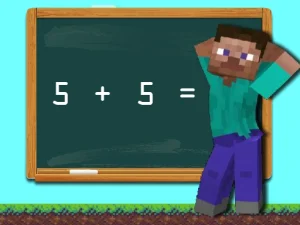
Begin with a clear arithmetic challenge
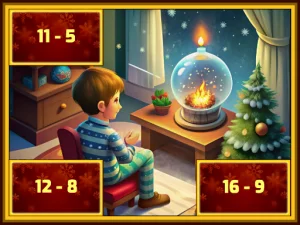
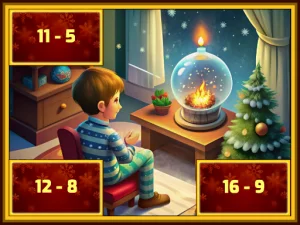
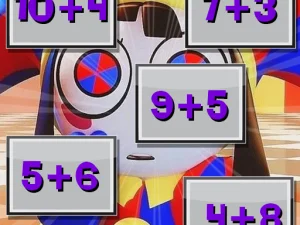
Noob Math Challenge is a useful starting point for addition and subtraction. Its questions use small whole numbers and offer answers on screen. You read the operation, calculate the result and click the matching number before the timer expires. Correct answers increase the score and bring another question; a wrong choice or an expired countdown ends the round. That makes it suited to practising careful decisions within a limited time.
The important distinction is between knowing the calculation and managing the interface. A player can understand eight plus three yet lose a round by clicking the neighbouring answer. Start by identifying the sign, then solve the problem, then locate the result. This separates the thinking from the mouse movement and gives you a more useful idea of which part needs practice.
Choose the kind of numerical thinking you want
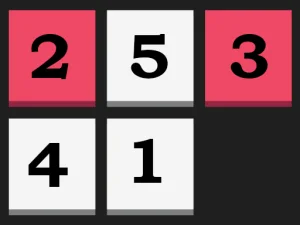
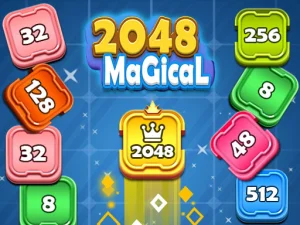
This collection includes titles presented around addition, subtraction, multiplication, quantities, sequences and number puzzles. Those subjects suit different goals. A calculation quiz asks for a result, while a sequence task asks what belongs in an ordered pattern. A puzzle involving numbered blocks can require planning where a value goes. Read the selected game's description to establish its objective instead of treating every numbered board as an arithmetic test.
For basic number confidence, look for a task whose opening instructions are immediately understandable. If you already recognise simple sums reliably, choose a different operation or a puzzle that makes you plan several decisions. A familiar character or colourful picture can help a game feel inviting, but the actual mathematical task should guide your choice.
Accuracy comes from checking the operation
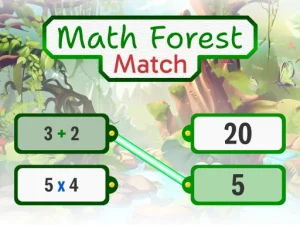
Before answering a sum, say the operation to yourself. Addition increases a positive starting number; subtraction removes an amount. Use that relationship as a quick reasonableness check. If a small subtraction produces a much larger answer in your head, pause and calculate again. With multiplication, breaking a fact into an easier one can help: six times four is five groups of four plus one more group.
These are practice strategies, not extra rules shared by every game here. Follow the active game's scoring and input instructions. Where a timer is present, first establish an accurate method, then work on shortening it. Guessing faster can raise the number of attempts while leaving the same misunderstanding unresolved.
Make a short session useful
Pick one focus for a session, such as reading minus signs carefully or checking an answer before selecting it. After a mistake, solve that same calculation away from the countdown. Work out whether the difficulty came from the arithmetic, a misread symbol or an accidental click. Then return for another attempt with a specific adjustment rather than repeating the same hurried approach.
When helping a younger player, ask how they reached an answer before giving the result. Counting objects, grouping equal amounts or explaining a number pattern can reveal their method. Choose a level of difficulty they can reason through; a high score by itself does not show which skill has improved. Game scores are feedback about a particular activity, not a school assessment.
Find a comfortable format and keep exploring
On a small screen, check that digits and answer areas are easy to distinguish. Input methods vary between games, so confirm whether the chosen title expects clicking, tapping or another action. If you prefer wider problem-solving beyond arithmetic, the puzzle games collection provides another route to explore. Return to math games when you want numbers and calculations to be the focus of your next session.