Start with Motorcycle Stunt Racing
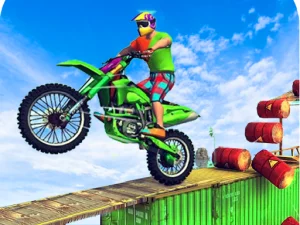
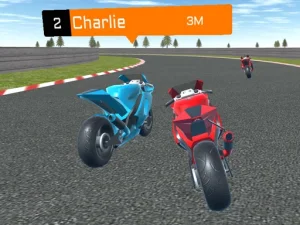
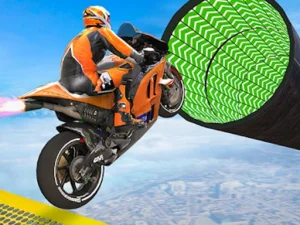
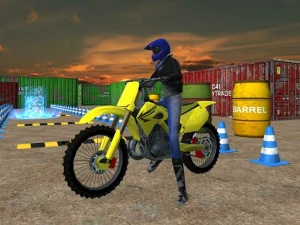
Motorcycle Stunt Racing combines races against AI riders with obstacle courses and high-speed tracks. Its documented controls are WASD to drive and Shift for nitro. Learn the selected bike's ordinary response before using the extra speed during a complicated section.
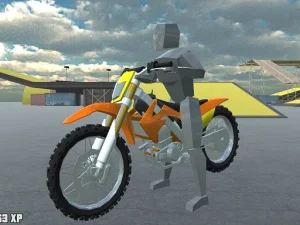
The supplier describes opportunities to unlock bikes with greater power and performance as progress is made. Inspect the choices actually available in the loaded game instead of expecting every bike to be selectable immediately. An unfamiliar vehicle gives you another movement response to understand.
A sensible opening goal is to read the next course section and keep the motorcycle directed toward a manageable continuation. Speed becomes easier to use when you know the line it needs to follow. A rushed approach can make a straightforward obstacle harder to assess.
Plan the exit as well as the entry
Identify where you want the bike to be after a feature, not just the point you want to reach first. Passing an obstacle is more useful when the resulting direction leaves you ready for the following section. Keep that continuation in view as you approach.
If an attempt goes wrong, divide the manoeuvre into its setup, the passage through it and the recovery afterward. An awkward exit may have begun with the angle chosen earlier. Adjusting the entry can be more effective than making a larger correction at the final instant.
Use a familiar section to compare changes. Try a more deliberate approach while keeping the bike and the intended line steady. If several choices change at once, a better result can be difficult to explain or repeat.
Give nitro a particular job
Shift supplies the documented nitro function. Introduce it when you understand the next passage and can identify why extra pace is useful there. Using it while still correcting an uncertain route can make the movement harder to manage.
Read the current interface for any additional conditions rather than assuming a fixed boost duration or refill rule. Those details are not established by the basic control instruction. The useful habit is connecting the speed choice to the course you can actually see.
During an overtaking attempt, inspect the space beyond the other rider. Reaching the rival is only part of the move; you also need a route after going alongside or past. Compare the opening with your current direction instead of treating every nearby opponent as an immediate invitation to change line.
Make race practice specific
After an unsuccessful run, remember the first point where your actual position stopped matching the intended route. You may have noticed a feature late, used nitro before the line was clear or focused on a rival while overlooking what came next. Choose that decision as the focus of another attempt.
A short session can improve one approach without requiring a complete account of every track. Recognising a better entry or making fewer recovery corrections gives you something useful to carry into the next run.
Browse another motorcycle title when you want a different course or objective. Learn its keys and any progression rules independently rather than carrying over the Shift function automatically. The collection connects the interest in bike-based play; reading the selected game's route and feedback gives each ride its practical direction.
The verified opponent description is AI racing. Read any further session options in the loaded game rather than assuming this particular motorcycle contest needs a human online rival.