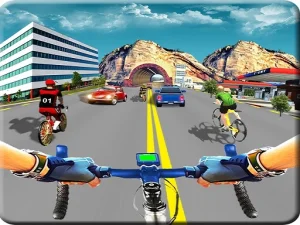
The specific downhill bicycle game
MX OffRoad Mountain Bike is the direct choice for the 3D mountain bicycle game. Its menu shows Mountain Ride, Free Ride and a Shop. Structured rides involve difficult terrain and checkpoints, while the free-riding option gives you room to explore. The shop uses the game's rewards for customization choices; read the actual item information before assuming that a visual change alters how the bicycle handles.
The WASD and arrow-key groups are used for riders. Check the selected mode's on-screen player assignment before beginning, especially when two people share the keyboard. The distributor documents a respawn control for getting unstuck, including R, and a visible restart button is available to consult. These instructions should not be replaced by guessed motorcycle controls or a jump technique borrowed from a different game. Click in the player if keyboard input scrolls the website instead.
Read a mountain route in manageable sections
For a checkpoint descent, identify the ground you need to cross and the direction you want to face afterward. Looking farther down the route gives you time to slow before a narrow passage. If you wait until the bicycle reaches an edge, braking and steering become harder to separate. A measured first passage helps you understand the obstacle before trying to improve the pace.
Ramps deserve the same planning. Look at the space beyond the takeoff, not just the ramp itself. More speed can create more airtime while leaving less room for the next turn. Compare approaches to a familiar feature by changing one part of the entry at a time. Notice where the bicycle arrives and whether the position lets you continue. A repeatable landing is a better reference than a spectacular recovery you cannot explain.
Compare other riding styles on their own terms
The surrounding collection includes varied racing and stunt cards. Before choosing one, check whether you will be steering through a 3D space or controlling a vehicle from another perspective. Find out whether success means a finish line, a checkpoint, a score or a particular maneuver. The artwork cannot reliably answer those questions. Read the selected game page and follow the instructions its own interface provides.
This distinction also helps when deciding how much time to allow. Learning a route is different from experimenting freely, and a shared-keyboard session requires agreement about controls. Two-player language should not automatically be interpreted as remote online multiplayer. Check how the chosen game actually introduces the second player and what each person needs to control. A familiar title fragment is not enough to establish those details.
Improve the next attempt rather than repeating it
When a bike becomes stuck, first identify the entry that caused the problem. Respawning can return you to a usable position, but it cannot by itself improve the route. On the next approach, change the angle, speed or timing that the visible situation suggests. Avoid changing all three at once if you want to understand the difference. Read any checkpoint and restart information the game displays instead of assuming every recovery preserves identical progress.
The MX OffRoad route guide develops these decisions for the named bicycle game. Use a device with its documented inputs, give the player time to load and distinguish a full-scene performance problem from a mistake at one obstacle. This collection is most useful when it helps you select a specific riding challenge with clear controls and a pace that suits your session.