Understand the attack before adding speed
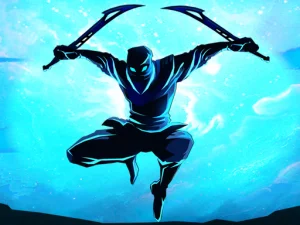
Dash & Slash uses a held left mouse button on desktop: point in the direction you want, then release to launch. On a phone or tablet, swipe toward the intended direction. The release or swipe sends the hero into the sword dash.
Begin with a target whose position is easy to read. Watch the path produced by the input and the point where the hero arrives. That gives the next movement a concrete reference instead of leaving every attack to an uncertain gesture.
Movement and striking are connected in this action. You are selecting a line that should reach an opponent while also placing the hero somewhere useful. Think about both results before releasing, especially when another threat is close to the intended destination.
Read a short arena as a sequence
Look across the visible enemies and obstacles before choosing the opening target. A nearby opponent can be an obvious choice, but the position afterward may affect which attack is sensible next. Compare the route as a few connected decisions rather than a collection of unrelated hits.
After the first strike, take stock of the new arrangement. The hero's position and the remaining opponents now define another line to consider. An opening plan is useful, while the result of the actual dash should guide whether it still fits.
The objective to leave no opponent standing makes the order worth examining. If a late enemy becomes awkward to approach, think about whether an earlier target choice left the difficult position. Revising the sequence may answer the problem more directly than repeating the final move with the same setup.
Distinguish direction from timing
When the dash misses the intended line, make the next aiming or swiping action more deliberate. Check the hero's position and the target before committing. A clearer directional input lets you see whether the planned route is actually the one being travelled.
If the line was correct but the result was unsafe, examine the obstacle and the position where the movement ended. The issue may be the chosen route or sequence rather than how accurately you pointed. Those questions deserve different experiments.
Keep attention beyond the enemy you are attacking. Reaching that target can be only the first part of the movement's effect. Space around the endpoint helps you judge what the next strike could accomplish and whether the approach has put you too close to a hazard.
Give another attempt a specific purpose
Choose one change that the previous attempt suggests. It might be a different opening target, a more controlled direction or an endpoint with a clearer continuation. Keeping the experiment understandable makes a successful adjustment easier to repeat.
Use the documented one-motion action as the starting point. The confirmed instructions do not require a separate firing key, a special equipment build or a named dash upgrade. Read additional options if the current player introduces them, then connect them with a real purpose.
The other Ninja cards can offer different combat and movement ideas. Check their individual instructions before carrying over the release action from Dash & Slash. For this arena, the central skill is making each fast-looking movement a considered choice about direction, target and the position that follows.
Before the next input, locate the hero again; a new origin changes the angle to a target even when the target has not moved.