Read the sign in Noob Math Challenge
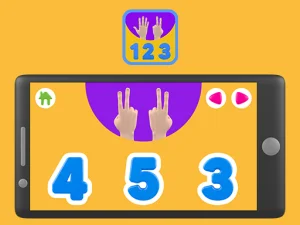
Noob Math Challenge uses small whole-number addition and subtraction questions with answers displayed on screen. Select the matching result with a mouse click. A correct answer raises the score and brings another calculation. An incorrect selection or an expired countdown ends the round.
The question setup uses a twenty-second countdown. Addition selects single-digit values, while subtraction pairs a value from five to nine with a smaller value from one to four. Recognising the sign before answering is therefore part of the challenge. Do not respond to familiar digits as though every question asked for the same operation.
Recognise a product in Multiplication Roulette
Multiplication Roulette provides a sequence of ten questions. Start the roulettes with the Spin button, stop them to select the factors and work out their product. Its documented interaction uses clicking or touch with the on-screen controls. The moving selectors add variety to the factors, not a reason to add them together.
Read both values before answering. If a multiplication fact is uncertain, connect it to a nearby fact you know. Six groups of seven can be understood as five groups of seven plus another seven. That gives you a method to review after the session rather than relying only on whether a quick answer happened to be correct.
Separate calculation from choosing the response
A multiple-choice display can tempt you to pick a number before finishing the calculation. Work out the result first, then locate it among the offered responses. This helps you distinguish an arithmetic error from a selection error. The distinction matters when deciding what to practise during another attempt.
Use simple reasonableness checks. Adding a positive amount should increase the starting value, while subtracting a smaller positive amount should reduce it. A multiplication question asks for equal groups. These checks support your reasoning; they are not extra scoring rules or a guarantee of success in every game grouped under the number tag.
Use a timed session without making speed the only goal
Begin with a method you can explain. A fast guess that keeps repeating the same misunderstanding gives less useful feedback than a deliberate answer. Once the calculation is reliable, see whether you can recognise it more readily. Improve accuracy and fluency together instead of treating them as competing targets.
After a mistake, revisit the exact problem away from the active countdown. Identify whether you misread a sign, forgot a product or selected a neighbouring answer. A small correction based on that observation gives the next session a clear purpose. Simply starting another round faster may leave the same difficulty untouched.
Choose a task that fits your current focus
For switching between elementary operations, the Noob quiz provides a compact challenge. For multiplication recall, the roulette sequence gives you ten products to consider. Neither format should be treated as a complete assessment of mathematical ability. Game feedback describes performance in the particular activity and conditions you have chosen.
Check that the digits, signs and response areas are easy to distinguish on your screen. Read another title's own instructions before transferring these controls or its question structure. Use the number collection to find a manageable numerical task, then give your answers a method that you can understand and improve.