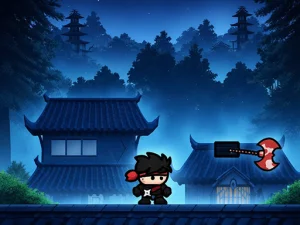
Samurai games can use the theme for a platform route, a room escape or a fight. A sword in the artwork does not tell you which kind of control the game uses. Start with the action the title describes and the first prompt on screen. Two options in this collection make that difference clear: one gives you a hook to help a rabbit move through a level, and the other asks you to collect and use objects to find an exit.
Last Updated:
Look at the route beyond a hook point
Rabbit Samurai 2 sends a rabbit through obstacles to recover carrots and bees. The game uses a hook as part of its movement, so first learn where you can attach it and how that changes your route. Locate the next place you would like to reach and select a starting point that lets you observe the movement. Follow the rabbit until you see where the hook takes the character. A good route depends on that result as well as on the place where you started.
When an item is near an awkward gap, look past it at where you could go after collecting it. A small detour can make sense if it reconnects to a route you already know. If it leaves you facing a difficult return, choose whether you want to learn that return now or continue along an easier path. After a missed pickup, remember whether the hook began the move from the wrong place or the item was reached from a poor direction. That observation gives you a reason to change a specific part of the next try.
Pair what you find with the obstacle it can solve
Samurai Escape is a room puzzle about finding items such as keys and matchsticks. Read the controls for moving around and selecting objects. When you reach a place that will not open, remember one detail about it that might help you recognise a useful item later. Check the surroundings for an object you can take. Then compare what the object suggests with the place that needs it.
Keep a short mental inventory as you move through the scene. A key is most useful when you have a reason to try it at a particular opening. A matchstick can point your attention to a place where the game suggests using fire. Follow the prompts the puzzle presents and notice how the scene changes after an action. A new item or a change in an old location can become the clue for your next move. If you get stuck, revisit the clearest unresolved spot first and consider which available object could affect it.
Work forward from a useful observation
In a hook platform game, observe where a move leaves you ready to go next. In a room escape, observe which route or object becomes available after you make a change. Each observation provides a logical next step. If you are unsure how to continue, choose a small area you can inspect without disturbing the part that already works. Learn one reusable movement or solve one clearly described obstacle before trying to finish the whole scene.
Once an opening route becomes familiar, use it as a starting point for a harder task. In Rabbit Samurai, a known part of the level lets you spend more attention on a missed item. In Samurai Escape, an opened route lets you check a new location without guessing which step came before it. Remember one point of progress and use it to decide where to resume.
Choose the kind of samurai adventure you want
Open the rabbit's platform route when you want to learn a physical movement and see what it lets you collect. Open the room escape when you want to read clues and test which objects belong together. In either game, watch for the first action that creates a real change in the scene. It gives you a reliable point from which to plan your next move.