Read a moving arena in Blocktrail 2048
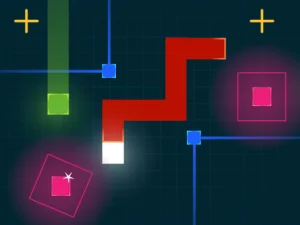
Blocktrail 2048 asks you to gather blocks and grow a number trail while sharing an arena with rivals. Weaker opponents offer points, while stronger ones are a threat to avoid. Your route must balance useful collecting with enough space to respond to nearby movement.
The documented controls allow mouse, WASD or arrow-key movement, with Space for boosting. Begin with one comfortable movement method. Watch how the trail follows and how a boost changes the approach before using it in a crowded area. A power-up or moving Golden Cube is attractive only when the route towards it remains manageable.
Judge a landing in Slime Jump
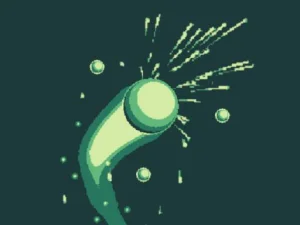
Slime Jump: Crown Quest gives you a different practice task. Hold, aim and release a slime towards a platform, then continue towards the crown. Mouse and touch inputs are documented. The supplier describes one hundred and fifty levels, with new arrangements that need another look rather than a copied sequence.
Choose an arrival point before releasing the launch. After landing, plan from the slime's actual position. A jump that reaches the platform near its edge may leave a different next angle from a jump that lands nearer the centre. Watch that result instead of assuming that touching the platform completes all the planning.
Break the skill into smaller decisions
In the arena, separate recognising a stronger rival from choosing the movement that keeps you away. In the platform challenge, separate selecting a landing from aiming the launch. If both decisions happen in a hurried blur, it is difficult to know which one needs attention. Naming them gives you something specific to practise.
Use a manageable situation first. Learn how an ordinary turn or launch behaves before adding a crowded route or a difficult gap. That does not require the game to provide a formal training mode. It means using the opening opportunities to observe the available input rather than immediately demanding a perfect long attempt.
Make retries comparable
When an attempt ends, keep one part of the next attempt familiar. Revisit a similar landing or a clearer collecting route and test a measured change. If you alter direction, timing and objective together, a better result may be difficult to explain. A repeatable correction is more valuable than an improvement you cannot describe.
Also notice when the situation itself has changed. A moving rival or a new level layout can make an old action unsuitable. Skill includes recognising that change, not merely reproducing a memorised input. Look again at the current target and available space before using a movement that worked in another arrangement.
Choose a useful measure of progress
Growing a longer trail and reaching a crown are different results. Judge improvement within the selected game: fewer avoidable encounters in the arena, a more consistent landing in the platformer or a clearer decision before committing. A final score is useful feedback, but it does not explain the whole path that produced it.
Set a small session goal and stop long enough to notice whether it improved. Check that the controls and screen layout let you see the information you need. Explore the skill collection for tasks you enjoy learning, then let each game's objective guide the kind of practice you give it.