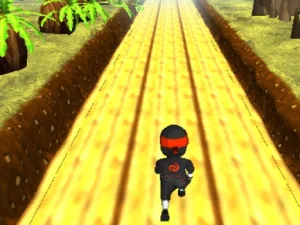
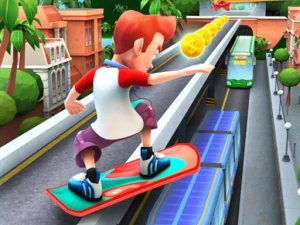
Identify the running game inside the player
The displayed names also include Subway Surfers Spacestation, Subway Surfers Orleans, Subway Surfers Runners and Angry Rooster Run Subway. Similar wording is a reason to inspect the selected destination carefully, rather than proof that all versions share a developer, account or progress system. Look for the opening title and any tutorial prompts before the first attempt.
This distinction matters when familiar scenery leads you to expect a particular action. One version may use a different viewpoint or explain its inputs differently. Start with the controls given by the game in front of you. Once you know what the input changes, you can concentrate on reading the course instead of repeatedly testing an assumed command during a busy section.
A verified example with a different cartoon identity
The established Subway Surfer Runner page in the wider catalogue currently opens Tom & Jerry Run. Jerry runs through a furnished indoor setting, avoiding obstacles and collecting cheese. Its tutorial assigns the sideways movement to the left and right arrow keys, jumping to Up and ducking to Down. This example shows why checking the loaded title is useful: the playable cartoon game has its own identity despite the name of the catalogue page.
When trying that runner, watch the next obstacle before pursuing a piece of cheese. The counter records collected cheese, but a pickup is only useful if the movement also leaves a safe way through the approaching section. Learn the route response first. You can then decide which optional objects fit a controlled attempt without pulling attention away from a barrier.
Distinguish going around, going over and going under
These are different decisions even when a runner offers all three. A sideways change needs enough room on the chosen side; a jump needs a usable landing area; ducking needs to be timed to the obstacle it is meant to clear. Read the selected game's tutorial to establish which actions exist before applying this comparison to a route.
Practise recognising the required action early. If two obstacles arrive close together, consider the second one before completing the first movement. That helps you avoid a successful dodge that places the character directly in the path of the next difficulty. Keep your inputs deliberate enough that you can understand which movement produced the outcome.
Use the scene to judge timing
The size and position of an approaching object can help you judge when a response is needed. A moving camera changes those visual cues, so use an early attempt to become familiar with the viewpoint. Compare where the obstacle was when you acted with where the character ended up. That gives you a reference you can adjust on another attempt.
If an action fails, separate recognition from execution. Did you choose the wrong response, or choose the right one too late? Those problems call for different practice. Recognising the obstacle sooner will not correct an input you have misunderstood, and pressing an understood command more forcefully will not change its assigned function.
Choose the next session for its own challenge
Use the collection to explore different presentations of running, while checking each game's actual objectives. A title containing endless does not tell you every scoring rule or unlock condition. Consult the current interface for those details, and avoid assuming that results from one destination will be restored in another.
When a short attempt ends, remember one thing you learned about the route or character response. Choose whether to retry that same difficulty or return to the grid for another title. This makes browsing purposeful: you are selecting the kind of movement practice you want, rather than treating every similarly named card as an identical copy of the previous game.