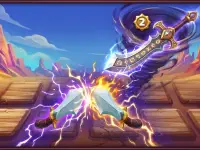
Understand the single motion
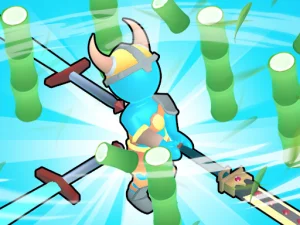
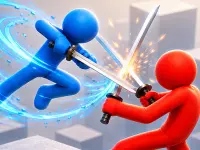
In Dash & Slash, desktop input begins by holding the left mouse button. Point toward the direction you want, then release to launch the character. A phone or tablet uses a swipe in the intended direction. Start with a clear target so that the action and its resulting path are easy to connect.
The documented opening controls do not require an additional fire command or a sword-upgrade system. Learn the directional action presented by the current build before expecting features from a different ninja game. A familiar weapon does not establish a familiar control layout.
Choose the end of the attack
The nearest opponent is only part of the decision. Look at the position where a successful dash would leave you and the danger nearby. Reaching the enemy may be an immediate success while still making the next action awkward. Planning the end position helps connect individual attacks into a readable sequence.
Before releasing, identify the obstacle that matters most to the proposed direction. You do not need a perfect prediction of every possible event. You need a reason for that route, so that its outcome can confirm or challenge a particular choice.
Distinguish aiming from target order
When an attempt fails, ask whether the character travelled where you intended. If it did not, the next useful experiment concerns a more deliberate directional input. If the path was accurate but the outcome was poor, reconsider the destination or the order in which you approached the opponents.
These are different problems. Changing the whole sequence because of one uncertain swipe can make a clear plan harder to evaluate. Repeating a precise but unsuitable route will not solve the positional issue either. Let the observed path tell you which kind of adjustment is justified.
Read a small arena as a connected problem
The stated aim is leaving no opponent standing. Survey the available targets and hazards before choosing an opening. One useful opening may leave you able to understand the following strike more clearly, while another may place the hero close to a threat you overlooked.
Use a successful part of the arena as a reference. Keep that part consistent when testing the difficult continuation, rather than inventing a new opening on every attempt. This gives you a comparison you can explain without claiming that an undocumented special ability will repair a poor position.
Separate the weapon theme from the rest of the catalogue
The Sword collection contains separate games, and their objectives should be read on their own pages. A title may involve a blade while asking you to perform a different action from Dash & Slash. Do not transfer its release gesture to another entry unless that player's instructions establish it.
For a focused session here, aim to improve one directional choice or recognise a better finishing position. Observe the loaded interface for pause, restart and progress information instead of assuming a shared save between sword games. The valuable habit is knowing what a strike is meant to achieve beyond contact with its immediate target.
When choosing the next card, decide whether you want another short positional problem or a different sort of adventure. That preference is more useful than expecting every game under the same weapon label to provide identical combat.