A passing puzzle rather than an assumed tournament
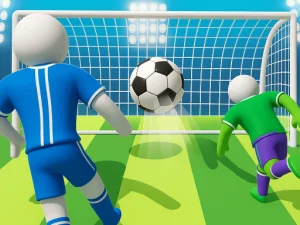
Choose Toon Cup Football to try the embedded Soccer Challenge version. Its publisher describes thirty levels and an objective of reaching the goal using fewer passes. Click or tap a yellow teammate to send the ball, while checking that no red opponent lies between sender and receiver. Tap the goalpost when you are ready to attempt the finish.
These rules reward reading the arrangement. Identify the player with the ball, locate the goal and inspect a possible receiver before selecting them. A nearby yellow player is not automatically the best choice. The connecting line matters, and the position left after a successful pass should give you a reason for the next decision. Treat each transfer as part of a route.
Check both sides of a useful setup
An intermediate teammate can help approach the next part of the field from a different angle. To evaluate that setup, inspect how the ball reaches the player and how it would continue afterward. A safe first transfer can still be unhelpful if the following approach is obstructed. Looking one step ahead helps you distinguish a purposeful setup from a pass that only moves the ball elsewhere.
You can also reason backward from the goal. Find a yellow player who appears to offer a useful final approach, then consider how the current holder could connect to that position. This can reveal why a tempting early pass leads away from the solution. Use forward or backward planning according to which makes the current arrangement easier to understand.
Improve a route after you understand it
The low-pass objective encourages efficiency, but a short route still needs unobstructed connections. First look for a sequence that appears legal. Then ask whether any intermediate transfer can be removed without introducing an interception risk or spoiling the final approach. This keeps the scoring aim connected to the puzzle's actual rule instead of encouraging reckless direct passes.
After an interception, identify the segment that caused the problem. Did you overlook a red player, misread the line or select a different teammate from the one you intended? Each explanation suggests a particular adjustment. Keep the parts of the route that you can justify and reconsider the first uncertain decision rather than changing the entire sequence without a reason.
Find the right kind of football session
The Soccer Challenge passing guide develops this planning process in more detail. It explains reading open lines, working backward from the goal and comparing shorter routes. Use it for the specific puzzle version described here, then check any other game separately. A shared football theme does not prove identical inputs, scoring or multiplayer support.
If you wanted a real-time match rather than a passing brain-teaser, inspect another destination's own description before starting. Several players on a field can be puzzle elements rather than people joining a live session. Knowing that distinction makes collection browsing more useful and avoids applying movement or shooting keys from another football title to a click-or-tap puzzle.
Let the visible arrangement guide the next choice
Begin an attempt with one clear goal, such as checking every proposed passing segment before the first selection. On another attempt, concentrate on whether each intermediate player gives the route a useful continuation. These are observable decisions that help you understand the result. Read the current interface for pause, restart and progress information, and use the collection to discover alternatives without assuming that unrelated games share saved progress.