Start with the evidence in a picture
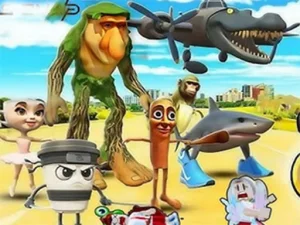
Italian Brainrot Tung Tung Sahur Anomaly provides a five-difference challenge with mouse interaction. The important action is comparison: determine which detail is different, then select its location. The artwork supplies the Brainrot theme, but recognising a character is not itself the objective.
Begin with a landmark you can identify reliably, such as a prominent outline, and compare the neighbouring detail. Move across the scene in a deliberate sequence. This reduces the chance of overlooking a quiet corner while repeatedly examining the part of the picture that first caught your eye. You are trying to improve coverage, not simply to stare longer at the same feature.
When a possible difference attracts your attention, state what looks changed before clicking. A shape, an outline or an object's presence gives the choice a reason. If the response is unexpected, reconsider the detail and its exact location. Do not assume that rapid repeated clicking is equivalent to having found the required difference.
Separate uncertainty from an overlooked region
Two kinds of difficulty can feel similar. You may be unsure whether a detail truly differs, or you may not yet have inspected a section thoroughly. In the first case, compare that detail more carefully. In the second, move your attention to the neglected section. Distinguishing these problems makes a second look more purposeful.
The verified description establishes five differences but does not establish a universal time limit, a fixed hint supply or an incorrect-click penalty. Read any such information in the current game rather than planning around an assumed rule. Track the target through its interface and keep the search relevant to the illustration you actually see.
Recognise when the task becomes a launch
The separate Tung Tung Sahur rescue game uses a slingshot-style adventure. It asks you to launch the character and rescue kidnapped Brainrot characters from zombies. The supplier documents mouse clicks or taps, with targets and traps in the levels.
Here, inspecting the scene prepares an action whose path must be observed. Identify the destination and a possible obstruction, make an understandable attempt and notice where the result differs from your intention. You are learning a response and an approach. Advice about scanning illustrations cannot supply a winning launch gesture.
After a miss, focus on the point where the approach became unsuitable. Revise that choice using the controls explained by the player. A useful retry should answer a question about the scene; it should not rely on invented keyboard shortcuts or a promise that all levels share one angle.
Compare other cards without guessing their mechanics
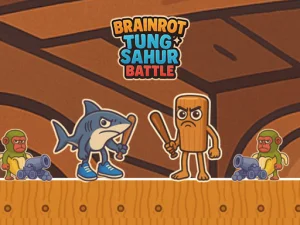
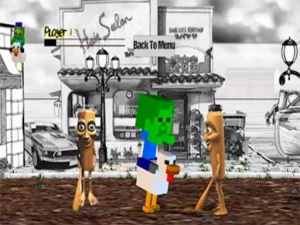
Hugli Wugli vs Tung Tung Sahur, Chicken Jockey Tung Tung Sahur Fight, Tung Tung Sahur Reassembled and Brainrot Tung Sahur Battle are among the separate names currently listed. An ambulance-themed entry is also present. These are catalogue memberships, not proof that every title follows either of the two activities explained above.
Open the page of a title that interests you and read the objective it actually states. Consider whether you want measured inspection, repeated movement decisions or another kind of activity. The current game instructions should settle the input method; a shared tag does not make all games interchangeable.
Make the collection useful on your next visit
Remember a title together with its task, such as Anomaly for comparing illustrations or Tung Tung Sahur for the rescue launch. That association is more useful than remembering only the collection label. Check each player's pause or progress information before leaving. Unblocked is part of the page name and does not guarantee access on a restricted network, identical device support or a shared save between these games.