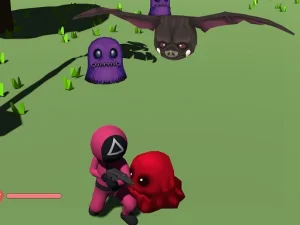
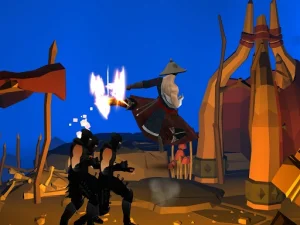
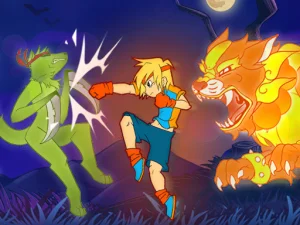
Choose the boxer you intend to control
Boxing Fighter Shadow Battle leads to a Start screen, a player option and a character selection with eight numbered choices. Inspect the highlighted selection before continuing. That establishes which boxer you are taking into the match, without relying on a character or setting inferred from the catalogue name.
Read the contest as an exchange between two fighters. You need to notice the other boxer's position while deciding where your own fighter should stand. Movement, attacking and defence have distinct jobs, so learning one key at a time gives you a clearer opening than holding several unfamiliar inputs together. When returning to character selection, check the highlighted choice again before continuing with another boxer.
Connect movement with an attack
WASD moves your boxer and Z attacks. Begin by approaching deliberately, then use an attack when the opponent is in a position you can read. Watch the response before immediately repeating the input.
Distance matters to the decision to advance. Closing space may create an opportunity to strike, while also bringing the other fighter within reach. After an exchange, look again at the gap between the boxers instead of acting as though the position remained unchanged.
If you keep attacking while moving in a direction you have not checked, it becomes harder to explain an unsuccessful exchange. Practise a short approach and one intended action. The result provides something you can compare with a later attempt, even before you have mastered the whole match.
Make defence part of the rhythm
C is the documented defence key. Learn its response while you can keep the other fighter clearly in view. Adding a defensive pause between attacks creates another choice besides continuous pressure.
Observe what happens when the opponent advances. You may need to adjust position, defend or wait for a clearer moment to act. The useful question is which response the current exchange calls for, rather than how often you can press the attack key.
Compare two approaches during practice. Notice the result when you move forward without interruption, then pay attention to an exchange in which you stop and respond to the other boxer's movement. This is a comparison of decisions, with the visible result settling what worked in that situation.
Identify the first part of an exchange to improve
A difficult moment may start before the final visible hit. You might have approached from an awkward position, kept attacking after the gap changed or delayed a defensive response while concentrating on another input. Remember that earlier decision when choosing what to practise next.
Keep the next goal specific. Learn to use C deliberately, or make the movement before Z more controlled. Changing one part of the sequence is easier to evaluate than trying to improve movement, attack and defence simultaneously.
Use the game's actual display to understand progress and further options. The confirmed controls and character screen do not establish hidden special-move combinations or an equipment system. Add an action when this version explains it, so the practice remains connected to the game you loaded.
The Warrior collection provides other combat-themed cards when you want a change. Check whether the next title involves a ring, a different environment or another style of character control. A fighting theme links the choices, while the selected game's own instructions explain how to manage its particular encounters.