Sail out and return with an egg
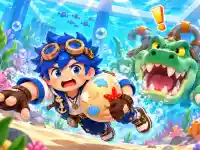
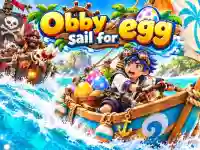
Obby Sail for Egg begins at a harbour and offers ten islands to explore for eggs. More distant islands have rarer finds, but collecting an egg brings a hunter ship into the return journey. The outward route is therefore only part of the expedition you need to consider.
Move on foot with WASD and look using the mouse. Press E at the harbour to board a boat. Aboard the vessel, W and S control the throttle while A and D steer. Tab releases the cursor, and phone joystick controls are also documented. Learn the difference between walking near the harbour and controlling the boat before setting out far from land.
Choose a destination that suits the boat you currently have. A rare egg is appealing, but the voyage must still leave you able to return to the farm. Bring the egg home, place it and hatch a pet; its earnings connect the journey with further development. The supplier also describes boat upgrades, faster vessels and a collection Codex.
Redirect water through a pipe puzzle
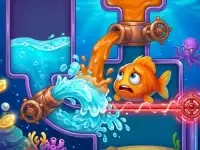
Fin Freedom puts a small fish in a network of underwater pipes. Pull pins to change connections and direct water while accounting for lava and predators. Instead of steering through open water, you study an arrangement and decide which change should happen first.
Before clicking, locate the fish, the water and the dangers. Ask which spaces a pin removal will join and whether that opening also creates an unsafe connection. A route that moves liquid toward the fish is only helpful when the rest of the network remains suitable for the rescue.
Observe what one interaction does before choosing another pin. Water takes part in the result, so selecting several points without watching can make the sequence difficult to understand. When a route goes wrong, trace the problem back to the removal that introduced it rather than focusing only on the final failure.
The supplier lists click or tap input but marks this build as not mobile-ready. A pointer-based computer setup is the clearer starting choice. The presence of a water theme does not establish common device support across every game in the collection.
Choose between travel and a contained problem
The sailing example suits a session in which you want movement between places, a return trip and purchases connected to earnings. The pipe puzzle keeps attention on the arrangement visible in the level. Neither activity supplies a universal water-game strategy: good steering does not tell you which pin to pull, and a safe pipe sequence does not plan an island voyage.
What they share is the value of looking at consequences. At sea, a destination also implies a journey back. In a pipe network, opening one connection changes what can reach another area. Notice that second step before committing to the first.
Make the next attempt more deliberate
Set a small goal appropriate to the title. In the boat, practise a clear harbour departure and a controlled approach to land. In the puzzle, work out which hazard must remain separated while you create a route. These are observable tasks that make it easier to recognise an improvement.
Use the cards to try another activity when you want a different pace. Read its controls and objective at the start, even if the scenery is familiar. Water can be a route, a resource or part of a hazard, and understanding its role in the selected game is more useful than assuming it always behaves the same way.