Pick a balance challenge deliberately
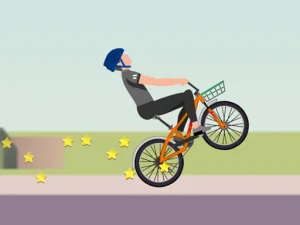
Game Wheelie Bike hosts Wheelie Bike by FG Studio. Its objective is to cover distance while keeping the bicycle on one wheel. That gives your early attempts a clear purpose: learn the lift, recognize an unstable movement and try to keep the next part of the ride manageable. The supplier lists mouse input for this version.
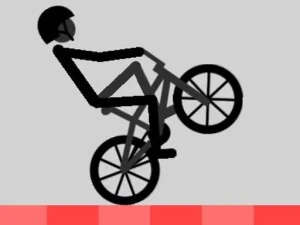
Wheelie Bike 2 is another rear-wheel balance choice in the collection. It also asks you to maintain the ride over distance, but you should follow its own starting prompt instead of assuming that every bike title reacts identically. Comparing these two entries is most useful after you can recognize what ended an attempt in the first game.
Separate position from movement
A bicycle that appears to be at a familiar angle may still be rising or dropping. Watch that direction of movement as well as the height of the front wheel. If you respond only to where the wheel is now, your correction can arrive after the lean has already become difficult to control. Looking at the developing motion gives you more useful feedback.
For the first few attempts, use a repeatable opening. Observe what happens while you apply the instructed input and what changes after you release it. Make the next adjustment small enough that you can connect it with the response. This approach is easier to learn from than a rapid sequence of changes whose separate effects become impossible to distinguish.
Read the ending of each attempt
Treat a front wheel dropping and a backward tip as different problems. One may suggest that your lift faded too soon; the other may follow an excessive or late correction. Use the movement visible in that specific attempt as evidence. Do not assume an upgrade, trick button or hidden ability is required simply because a run ended quickly.
Then review the moment before the obvious failure. Was the bike already becoming unstable while your attention moved elsewhere? Did you change the input several times without allowing yourself to see the result? Choose one answer to investigate on the next ride. A clear adjustment makes a short retry more informative, even when it does not immediately produce a personal best.
Compare games without mixing their rules
Keep one title open long enough to understand its basic response before moving to the other. A useful comparison is how clearly you can judge the opening lift or recognize a dangerous lean. Importing an exact timing pattern from another game can be misleading because the current game's response is what determines the next action.
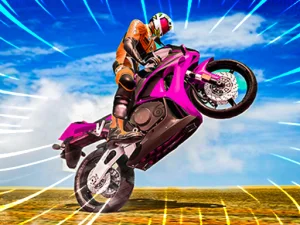
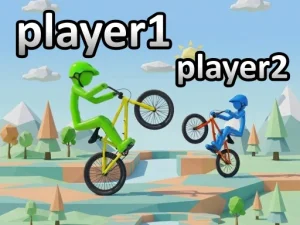
Some cards in this collection lead to activities outside simple bicycle balancing. Check a destination's title, description and control prompt before using it as your next wheelie practice. A similar word in a tag or a themed thumbnail does not prove shared physics, shared saved progress or a common set of stunt controls.
Set a practice target you can assess
Choose a goal such as producing three recognizable opening lifts or identifying why several attempts ended. After that, work on extending one stable section. This gives you a way to judge progress even before the distance increases. A longer run is useful feedback, but a repeatable start and a clearer understanding of the failure are useful achievements too.
Check the device information before beginning, especially if you are moving from a mouse to a touchscreen. The word “unblocked” in this collection's name cannot guarantee access on a particular school, workplace or managed network. Use an allowed connection and the loaded game's own instructions, then concentrate on the balance challenge that is actually in front of you.