


Slow Roads: Learn to Read the Next Bend on an Endless Drive
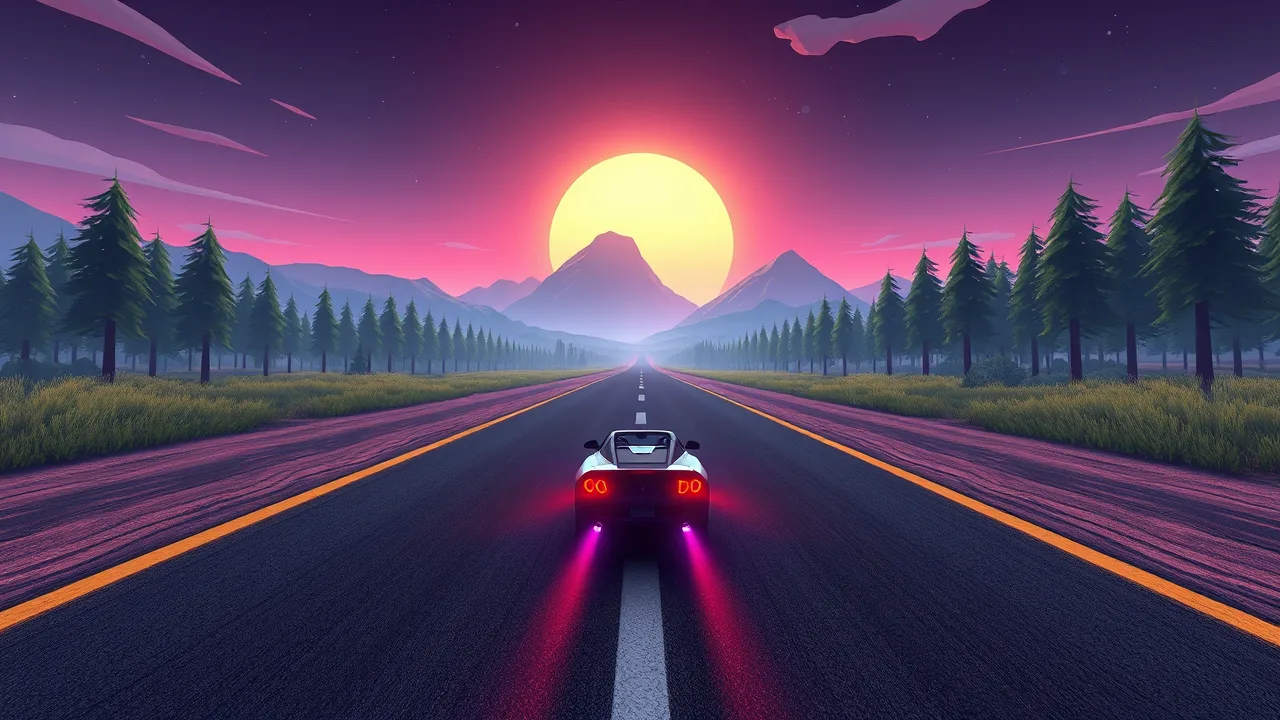
Slow Roads gives you a road that keeps going and lets you decide how much of it to take in at once. The landscape and weather can change, and the next bend doesn't owe you a comfortable line. But there's no finish flag asking you to make up time. If you've played driving games where the goal is to carry as much speed as possible, that absence gives you a chance to try something different: choose a pace that leaves you enough time to make one decent decision before the next one arrives.
Start with the stretch that is in front of you
Open Slow Roads, choose a vehicle and use a view that lets you see its position relative to the road. Make the first few steering changes gentle enough that you can watch how the car settles afterward. A moving car is still changing position while you decide what to do next. If you keep adding input because you can't see the immediate response, you can end up chasing the road from side to side. Give each correction time to show its effect.
A long view doesn't mean staring at the horizon. Look from a piece of road near the vehicle to the farthest length of road that you can read clearly. On a straight, you may have enough sight distance to relax your hands for a moment. Near a rise, the visible road may end well before the actual turning point. Judge the room you have based on what you can see, and let the unseen part of the route remain a reason to wait. Taking a crest gently is more comfortable than discovering where the road goes with the steering already committed.
Set the speed early enough to steer simply
A loose corner often starts with a speed decision you made back on the straight. If you wait to slow down until the vehicle is well into the bend, you have to judge distance and change direction while part of your attention is on recovering pace. Try coming off the accelerator when the curve becomes visible. See if you can settle into a speed you can hold before the road actually turns. Then use the corner to check your line. With less work happening at the same time, you can often get through it using one smooth correction.
If you catch yourself crossing back and forth across the road, return to that earlier choice. You might first think the steering is too sensitive, when the thing that really changed was your approach speed. Try another bend at a pace that lets you notice the first turn and its exit. Turn only as much as you need to stay on the road and relax the input as the view opens up. This is a way to learn the game without pinning a number to an ideal corner speed. A broad curve and a tight turn on the next hill give you different amounts of information.
Another useful check is the moment just after the bend. Are you already able to look ahead, or are you still fixing the line you carried out of the turn? If it's the latter, make the route a little easier on yourself before the transition. You may need to begin turning from a more neutral position rather than from one extreme edge. Or you may need to finish slowing down earlier. There's no traffic race forcing you to solve the problem with a dramatic maneuver. A smaller correction farther back is available to you.
Take two bends as one sequence
When the road bends one way and quickly turns back, an exit that looks good in isolation may leave you in the wrong place for the second part. Look for the space between the turns. That's the moment you have to get your view and direction organized. If the first corner feels fine but the second always catches you out, try making the first one a little less ambitious. Leave time to bring the vehicle back toward the middle of the usable road, then decide how much input the second turn needs.
Sometimes there is no clear look at the second turn from the first. A hill or a change in the scenery may hide the road. Drive the visible section carefully enough that you can react when the next turn comes into view. You can still enjoy the shape of a road without forcing yourself to predict a part of it that the camera hasn't shown. In contrast with a fixed racetrack, the value of this approach is that you can apply it even when the exact sequence changes.
Try a short exercise: relax the accelerator on the first turn of a pair and wait until you can see a useful piece of the next turn before adding speed. Then compare that with what you usually do. You don't have to decide which was objectively faster. Ask which approach left you more able to tell where your vehicle was pointed, and whether you had any attention left for the next thing the road asked of you. That is useful feedback even when there is no race timer validating your choice.
Know how to recover after an untidy move
An awkward exit doesn't need to become a chain of frantic adjustments. Reduce your speed and see whether there is enough room to straighten out gradually. If the car is off the route or you're no longer interested in recovering the position by hand, R returns it to the road in the embedded build. Use that reset when it makes the next minute more interesting. Before setting off again, take a second to work out what contributed to the mistake. Losing the visible roadway over a rise calls for a different response than turning too sharply on level ground.
The other reset is simply to change how you're looking. C switches cameras in the documented build. If you aren't certain where the vehicle is sitting on the road, a camera that shows its position may help. If you know where it is but keep losing the far edge of the bend, use a view that makes the road easier to read at your current speed. Try a view for several turns before deciding whether it helps. A camera can feel unfamiliar on the first input and make sense once the car is pointed down a longer stretch.
Don't treat every excursion from a tidy line as a failure. You are learning how this vehicle moves under the conditions the game is showing. If going more slowly makes a rough section interesting, stay there. If it turns the drive into a frustrating exercise, choose a gentler road setting and preserve the part of the experience you were enjoying. The point is to have control over what you practise, not to prove that you can handle every option in one visit.
Keep the drive long by making the plan short
An endless route doesn't require an endless session. Think in short stretches that have a recognizable aim: get through a few corners with enough room to see the exit, settle after a rise, or find a calm pace at the start of a new landscape. Once that aim is met, you can stop or choose another. It's easier to make a pleasant habit of a game when getting something out of it doesn't depend on reaching a distant end that was never there.
If you change the vehicle, give it a fresh introduction. Use familiar visibility and terrain settings if you want to learn how it responds. Notice how your line changes by the time the turn finishes; the first instant of steering only gives you part of the answer. Save a dramatic setting change for a later stretch, where it can have your full attention. When you can explain which difference came from the vehicle and which came from the road, you're less likely to overreact to a new combination.
Contrast an open road with a confined approach
If you'd like to isolate the same habit at a lower speed, Bus Parking Unblocked offers a different space problem. The job is to get a long vehicle into a defined area. A good approach leaves space to finish aligning without bumping into what's beside you. In Slow Roads, the useful space is the bit of road you can see before and after a bend. In the parking game it's the room around the vehicle before reaching the entrance. Both make the earliest part of a turn matter.
When you return to Slow Roads, choose a simple aim for the first minute. See the curve, settle the pace and leave the exit open for whatever comes next. If the road opens up and you have no urge to test anything else, just stay with the rhythm. A drive worth keeping does not need a new high score; it can be the one where you had time to see where you were going.