Aimed launches in Slime Jump
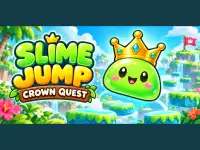
Slime Jump: Crown Quest is a platform game about launching a slime toward a crown. Its supplier describes 150 colourful levels. Platforms provide places to land and a new position from which to plan another jump.
Hold, aim and release using the mouse or touch controls. Before letting go, identify the platform you want to reach and consider which part of it would leave a useful next angle. Follow any aiming guidance displayed in the current game rather than assuming a particular numerical power setting.
Begin with a target that is easy to distinguish. The release should test an intention you can observe, such as reaching a nearer edge or landing more centrally. If you cannot explain the intended landing, the result will be harder to use for the following attempt.
Read the position after each landing
Once the slime arrives, plan from the location it actually reached. A small difference in landing position can change the next approach. Continuing a sequence imagined before the first launch may send the slime toward an angle that no longer fits.
Pause briefly to identify the next useful surface and the crown's place in the route. You do not need to solve every movement in the level at once. A short plan that updates correctly after a bounce gives you a more reliable basis for the next release.
Look at both the current target and the space that comes after it. A landing that barely reaches a surface can still be informative, but another part of that surface may make the following movement easier. Use that relationship when deciding what to change.
Learn from a short or long launch
If the slime falls short, compare the aim and release with the intended destination. If it passes the target, make a deliberate adjustment on a familiar approach. Changing one part of the action helps you understand the result instead of producing a different jump with no clear reference.
The objective is reaching the crown to complete the level. Treat the next arrangement as a fresh problem, even when a movement looks familiar. The relationship between surfaces matters more than repeating a previous launch automatically.
Aimed bouncing also benefits from accurate input placement. On a touch screen, keep the target visible while making the hold-and-release action. With a mouse, separate lining up the aim from releasing it. Use the loaded game's own layout for the available interaction.
Choose a bounce challenge worth revisiting
Set a practical aim for another attempt: reach a platform more consistently, arrive with a better next angle or recognise when the route needs a different first target. These goals make progress visible before you finish a whole sequence.
Other cards may represent bouncing with different objects, controls or objectives. Read their instructions before applying this game's launch method. The shared theme is movement between positions, while the details of aiming and completion belong to each title.
Use a failed landing as information about the route you chose. Decide what that result says about the next input and try a specific correction. That keeps repetition purposeful and makes a small bounce feel like part of a plan rather than a hopeful release toward the nearest platform.
Choose a recognisable edge as a reference when comparing two launches. Watching the same part of the target makes a small difference in the landing easier to identify.