Identify the activity before learning its inputs
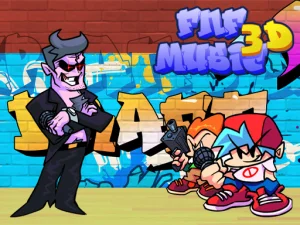
In FNF Portrait Friday Night Funkin, you guide Boyfriend's side of a musical showdown by answering directional prompts. The documented desktop input uses keyboard arrows, and the mobile presentation supplies on-screen buttons. The characters make the setting recognizable, but success still depends on reading the current pattern and entering the right direction at a useful moment.
Begin by watching a clear sequence. Notice which directions arrive and how their timing relates to the music. Then choose an input as the relevant prompt reaches the point indicated by the game. The opening instructions and the current playfield provide the reference. Familiarity with a song title or character should not replace attention to the pattern that is actually shown.
Make a busy section easier to understand
When several inputs approach closely, concentrate on their order. Prepare for the first clear direction, then read the next change instead of treating the group as one burst of random presses. This gives your fingers a sequence to follow and makes it easier to identify what went wrong if you miss a prompt.
After an error, look for a clean place to rejoin the rhythm. An extra press made only to compensate for the previous mistake can become another distraction. Rebuilding from the next readable prompt gives you something definite to act on. A short successful recovery is useful practice even when the earlier part of the attempt was untidy.
For another attempt, decide which aspect needs attention. You may have recognized the direction too late, entered the wrong arrow or lost the musical pace while watching the characters. Choose one of those explanations to investigate. A specific adjustment is easier to assess than trying to become faster at every part of the song simultaneously.
Try a contrasting musical presentation
Magic Piano Tiles is a separate recommendation for a piano-tile timing activity. Its playfield presents a different visual task from FNF Portrait's directional battle. Read the controls on its own page and in the loaded game before transferring a habit from the previous session. What remains useful across the comparison is observing the next required action and keeping a pace you can read.
Choose the FNF format when you want its character-based showdown and arrow sequence. Choose the tile format when you want to organize your attention around another kind of musical playfield. The point of comparing them is finding a task that suits the session, rather than assuming that a shared music theme makes their controls interchangeable.
Browse related choices with clear expectations
The Magic Tiles topic page offers more browsing when you want to explore that direction. As with the cards here, inspect the selected game's own objective. A title can refer to a musical character while offering another genre, and two games that both use FNF in their names do not necessarily contain the same songs, opponents or progression.
Avoid judging a destination only by its thumbnail. Read the description, check the supported inputs and wait for the play area to load. That small check can save time when a familiar-looking card leads to a different activity from the one you intended. Keep each game's scores and settings separate unless its interface explicitly explains otherwise.
Set up the next attempt deliberately
For keyboard play, click within the player and confirm that arrow inputs reach the game. If the surrounding page moves, restore focus before changing your timing technique. For a touch version, follow the buttons it actually displays. Use comfortable audio so the beat remains easy to hear, then give yourself one achievable aim for the next section. Recognizing an earlier direction or recovering more calmly after a mistake is a useful step toward a more consistent musical session.