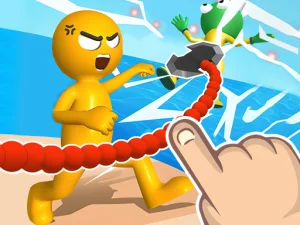
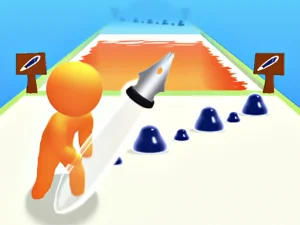
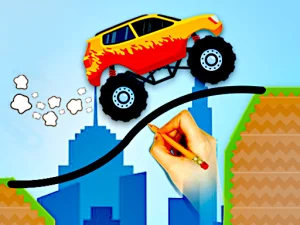
Draw games give your line a role in the level. It can become a surface a character travels along, part of a course you will play yourself or a shape that helps something move safely. Before drawing, find the parts of the scene the line needs to connect. A path that reaches both ends can still be difficult to use if its middle rises too quickly or touches the wrong object.
Last Updated:
Design a simple course before adding difficulty
Squirrels Draw Your Level lets you design a route and then move a squirrel through it to collect acorns. Draw the first version with a clear start, a readable path to an acorn and a place to keep moving afterwards. Start the course and use the movement controls to try it. The test run will show you where a shape you drew is easier or harder to travel over than it looked while you were planning.
If you want to make the level more challenging, change one section at a time. Place the steeper part after a stretch where you can set up the approach. Make a landing broad enough that you can see the effect of the jump before you decide whether to narrow it. Keep the acorn you are working toward in a place that helps you understand what the jump needs to do. A course teaches you more when you can tell which of its shapes caused the result.
Connect both sides of a gap
In Draw Bridge Puzzle, you sketch paths to help a car cross obstacles. Start by looking at where the wheels can reach the line. Then find a place for the line to meet the far side. Draw through the space between those points while watching for objects the car could strike. The plan includes the transition onto the bridge and the transition back onto stable ground. A bridge that only solves the middle of the gap may still leave the car stuck at the entrance or exit.
After your first attempt, watch the earliest point where the car behaves unexpectedly. If it stops before reaching the bridge, consider the way the drawing begins. If it crosses the gap and loses control at the far side, take a closer look at the exit angle. Keep the useful part of your first line and adjust the short section that needs work. Observing the motion gives you better feedback than guessing whether the bridge is long enough.
Use fewer strokes to make a test clearer
Start with the simplest visible shape that could solve the immediate problem. A short line can show you how an object reacts on contact. A gentle slope can help you learn whether the car can make the approach. Once the straightforward version works, add a change that answers a specific question. For example, try a curve to smooth one transition while keeping the other end in the same place. You can then compare what the object does at that one bend.
If the level allows a reset, return to the starting view and locate the first contact again. Imagine an object entering your line from the direction it will actually move. That view can help you catch a steep point you overlooked while drawing from the other end. Choose the end you understand better as the starting point for your next sketch.
Decide whether you want to build or solve
Pick the squirrel game when you want to create a short level and see how a character fits it. Pick the bridge puzzle when the level has already given you a problem and you want to design the missing path. In both games, follow your drawing through its first use. Notice the difference between a line that looks neat and a line that places the moving object where you intend. That comparison gives you a good next idea whether you are building a course or repairing a route.