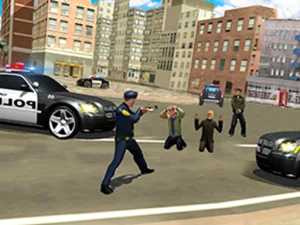
Separate the setting from the task
A city is a setting, not a complete explanation of what to do. One game may direct attention toward driving, another toward a specific action challenge. Even when the name sounds familiar, first establish what starts a session and what counts as progress. Look for the game's own objective, the controls it actually displays and any visible instruction that explains how the current activity ends.
This avoids spending the opening minutes searching for a feature that belongs to a different title. A driving challenge need not include free exploration. An action themed card need not supply a mission sequence or a persistent character. The selection includes Grand Crime Auto VI and Crime Wars San Andreas among its displayed names, but names alone do not verify shared characters, maps or official franchise content.
An alternative for vehicle experimentation
If exploring vehicles is the part of this theme that interests you, Evo-F2 is a verified recommendation elsewhere in the catalogue. It is a Ciorbyn vehicle sandbox with a city setting, road cars and working machinery. It offers a different reason to drive: experimenting with handling and equipment rather than following a fixed race sequence. This recommendation does not imply that Evo-F2 is one of the collection's current displayed cards.
The documented desktop controls use WASD for driving and the mouse for looking around. C changes the camera, R repairs the vehicle, Enter resets it and T activates slow time. Learn those recovery and view controls during a short test drive. Understanding how to recover from a poor landing makes it easier to investigate a ramp without losing track of the experiment you were trying.
The truck, forklift and excavator also call for different positioning from a smaller road car. The equipment instructions list U and J for raising and lowering the arm, and I and K for the fork. Select the appropriate machine before using those inputs. Leave enough room to approach an object, adjust your position and see the moving part without another vehicle obscuring the view.
Plan an approach before adding speed
For a driving session, choose a short route you can see clearly. Turn at a manageable pace and find out how much space the selected vehicle needs to stop. A route that feels comfortable in a sports car can become awkward in a larger machine. Treat the difference as part of vehicle handling instead of repeatedly applying the same acceleration to every vehicle.
In a game with a stated mission or immediate action objective, the equivalent preparation is reading the current instruction before moving away. Identify the relevant destination or target that the interface actually shows. Avoid assuming that every visible road, building or object is interactive. Check what the game responds to, then build your next decision around that information.
Find the right kind of city game
Compare individual pages when deciding between a focused challenge and a sandbox. The first offers a stated task to pursue; the second is useful when you enjoy setting a modest driving experiment yourself. Neither description promises the other game's features. The collection label also does not establish multiplayer availability, controller support, progress storage or mobile compatibility across all its titles.
Use a version's displayed instructions as the final control reference. In particular, Evo-F2's verified machinery controls are desktop keyboard inputs, not evidence of a touch interface. Choose a game whose input method and subject suit your session, and revisit the collection when you want a different balance of city scenery, vehicle control and action.