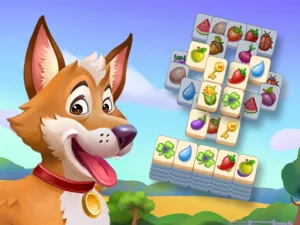
Compare the symbols before tracing a route
In Mahjong Connect Classic, click with the mouse to select the two tiles you want to join. First identify a matching pair, then inspect the space through which its connection would run. Two visually similar tiles still need to satisfy the game's actual matching and connection rules.
A nearby pair may be less convenient than a more distant one with a readable path. Avoid letting distance alone decide the next selection. The route's changes of direction matter, so look at where a line would have to turn before assuming the connection is available. Follow one candidate connection from its first tile to the other, naming the corners mentally. That small check helps distinguish a plausible line from an impression based only on proximity.
Count corners rather than imagining a straight shortcut
The stated limit is two right-angle turns. Trace a candidate path in parts and notice each change of direction. If your imagined route needs more corners, look for another approach or another pair rather than selecting repeatedly and expecting proximity to override the rule.
Use the current board and the game's response to judge a route. This description does not promise that every pair with the same symbol can connect immediately. The useful question concerns the arrangement that exists before the next move, not the path you wish were open.
Inspect the space left by a successful match
Clearing a pair changes the layout. Look again at the region it leaves behind, because another connection may become easier to recognise. Continuing an old search without noticing that change can make you overlook a useful new route.
You can keep a previously difficult pair in mind and revisit it after the board changes. What matters is reassessing its path in the new situation. A pair that was unsuitable earlier should not be treated as permanently impossible, but it also should not be selected again without a reason to expect a different result.
Search systematically when the board feels crowded
Scan a region at a time, comparing symbols and then following possible connections. This separates recognising candidates from testing their paths. Jumping continually between unrelated areas can make it harder to remember which possibilities you already examined.
If you run out of clear candidates, return to a region with a specific question about its available lines. Inspect the quieter parts of the layout as well as the symbols that first attracted attention. Repeatedly clicking one uncertain pair provides less useful information than looking for a different route.
Read a new layout on its own terms
Mahjong Connect Classic supplies several layouts with increasing difficulty. A remembered pair location from one board does not identify the next board's solution. Carry over the method of comparing and tracing while allowing the present arrangement to supply the actual path.
Other Mahjong entries may follow different tile rules. Read each game's description before expecting the same two-turn connection limit, input method or progression. The shared theme is a way to browse, not evidence of identical boards or save behaviour.
For a focused session, aim to recognise one useful route more deliberately and notice what clearing it changes. Check the current interface for pause and progress information. Treat every match as both a completed pair and a possible change to the space available for the next connection.