A direct route to practising products
Multiplication Roulette provides a clear mathematical task outside the ambiguity of a broad collection name. Start the wheel using Spin, then stop the roulettes to determine the factors. Calculate their product and answer using the interface shown in the game. Its published format contains ten turns and asks you to respond accurately in a short time.
That format can help you notice which products are familiar and which require thought. It does not replace an explanation of multiplication. If a learner has difficulty with six groups of eight, a drawing of equal rows may be more helpful than another hurried answer. Work out five groups of eight and one additional group, then connect forty plus eight to the full product.
Distinguish blocks from arithmetic
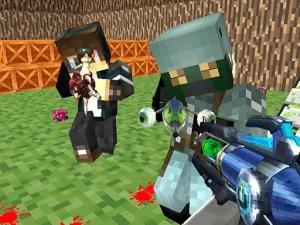
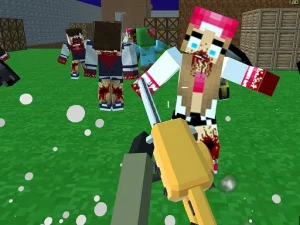
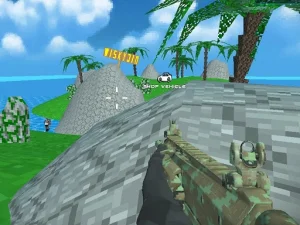
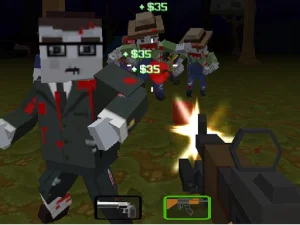
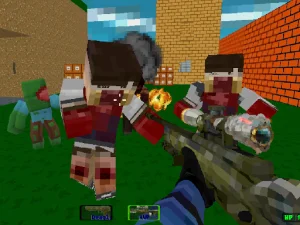
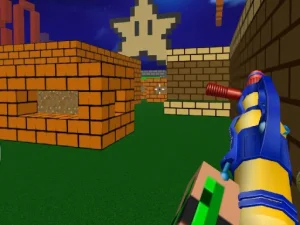
Names such as Blocky Gun Paintball and Blocky Combat Strike Survival appear among the current cards. Their block theme refers to a style of game world, not a verified times-table exercise. A game can require aiming, movement or survival without asking you to multiply at all. There is no need to treat those choices as educational software merely because they share a word with this page's label.
Before opening a card, decide what kind of session you want. For product recall, look for explicit multiplication questions. For a building activity, look for construction controls and a suitable environment. For an action session, read the combat or movement rules. These choices involve different tasks, and recognising the difference is more useful than assuming that a collection has one uniform set of mechanics.
Plan a small learning exercise
Choose an uncertain fact and identify something you already know that can support it. Nine groups of seven can be understood as ten groups of seven with one group removed. The calculation becomes seventy minus seven, or sixty-three. Draw the removed group if the adjustment is not yet obvious. A useful explanation tells you why seven is subtracted, rather than simply giving a memorised instruction.
Use a quiz afterward to see whether the relationship is easier to recognise. Review the cause of an error: misreading a factor, using addition, confusing a neighbouring fact or entering the wrong digit are not the same problem. Keep a brief note and address that specific cause. Randomly repeating more questions may not resolve a misunderstanding of the operation.
A guide for organised practice
The Multiplication Blocky practice guide explains how to connect equal groups, short quiz sessions and reviewing mistakes. Its exercises can be carried out with a sketch or counters alongside the game. They are not claims that the current collection contains a classroom dashboard, custom worksheets or a system for exporting learner results.
When a game chooses questions randomly, remember that one short session is a sample of performance. Different selected factors can make two attempts feel very different. Focus on whether you can explain an uncertain product and recognise it later in another order. This gives you a practical learning goal without treating every score as a judgement about overall mathematical ability.
Choose access and content appropriately
Follow the controls of the individual game rather than copying a keyboard shortcut from another card. The roulette uses touch or pointer interaction with its number selectors; action games may need a different setup. Select content appropriate to the player and play on a network where games are permitted. If your goal remains multiplication, return to a verified arithmetic activity instead of relying on block shaped graphics to supply a lesson they do not contain.